Reading: Brett Devereaux, “Why Stone-Faced Fascists Keep Getting Antiquity Wrong” (The Bulwark)
Shared Article from thebulwark.com
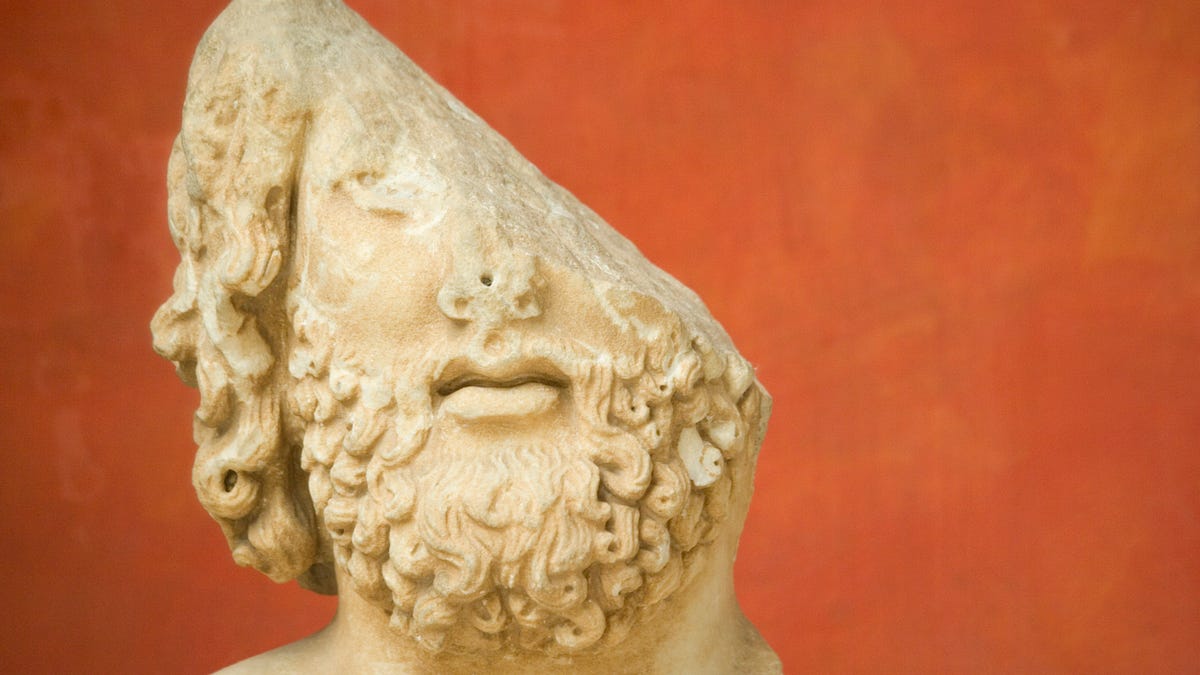
Why Stone-Faced Fascists Keep Getting Antiquity Wrong
Online bigotry masquerading as a love of history in the fever swamps of Elon Musk’s X.
Bret Devereaux @ thebulwark.com
IT IS THIS VERY IDEOLOGICAL PROJECT that demands the flattening down of the real historical Greek and Roman tradition and demands hostility towards classicists who actually cherish it, because the study of the ancient world does not conform neatly to modern bigotries or hard-right ideology. The irony is that it is precisely this complexity that has drawn generations of readers and scholars to the Greek and Roman classics and ensured their continued place in the pantheon of
great works.Indeed, as Stanford classicist Reviel Netz notes in Why the Ancient Greeks Matter, it was the very fractious, discordant, individualistic nature of Greek culture—clearly visible in their literature—that set them apart from previous and contemporary societies.For its part, Rome was a diverse society from its foundation and regularly extended citizenship to foreign ethnic groups and even freed slaves. Roman authors like Livy, and even foes of Rome like Philip V of Macedon, recognized that this liberality was a foundation of Roman strength. While the Greeks and the Romans could certainly be bigoted, their stereotypes map poorly onto the modern racism demonstrated by X’s unworthy defenders of Western civilization. Herodotus thought Egypt the oldest of all peoples, in some ways more civilized than Greece, with a better calendar and an older and deeper religious tradition. Homer imagined the mythical Ethiopian king Memnon as a cousin to the hero Hector and also the most beautiful man Odysseus had ever seen, a stark contrast to racialized claims that actress Lupita Nyong’o could not possibly play the famously beautiful Helen. Meanwhile, the Greeks and Romans felt little kinship with other European
whites.If anything, Gauls, Britons, and Germans could be far more alien and barbarous to ancient writers than Egyptians, Syrians, Persians, or even Ethiopians.The classical canon does not present a single vision of greatness, but many. It even questions the value of greatness itself. Even in Homer, Achilles’s vision of greatness through glory in the Iliad conflicts with Hector’s dogged defense of his home. The poem does not render a clear verdict on who is right, only who won. Homer doesn’t end with the triumph of Achilles, but wistfully notes
such was their burial of Hector, breaker of horses.Even if we take the Iliad and Achilles’s victory at face value, what triumph he has is undermined in the Odyssey: Achilles’s shade appears in the Underworld and rejects Odysseus’s declaration of his greatness.I would rather follow the plow as thrall to another man, one with no land allotted him and not much to live on,he laments,than be king over all the perished dead.Homer is hardly the only figure in the classical canon to question the sort of violent masculine greatness to which the statue accounts aspire. Sallust famously concludes that the great military achievements of the Romans merely served to undermine their morals and domestic politics, while he extols the greatness of writing history. Tacitus, in the midst of praising his father-in-law Agricola’s military achievements, in turn questions the fundamental morality of Roman conquest itself through the famous words he attributes to Calgacus:
robbery, butchery, and plunder they call by the lying name empire and where they make a wasteland, they call it peace.Unless we view the ancients as if they were cartoons, it should not surprise us to find classical views on both violence and masculinity were complex and varied.— Brett Devereaux, Why Stone-Faced Fascists Keep Getting Antiquity Wrong
The Bulwark, 4 June 2026
Reply to Reading: Brett Devereaux, “Why Stone-Faced Fascists Keep Getting Antiquity Wrong” (The Bulwark) Follow replies to this article · TrackBack URI