Posts filed under Politics
Take the A-Train
Back in 1974, the newly-formed Libertarian Party adopted what’s now called the Dallas Accord.
The Dallas Accord was intended to make the LP platform compatible with both minarchism and anarchism by keeping the LP officially silent on whether or not governments should exist, in the end; hence the platform focused mainly on what ought to be repealed, and where it suggested any positive action by some level of government, it qualified the plank with conditional phrases like Where governments exist, ….
I think that it was foolish for anarchists to sign on to the Dallas Accord. Partly because I’m a self-righteous ultra and I dislike that kind of calculated compromise in the name of political expediency. But also because of the very practical effect that it has had in constricting the range of subjects that market anarchists are willing to talk about or work on over the past three decades. Avoiding points of conflict between anarchists and minarchists means either studied silence or mumbling prevarication on issues that ought to be absolutely central for any anarchist worth her salt — among other things, the right of (state, local, neighborhood, individual) secession, the moral illegitimacy and practical futility of appeals to the Constitution, the arrogance and abusiveness of monopoly police forces, the illegitimacy of any and all forms of taxation, the fundamental problem with any form of government military or intelligence apparatus whatsoever, etc. Devoting your time and energy to a political organization whose messages are specifically adapted to be compatible with the minarchist program on these issues means frittering away a lot of energy fighting what goes on in the palace — while leaving untouched the pillars that hold the damned thing up. I would certainly agree that market anarchists should be willing to work together with coalition partners on particular issues of concern — the drug war, corporate welfare, the war on Iraq, etc. — whether those coalition partners are minarchists, or state Leftists, or whatever else. But who you’ll work with in issue-based coalitions is a different question from whose movement you’ll participate in, or what formations you’ll make the primary venue for your broader organizing and activism. I think it is long past time that we stop shelving our anarchism and indefinitely deferring our explicit anti-statism in order to fit in with limited statists in organizations like the Libertarian Party or Chairman Ron’s Great Libertarian Electoral Revolution.
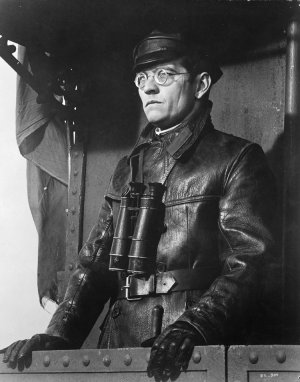
Libertarians who favor a more conciliatory approach often use the metaphor of sharing a train as it heads toward the end of the line. For example, here’s Mike Hihn, paraphrasing Steve Dasbach:
There are fundamental differences in what our members see as a proper role for government — original constitution, much less than that, or none at all. Yet, we manage to co-exist and work together. That is precisely why we shall prevail.
Steve Dasbach, National LP Chair, describes our party as a Freedom Train. We’re all on that train together, heading in the same direction. But we’re not all going as far. Some will get off the train earlier than others. Eventually, the anarchists will be riding alone.
That’s not just an analogy. It’s a strategy for eventual governing [sic!]. As we’ve expanded from a tiny band of idealistic anarchists and minarchists, we’ve been forced to refine and expand our original coalition. We succeeded, by becoming a minority in the party we had founded — as we’d intended. (Well, some of us.)
— Mike Hihn, Washington Libertarian (August 1997): The Dallas Accord, Minarchists, and why our members sign a Pledge
And here’s (market anarchist) Tom Knapp:
I am an anarchist. I don’t think anyone who didn’t already know that will find it surprising. I believe that, ultimately, government always does more damage than it does good; that that’s its nature. Eventually, I hope that we will arrive at the point where we can choose to shrug it off entirely.
I also recognize that we aren’t there yet; therefore, unlike some anarchists, I choose to involve myself in the political process. Limited government is conducive to minimal government; minimal government allows the question to be raised, in an environment where it can be considered seriously: do we really need this institution at all? I don’t expect that to happen within my lifetime, nor do I feel the need to pursue it as an immediate goal.
The Libertarian Party is a train that is going in my direction. I recognize that the bulk of the passengers will be disembarking at stations somewhere east of the one for which my ticket is stamped.
Some will get off the train when we’ve reached their notion of
limited government.Others will keep their seats until we arrive at their conception ofminimal government.At each stop, those disembarking will have the opportunity to urge their fellow passengers to join them. At each stop, those hanging on for the whole ride will have the opportunity to urge those getting off to buy another ticket and go a little farther down the track.…
I will personally welcome anyone into the Libertarian Party who wants more freedom and less government. In return, I expect those among them who want more government and less freedom than I do, having purchased a ticket on the same train I did, to refrain from throwing me from that train.
My presence does not stop them from reaching their destination (indeed, it could be argued that my ticket purchase helped make it possible for the train to run at all). Their presence does not stop me from reaching mine.
All aboard.
— Tom Knapp, Rational Review (2003-01-01): Time for a new Dallas Accord?
This metaphor has bugged me for a long time. Let me try to say why.
The image of political factions hopping onto a train, and getting off at different stations, might work well enough if you’re talking about factions within a party all of whom agree on the legitimacy of an electoral process. Say, for example, you’re talking about Constitution fundamentalists and principled minarchists; people get on the smaller-government train because it’s headed towards the political outcome that they want, and if the train reaches a point beyond which they don’t want to go, they hop off and try to find another train (i.e., another political party) that will take them there.
O.K., fair enough. But does the same image work for the relationship between minarchists and anarchists? I don’t think it does. The basic problem is that when we imagine the minarchists getting off the train,
we imagine that they are simply done with going where they want to go, and, while they prefer to stay at the minimal-government station, we will be free to go on past that station to the anarchy station. They’re off the train, and that’s the end of working with them. But it’s not quite that simple. Once you’ve reached minarchism, you’re at the end of the line, as far as a process of reform through electoral politics goes. Moving from minarchism to anarchism isn’t like moving from Constitutional originalism to radical minarchism. It’s not one more reform down the line of electoral politics; it’s a qualitative change that involves chucking out the whole structure of electoral politics in favor of something different, specifically secession and individual sovereignty. Once the minimal State has been reached, there is nothing left to reform by further work from within; the only options left are (1) to attack the remaining minimal State
; (2) to try to ignore it and get yourself attacked by it; or (3) to capitulate to it and give up on anarchy entirely.
So if minarchists simply hop off the train and leave the anarchists in peace to go on towards the anarchy station, then they are no longer acting as minarchists. Once we’re down to the minimal State and the anarchists start trying to withdraw and set up their own competing defense associations (or withdrawing in favor of individual self-defense, or whatever), the minarchists have only two choices. They can allow it to happen. But then what you have is government
where any subject can choose to refuse or withdraw her allegiance at any time, and give it to a different government,
or to no government at all. But that wouldn’t be a minimal government, or any kind of government at all; it would just be one voluntary association amongst many in a state of anarchy. Or they can try to forcibly suppress anarchists’ efforts to withdraw from the minimal State, and to move from limited government to no government. If the minarchists really mean it, then in the end they are going to be turning their limited-government cops and limited-government military on us, just as surely as any Bushista or Progressive.
So the appropriate image for anarchist-minarchist compromise really isn’t a train ride where minarchists hop off at the next-to-last station, and let the anarchists ride on towards the anarchy station. Statist politics don’t work like that. Rather, what will happen on this ride is that once the train pulls into the minarchy station, the minarchists will get off the train — and then they will try to block the tracks and threaten to open fire on the rest of us if we try to take the train any further towards the end of the line. That’s what being a minarchist means: government always comes out of the barrel of a gun, and that’s true whether the government is unlimited or limited, maximal or minimal. If you try to move, in any concrete way, from minarchy towards anarchy, those minarchists you spent so many years working with are still going to try to shoot you.
Personally, I have no desire to join any movement whose members will turn around and shoot me in the end. I am a market anarchist, and as I see it, as market anarchists, our primary allies shouldn’t be minarchists. They should be other anarchists, and it would be wise to make it so that that’s reflected in the organizations and causes that we spend our time and energy on.
Dr. Anarchy answers your mail #4: How can we safeguard our data?
… the occasional advice column that’s taking the world by storm, one sovereign individual at a time.
This week’s letter comes to us from a reader in the United Kingdom. The question has to do with a fundamental issue of trust. How can you rebuild your belief in someone when he’s let you down, over and over again?
Dear Dr. Anarchy,
The theft of a laptop from a Royal Navy officer which held the personal details of 600,000 people is being investigated by the police.
The laptop was taken from a vehicle which had been parked in the Edgbaston area of Birmingham.
It contains data including passport numbers, National Insurance numbers and bank details connected to people who had expressed an interest in, or joined, the Royal Navy, Royal Marines and the RAF.
Meanwhile, hundreds of documents containing sensitive personal data including benefit claims and mortgage payments have been found dumped on a roundabout in Devon.
How can we safeguard our data?
Dear Baffled,
Stop collecting it. You don’t have secure data that you don’t collect.
I know that you want to believe that if you just had the right people, if you just had the right policies, maybe you could go on turning over all this data to the government and distributing it to all these different agencies and have it somehow remain secure from malice, malfunction, or human error. But you need to look at this relationship honestly and realistically. You may be fooling yourself. The government will go on doing what they have been doing, with all their usual vices and limitations. If the only way to get what you need out of this relationship is to change your partner into something that he’s not, then you need to seriously consider whether it’s time to just dump him and move on.
Yours,
Dr. Anarchy
That’s all for today. Just remember, folks: people are more important than power. And everything is easier when you reject the State as such.
Next week: Dr. Anarchy answers your health and safety questions!
(Story via Phil Wilson 2008-01-20.)
Libertarian Gosplan
Here’s Keith Halderman, supposedly replying to an argument by Roderick Long, to the effect that short-term success for the Ron Paul campaign might come at the cost of damage to the longer-term prospects for a fully free society:
Your argument that the Paul candidacy works against a libertarian society is ridiculous. Fourteen hundred meet-up groups with over 80,000 members being exposed to libertarian ideas, many for the first time, say so.
Yep. Let’s all measure the inputs to the allocation process, rather than the outputs. Judging from the inputs, we are on track to exceed liberty production quotas by 75%. Long live Chairman Ron’s Great Libertarian Electoral Revolution!
Who usurps the usurpers?
I celebrated Roe v. Wade Day today by recalling the radical, anti-statist heritage of the pro-choice feminist movement. Lew Rockwell, on the other hand, celebrated it by reporting an anti-choice campaign endorsement for Chairman Ron’s Great Libertarian Electoral Revolution:
Today – the 35th anniversary of the Supremes’ Roe v. Wade usurpation – Norma McCorvey (
Roe) has endorsed Ron Paul for president.
In passing, Rockwell describes the 1973 Supreme Court ruling in Roe v. Wade as a usurpation.
But a usurpation against whom?
The only thing that Roe does, legally speaking, is restrain the action of state governments, by forbidding them from passing certain kinds of abortion laws, on the claim that any such law conflicts with the requirements imposed on the several states by the United States Constitution. But depriving someone of a legal power can only count as usurpation
if the person or people you’re depriving had some kind of legitimate authority for you to usurp. And since when do anti-war, anti-state
pro-secession anarchists believe that state governments have any kind of legitimate authority at all?