Rad Geek People's Daily

official state media for a secessionist republic of one

This War of Mine

Shared Article from Polygon

Meet the Iraq veteran helping to make an unconventional game abo…

In November of 2004 seven U.S. Marine battalions and associated coalition forces began a bombardment. When the planes had finished their work and afte…

Charlie Hall @ polygon.com


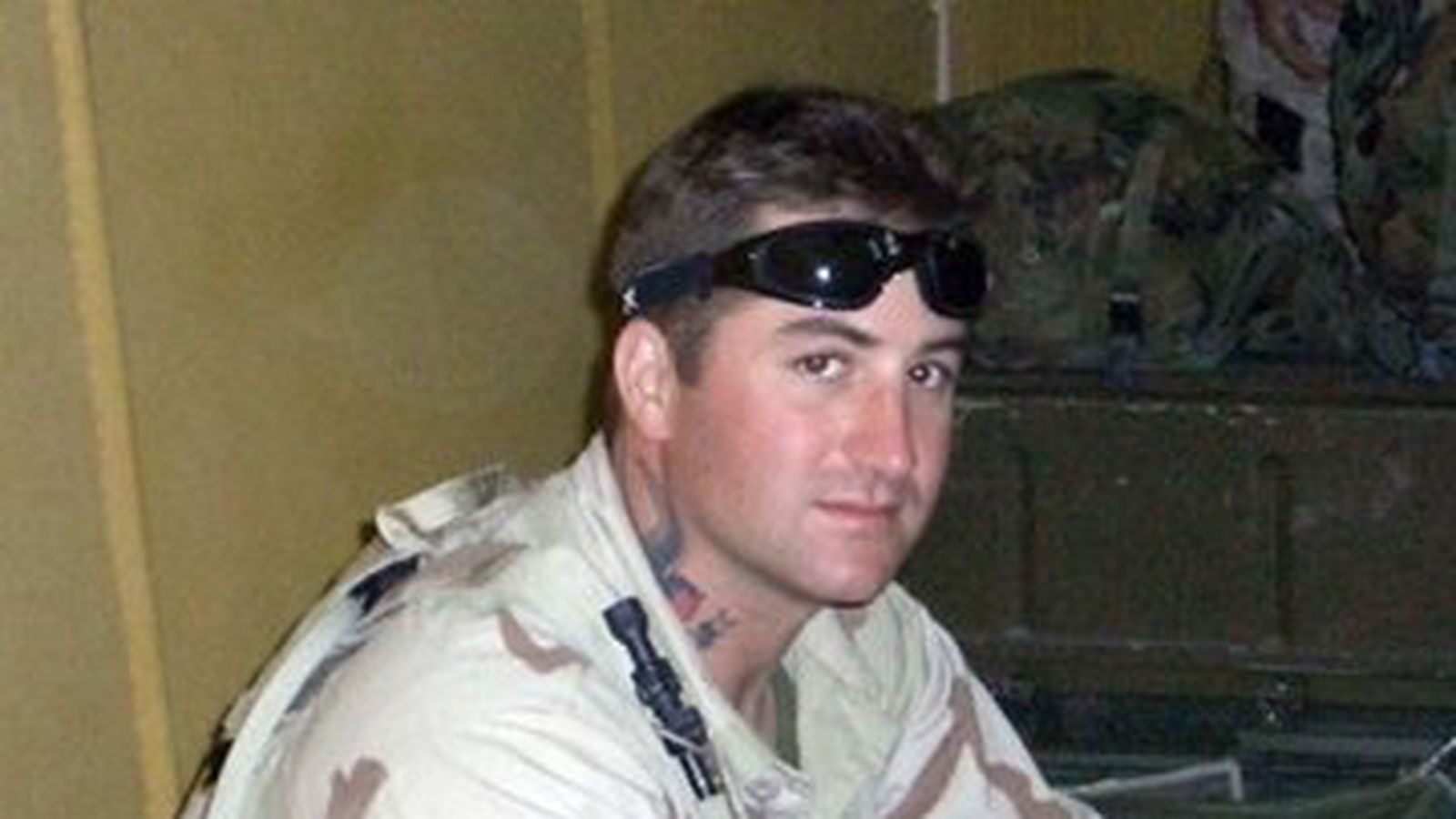
In 2004 Keyser was attached to the 1st Battalion of the 3rd Marine Regiment, part of 3rd Marine Division of III Marine Expeditionary Force. During the Second Battle of Fallujah, it was Keyser’s job to put Marines back together, as best he could, while under fire. . . .

It was his work with civilians, his memories of that time in his life, that drew him to This War of Mine, an upcoming game by 11 bit. The game aims to tell the story of war from the perspective of the innocents trapped inside it. It is a narrative adventure survival game unlike any other, where players shepherd a ragtag group of strangers and, with luck, help them to survive.

The game appealed to Keyser right away, because it was the first time he had seen his experiences shown in the hobby he loves. Shortly after he learned of the game the former corpsman volunteered to help 11 bit playtest it, free of charge. He’s been helping tweak the game for months, a task that at times has been hard for him.

“I was diagnosed with chronic post-traumatic stress disorder in 2007 when I was discharged,” Keyser said. “It’s definitely manifested over the past few years. I’ve been married twice. I’m an alcoholic. There are lots of not-great things that have occurred for me mentally.

“[This War of Mine] is definitely very affecting. My mind automatically goes back. I played a build one time and I was kind of taking notes and I kind of had to say, !!!@@e2;20ac;2dc;Okay. I’m not going to do this again for a couple of days.'”

Keyser believes that the message the game conveys is important for Americans to hear — especially veterans. Part of the goal of the work Keyser is doing for 11 bit is making sure this game is worth a veteran’s time.

“From my perspective,” Keyser said, “it’s effective as a game. I am certain there are vets — probably a lot of my buddies out there — that will have a hard time sitting down to play this kind of thing. And that’s what I think of too; is this game meaningful enough that other veterans might sit down and, regardless of how it makes them feel mentally, still push through? Is that going to happen? Will they still do it, even if it makes them feel a certain way?”

The kind of empathy games can bring about, Keyser said, can create a kind of experience that veterans might not otherwise get from modern games.

“I’ve been thinking that a game like this needs to be made for quite some time now,” Keyser said. “Especially in the gaming climate with Call of Duty and things like that are really popular, this is kind of something that needs to be done.

“Every few seconds I’m thinking of how this place looked like a building that I’ve seen … I’m automatically thinking specifically about Fallujah, about people who may have had to [take shelter where I was fighting], and my mind goes right there. We had to sleep in some of those ruined buildings as well.”

–Charlie Hall, Meet the Iraq veteran helping to make an unconventional game about war
Polygon (4 September 2014)
Kevin Carson, The Desktop Regulatory State

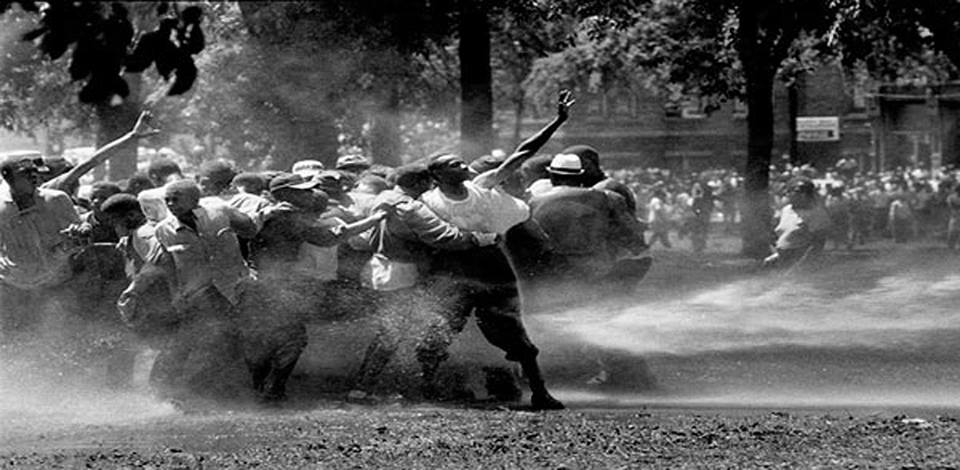
So I’m happy to announce that brand-new print copies of Kevin Carson’s recently-released fourth book, The Desktop Regulatory State (2016) are now available for purchase from the Distro of the Libertarian Left, hot off the presses and part of the Bookshelf of the Libertarian Left trade-paperback book series. Check it out; here’s a bit about the book:

The Desktop Regulatory State: The Countervailing Power of Individuals and Networks

Kevin A. Carson, 2016.

Defenders of the modern state often claim that it's needed to protect us — from terrorists, invaders, bullies, and rapacious corporations. Economist John Kenneth Galbraith, for instance, famously argued that the state was a source of "countervailing power" that kept other social institutions in check. But what if those "countervailing" institution — corporations, government agencies and domesticated labor unions — in practice collude more than they "countervail" each other? And what if network communications technology and digital platforms now enable us to take on all those dinosaur hierarchies as equals — and more than equals. In The Desktop Regulatory State, Kevin Carson shows how the power of self-regulation, which people engaged in social cooperation have always possessed, has been amplified and intensifed by changes in consciousness — as people have become aware of their own power and of their ability to care for themselves without the state — and in technology — especially information technology. Drawing as usual on a wide array of insights from diverse disciplines, Carson paints an inspiring, challenging, and optimistic portrait of a humane future without the state, and points provocatively toward the steps we need to take in order to achieve it. [Read more]

Kevin A. Carson is a contemporary mutualist author and a prolific writer on subjects including free-market anti-cap­it­al­ism, the in­div­idualist anarchist tradition, grassroots technology and radical unionism. He is the author of "The Iron Fist Behind the Invisible Hand", Studies in Mutualist Political Economy, Organization Theory: A Libertarian Perspective, The Homebrew Industrial Revolution, and The Desktop Regulatory State. He keeps a blog at mutualist.blogspot.com and frequently publishes short columns and longer research reports for the Center for a Stateless Society (c4ss.org).

In Dire Need

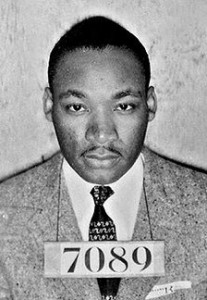
Fifty-three years ago to-day, Martin Luther King Jr. wrote his letter from Birmingham Jail.

You express a great deal of anxiety over our willingness to break laws. . . . One may well ask: “How can you advocate breaking some laws and obeying others?” The answer lies in the fact that there are two types of laws: just and unjust. I would be the first to advocate obeying just laws. One has not only a legal but a moral responsibility to obey just laws. Conversely, one has a moral responsibility to disobey unjust laws. I would agree with St. Augustine that an unjust law is no law at all.

. . . I must make two honest confessions to you, my Christian and Jewish brothers. First, I must confess that over the past few years I have been gravely disappointed with the white moderate. I have almost reached the regrettable conclusion that the Negro’s great stumbling block in his stride toward freedom is not the White Citizen’s Counciler or the Ku Klux Klanner, but the white moderate, who is more devoted to “order” than to justice; who prefers a negative peace which is the absence of tension to a positive peace which is the presence of justice; who constantly says: “I agree with you in the goal you seek, but I cannot agree with your methods of direct action”; who paternalistically believes he can set the timetable for another man’s freedom; who lives by a mythical concept of time and who constantly advises the Negro to wait for a “more convenient season.” Shallow understanding from people of good will is more frustrating than absolute misunderstanding from people of ill will. Lukewarm acceptance is much more bewildering than outright rejection.

I had hoped that the white moderate would understand that law and order exist for the purpose of establishing justice and that when they fail in this purpose they become the dangerously structured dams that block the flow of social progress. I had hoped that the white moderate would understand that the present tension in the South is a necessary phase of the transition from an obnoxious negative peace, in which the Negro passively accepted his unjust plight, to a substantive and positive peace, in which all men will respect the dignity and worth of human personality. Actually, we who engage in nonviolent direct action are not the creators of tension. We merely bring to the surface the hidden tension that is already alive. We bring it out in the open, where it can be seen and dealt with. Like a boil that can never be cured so long as it is covered up but must be opened with all its ugliness to the natural medicines of air and light, injustice must be exposed, with all the tension its exposure creates, to the light of human conscience and the air of national opinion before it can be cured.

. . . You speak of our activity in Birmingham as extreme. At first I was rather disappointed that fellow clergymen would see my nonviolent efforts as those of an extremist. . . . Oppressed people cannot remain oppressed forever. The yearning for freedom eventually manifests itself, and that is what has happened to the American Negro. Something within has reminded him of his birthright of freedom, and something without has reminded him that it can be gained. Consciously or unconsciously, he has been caught up by the Zeitgeist, and with his black brothers of Africa and his brown and yellow brothers of Asia, South America and the Caribbean, the United States Negro is moving with a sense of great urgency toward the promised land of racial justice. If one recognizes this vital urge that has engulfed the Negro community, one should readily understand why public demonstrations are taking place. The Negro has many pent up resentments and latent frustrations, and he must release them. So let him march; let him make prayer pilgrimages to the city hall; let him go on freedom rides -and try to understand why he must do so. If his repressed emotions are not released in nonviolent ways, they will seek expression through violence; this is not a threat but a fact of history. So I have not said to my people: “Get rid of your discontent.” Rather, I have tried to say that this normal and healthy discontent can be channeled into the creative outlet of nonviolent direct action. And now this approach is being termed extremist. But though I was initially disappointed at being categorized as an extremist, as I continued to think about the matter I gradually gained a measure of satisfaction from the label. Was not Jesus an extremist for love: “Love your enemies, bless them that curse you, do good to them that hate you, and pray for them which despitefully use you, and persecute you.” Was not Amos an extremist for justice: “Let justice roll down like waters and righteousness like an ever flowing stream.” Was not Paul an extremist for the Christian gospel: “I bear in my body the marks of the Lord Jesus.” Was not Martin Luther an extremist: “Here I stand; I cannot do otherwise, so help me God.” And John Bunyan: “I will stay in jail to the end of my days before I make a butchery of my conscience.” And Abraham Lincoln: “This nation cannot survive half slave and half free.” And Thomas Jefferson: “We hold these truths to be self evident, that all men are created equal . . .” So the question is not whether we will be extremists, but what kind of extremists we will be. Will we be extremists for hate or for love? Will we be extremists for the preservation of injustice or for the extension of justice? In that dramatic scene on Calvary’s hill three men were crucified. We must never forget that all three were crucified for the same crime–the crime of extremism. Two were extremists for immorality, and thus fell below their environment. The other, Jesus Christ, was an extremist for love, truth and goodness, and thereby rose above his environment. Perhaps the South, the nation and the world are in dire need of creative extremists. . . .

–Rev. Dr. Martin Luther King, Jr.
Letter from Birmingham Jail (16 April 1963)

Auburn Police Standards and the Shooting of Melissa Boarts

I picked up a copy of the most recent Plainsman the other day on my way to an appointment on campus. Behold the most predictable headline in the history of newspaper headlines.

Here's a copy of the front page of the Auburn Plainsman, with the headline "AUBURN POLICE SAY SHOOTING JUSTIFIED."

It’s a reference to the Auburn police who followed, confronted and killed Melissa Boarts on the highway last week. The police were following her because her parents called 911 out of fear that Melissa might be suicidal. The police followed her for miles until she stopped, then they saved her from harming herself by confronting her and shooting her to death.

The headline is more predictable than Dog Bites Man. If you programmed a Police Shooting Response robot that took police shooting reports as input and produced a claim of justification 100% of the time, only filling in the blanks with facts taken from the input and not adjusting the template in the slightest, you’d get the same headlines that you actually get from local police statements. Based on the extremely limited information that has been released so far, it’s possible that the police went overboard even by their own standards; it’s also perfectly possible that when the dash cam and body cam footage is released, it will turn out that the killing meets the police’s internal standards for justification — but if so, the police standards themselves are the problem. We don’t know how much police officers knew about how she was armed. The weapon that La Jura keeps talking about, always as a quote-unquote weapon without further clarification, was actually a small knife. Melissa’s parents and their lawyer say that they told the 911 dispatch that she had a knife; police claim that when she got out of the car they didn’t know what weapon she had in her hand. It may be that she brandished the knife in a way that would meet the police’s policies for using lethal force against her. But if so, then morally I think the problem with police procedures is that they take no real account of who initiated the confrontation, who escalated it, what other less-forceful options were available. We have here a case in which police pursued a woman who had committed no crime, followed her car for miles out of their own jurisdiction and into Macon County, cornered her when they were told she was upset and panicked and lightly armed, and then shot her to death when, they claim, she charged them. For ordinary people like you or me, a claim of self-defense requires that someone else is the aggressor; but police standards never take that into account.


Stories on the police shooting, what the police claim they knew, and what the family says they know about what happened, have appeared in the Huntsville Times (April 4), the Montgomery Advertiser (April 5), and The World According to Vladimir Putin (April 5). According to the Opelika-Auburn News (April 7), the family was desperately trying to reach Melissa’s car on the highway but the police cornered her and shot her before they could arrive; the OA News story also reports that there is both dash cam footage and body cam footage of the confrontation and the shooting. But the footage was given to the Alabama SBI, so that state police can investigate local police, and will not be released to the public until or unless the Macon County District Attorney decides that it should be. (The Macon County DA is putatively in charge of this decision because Auburn police followed her out of Auburn and pursued her on the highway into Macon County, where they shot her.)

See also.

Alabama Corrections

Shared Article from The Intercept

Alabama's Solution to Prison Riots: Build More Prisons

Alabama hopes to solve its prison crisis by building new prisons. Critics warn that more riots are likely.

theintercept.com


In addition to its lawsuit, the SPLC issued a damning report exposing widespread neglect and denial of medical care. In particular, the SPLC found that to cut costs inmates were regularly denied medical treatment, which in several cases resulted in death. The report described requests for medical help that were ignored, derided, or met with beatings or segregation. It found that inmates were unwillingly or unknowingly signed up for "do not resuscitate" orders, that poor diabetes care led to frequent amputations, and contagious diseases like hepatitis C spread untreated. The SPLC also found that surgeries were denied for sometimes as long as a decade, broken bones were often ignored for weeks, and prisoners suffering from burns and strokes were at times denied care for days.

The inmate interviewed by The Intercept said that in one instance, a fellow prisoner repeatedly tried to gain admission to the infirmary but was turned away. When he finally saw a doctor, he was diagnosed with cancer, had five tumors removed, and died weeks later. "I felt like they killed him," the inmate said. "We really have no value."

. . .

Glasgow and others in close contact with prisoners told The Intercept that more protests across Alabama prisons are imminent, and they listed a long catalogue of abuses compounding prisoners' anger over their living conditions, including rat infestations, inedible food they dubbed "road kill," and guards forcing inmates to fight each other in laundry rooms while betting on the outcome.

"When we look at how our prisons run, it's really not a criminal justice system. It's a criminal enterprise. A legal, criminal, enterprise," the Holman inmate said. "If you make a felon out of a man, you take away his rights as a human being."

. . .

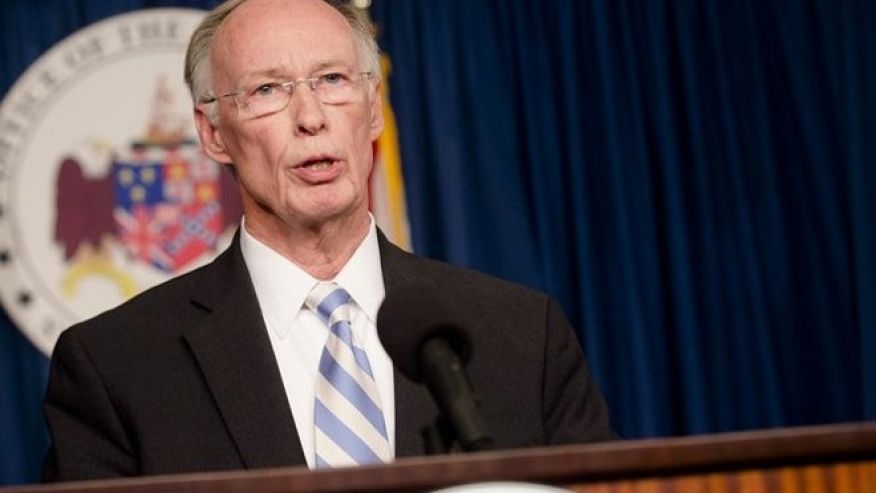
Alabama's new prison plan, if enacted, will add approximately 3,000 beds to the system, reducing overcrowding to 125 percent. In order to pay for it, the state will authorize an $800 million bond, which will be serviced by up to $50 million a year redirected from what the state already spends to maintain its decrepit prisons. "We were already solving this problem long before this took place," Alabama's governor, Robert Bentley, said in a press conference following the riots. He called the proposal "transformational thinking."

Prisoner advocates were less impressed. "That would just move the problem," said Watson. "In Alabama, we have a history: If we build them, then we overfill them." Morrison, of EJI, said the state consulted several experts about its prison problems, and none had recommended building new prisons as a solution. "A multi-year prison construction does not address the immediate crisis they have," she said.

Prisoners and their advocates say the only way to make incarceration humane — and legal — is to drastically cut the population of prisons, not build new prisons.

–Alice Speri, Alabama’s Solution to Prison Riots: Build More Prisons
The Intercept, 8 April 2016.

Anticopyright. All pages written 1996–2025 by Rad Geek. Feel free to reprint if you like it. This machine kills intellectual monopolists.