 Rad Geek, to-day:
This is literally utopia.
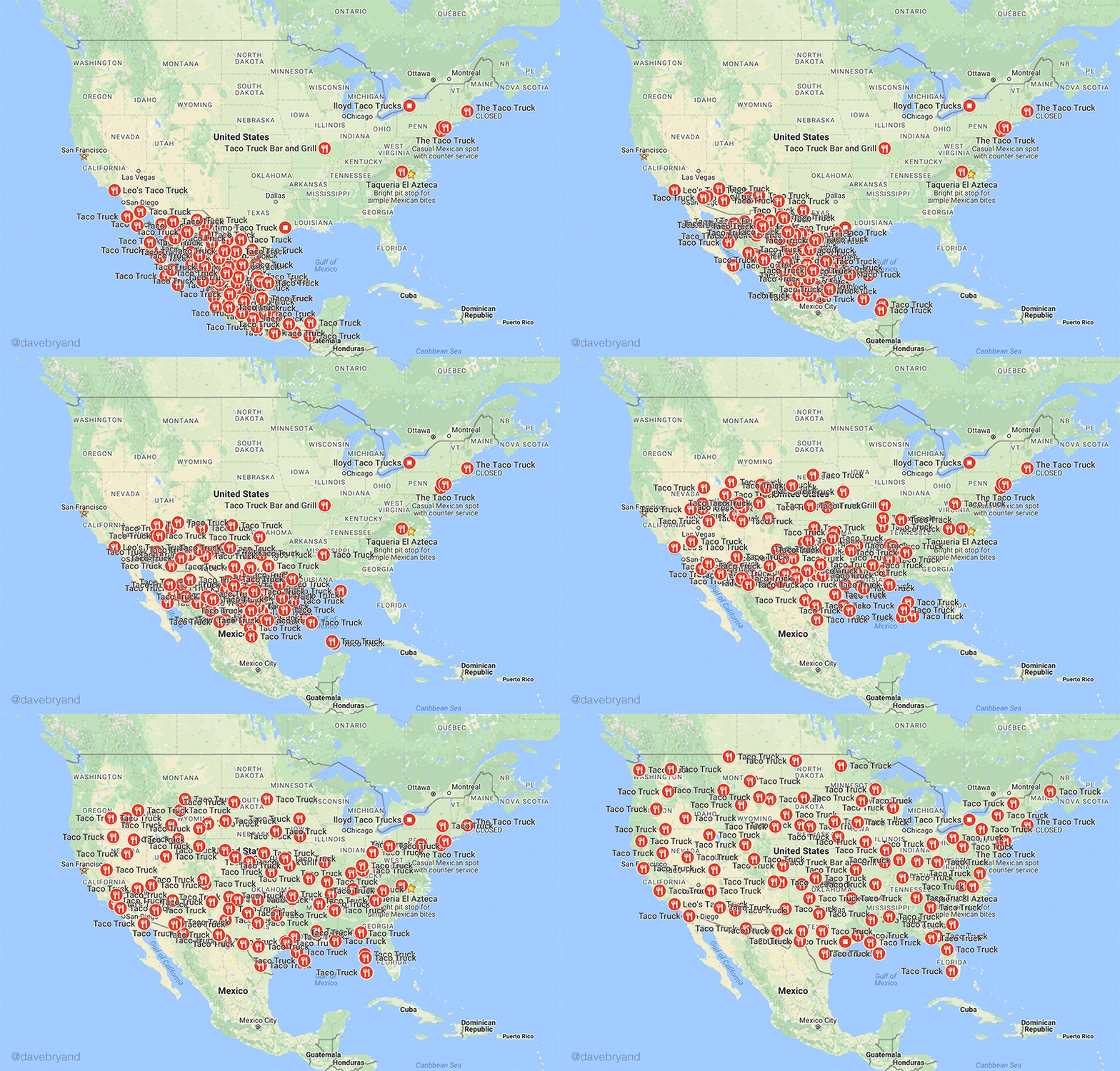
en. cada. esquina.
official state media for a secessionist republic of one
Mexico
Rad Geek, to-day:
This is literally utopia.
en. cada. esquina.
Anarchy is and always has been literally taco trucks on every corner.
This past weekend at FEE, me.[1]

Why Are There Not Taco Trucks on Every Corner? | Foundation for …
What people do not know is how hard government has worked for years to prevent this from happening. The War on Street Food been going on for more than…
Charles Johnson @ fee.org
When Marco Gutierrez, a founder and spokesman for the little-known and sparsely populated advocacy group "Latinos for Trump" recently tried to warn America of the grave dangers of open borders and free migration with the image of "taco trucks on every corner," most viewers, Latino and Anglo alike, seem to have experienced a vision of a possible new utopia. The tag immediately trended on Twitter, not in panic but in near-universal celebration of the possibility.
What people do not know is how hard government has worked for years to prevent this from happening. The War on Street Food been going on for more than 100 years….
Rad Geek, to-day:
Happy día de la Batalla de Puebla. If you feel like celebrating, shoot a French revenuer in honor of the event.
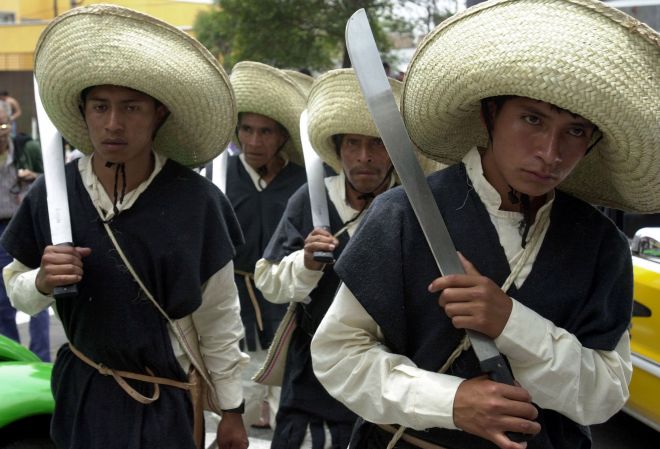
From Jeffrey M. Pilcher, The Rise and Fall of the Chili Queens, in Planet Taco: A Global History of Mexican Food (2012):
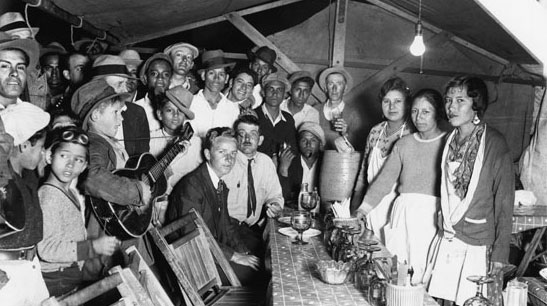
. . . Mexican food [from worker-owned street vendors] was also seen as a threat to white workers, both through unfair competition and labor radicalism. Nativist opponents of immigrant workers claimed that the Mexican diet of tortillas and chili, like the Chinese staple rice, undermined the nation’s standard of living. . . . Mexican food was also associated with anarchism and union organizing. Tamale vendors were blamed for the Christmas Day Riot of 1913, when police raided a labor rally in Los Angeles Plaza. Milam Plaza in San Antonio, where the chili queens worked in the 1920s, was a prominent recruiting ground for migrant workers. Customers could eat their chili while listening to impassioned speeches by anarcho-syndicalists of the [Industrial] Workers of the World[1] and the Partido Liberal Mexicano.[2]
–Jeffrey M. Pilcher, The Rise and Fall of the Chili Queens
in Planet Taco: A Global History of Mexican Food (2012), p. 113
So I just stumbled across this passage today; it’s kind of like a perfect addendum to the Xenophobia and Anarchophobia
/ U.S. vs. Them
section of my old No Borders / No State presentation, reheated, perfectly seasoned and cooked up together with everything I have to say about worker-owned, informal-sector food vendors and disruptive social and economic agoras.
International [sic] Workers of the World,a distressingly common mistaken expansion of the I.W.W.’s initials.↩
If yesterday’s post on orange chicken (among other things) made you think that I’ve got whole rants ready to go about the ways that people talk about how people talk about Tex-Mex, taco shacks and authentic
Mexican food, you — well, you might be right about that.
Let’s take an example of something that’s both real
Mexican food and also real
USAmerican food at the same time, no matter how much we may try to border off our cuisines into rigidly separated domains. Tamales are the Mexican food par excellance. They are also straight-up USAmerican food. They spread into the U.S. among agricultural workers in Texas and city street food in Los Angeles, San Antonio and Houston. During the early 20th century, tamales spread through migrant agricultural workers from east Texas into the Mississippi Delta, and went up the river, becoming popular (as red hots
) in Memphis, St. Louis, and Chicago. Red hot tamales are USAmerican food. They’re so USAmerican they showed up in the blues as a metaphor for sex. But when corn-meal tamales, or chili con carne, or tacos, or fajitas, or other food products of northern Aztlan get brought up — especially when they are wrapped up in a cuisine category like Tex-Mex
— there are always those who will insist that — because they are Texian, or because they are USAmerican, or because they are part of an immigrant community and a borderland — they somehow aren’t the same thing as Mexican food
anymore.
But of course they are. Of course Tex-Mex is the same as real Mexican food. Mexico’s a big country — it’s so big that it even used to encompass Texas — and Mexican cuisine is the food eaten in Mexico and the food eaten by Mexicans as a whole, wherever they may be, not just the stuff that they happen to serve in the Distrito Federal, or in the parts of Mexico far away from the jurisdictional boundary with the U.S. People will insist that it’s important to distinguish Tex-Mex from the many other cuisines that you can find among Mexicans and the many other cuisines you can find within Mexico. And of course that is obviously true; and it’s not snobbish to insist on the point. But the snobbery — where it comes up — doesn’t come up in distinguishing distinctive cuisines. It comes in distinguishing them by putting down the food eaten on the periphery, or in the diaspora — which is what happens when, say, you privilege the food popular in the capital or in favored sub-regions, by calling that Mexican
food proper (for example), and claim that the other cuisines are somehow less really or authentically or properly Mexican. This is part of what I was trying to get at a few years back when I wrote Whiteness studies 104: Class, cuisine, and authenticity:
See, the kind of Mexican food you’re used to doesn’t count as
incredible cuisinebecauserustic cookingfrom border provinces doesn’t even count as a cuisine.Cuisineis what rich people in big cities who use gratuitous French loan-words eat. And the kind of food they make in northern Mexican states like Tamaulipas, Coahuila, Chihuahua, Sonora, and Baja California, and in former northern Mexican states like Alta California, New Mexico, and (especially) Tejas,[1] doesn’t count asreal Mexican cookingeither, because a bunch offarmers and cowboysand immigrants don’t count as real Mexicans. Only rich Mexicans who eat in gourmet restaurants in metropolitan Mexico City do.In reality, part of the solution to Zwerdling’s puzzle may be that Estadounidenses had trouble with finding
this incredible cuisinethey supposedly haveright across the border,seeing as how those Mexico City restaurants where people eat this kind of food aren’t right across the border; Mexico City is hundreds of miles away from the Rio Grande. If you go right across the border you’ll be somewhere like Juarez or Nuevo Laredo or a little border village, and they’ll be serving thoseswamps of refried beans … and melted cheese.But NPR-listening white folks in the U.S. of A. are expected to take the very local and peculiar cuisine of Mexico City to represent therealcuisine of the entire United States of Mexico, because NPR-listening white folks in the U.S. of A. have mostly come to believe that world food is arranged not by the messy clustering of ecological, economic, and cultural factors that actually influences how people eat, but rather by the basically military reality of discretenationsseparated by fortified political borders. And, having come to believe that, we have mostly come to identify theauthenticnational cuisine of any given country with the preferences of the rich and powerful people sitting on the political, media, and mercantile centers inside those national borders — that is, the preferences of those who spend a lot of time eatingcuisine,and little or no time growing or raising the food that goes into it.What white people in the U.S.A. generally want, when they have the money to get it, is to eat like rich city people eat all over the world; different countries provide new brands, new spices, and, perhaps most importantly for the sort of white people who listen to NPR, new ways to distinguish yourself from the déclassé white people who don’t know or don’t like or can’t handle the
realstuff. Perceivedauthenticityis the important thing here, and what’s perceived as authentic for any given country — and, therefore, fit for white people in the U.S. to eat — is determined not by culture, but by political economy and the orders of power and wealth.— GT 2008-10-10: Whiteness studies 104: Class, cuisine, and authenticity
What I’d want to add on to the combo here would be: (1) to underline, again, the cultural twists and turns that Mexican food has made through the U.S. — the rapid spread of tamales from informal-sector street vendors, not only in coastal urban centers but also among (mostly black) workers up and down the Mississippi River valley; the development of mutant strains like the corn-meal tamal, the Sonora dog, and cinnamon-based Cincinnati chili;
or, for that matter, the taco-shack fast-food cuisine that Authenticists love so much to hate. And then (2) to note how closely attitudes towards different varieties of Mexican food have been caught up, historically, not only in immigration politics and imperial ideology about nationality and ethnicity, but also in local struggles within U.S. cities over ownership of the cuisine — especially in struggles between informal-sector street vendors and small shop owners, on the one side, and newspaper recipe guides, cook-book authors, entrenched Chamber of Commerce restauranteurs, and other gatekeepers of commercialized culture, especially in northern Aztlan cities like San Antonio and Los Angeles.
And also (3) I’d want to mention some of the weird little ironies that have emerged from those conflicts over ownership when they take the form of local Tex-Mex (say) being deprecated in favor of white Anglophone-curated presentations of self-consciously, self-presentedly authentic
Mexican cuisine — the sort of stuff that Diana Kennedy or Rick Bayless specialize in.
Of course Kennedy and Bayless are very good cooks, and the culinary movements they’ve promoted have served a valuable role when they have helped introduce a wider variety of foods from central and southern Mexico, and when they have defended the possibility of taking Mexican food seriously as a carefully prepared cuisine. But their way of doing this has typically been systematically to rank down food from the borderlands and food from the diaspora; and to try and present the foods they privilege as authentic
in ways that are really pretty elitist and exoticizing. Since part of their rhetorical goal is to distance themselves as much as possible from the over-familiar frontera food, the further you get from the U.S. border, the more authentic
the food supposedly gets, and Kennedy and Bayless in particular have developed a fairly strong tendency to disproportionately push distinctively local foods from the far southern states in Mexico — e.g. Yucatecan specialties — as type specimens of authentic Mexican food.
Of course there is nothing wrong with getting interested in specialties from southern Mexico, but the irony here, which goes more or less completely unremarked in Authenticist food writing, is that historically a lot of people in the Yucatán and Chiapas do not consider themselves Mexican
in the first place, and historically many have not wanted to be part of the Mexican nation-state. There’s a long history of cultural and political conflict between the central Valley and the southern periphery, and since so many view the Mexican
political identity as an identity imposed on them by conquest and occupation, the writing often comes off just as if you had a cookbook describing colcannon and bhel puri as prime, typical examples of authentic British cuisine.
Of course, you could point out that one way or the other, southern dishes have come into Mexican cuisine, and they are as good a thing to explore as any. And you’d be right about that — just as you’d be right to say that northern Mexican dishes, border food and local developments within the Mexican diaspora have become an integral part of USAmerican cuisine. Food cultures naturally diffuse, develop, intermix and produce experiments, fusions, local traditions and local mash-ups. Making food has always been an activity both of care and also of boldness, of repetition and innovation at the same time and within the same dish. Cultures naturally diffuse, naturally grow inward and also reach outward. For all that they resonate with locale and community and language and place and social relationships and shared identities, they always overflow the lines that are drawn around them; culture does not neatly obey borders, or class divisions, and cultures (including food cultures) constantly experiment with, redefine, challenge, borrow, appropriate, re-use, re-make, erase, and rewrite the formations that they themselves are supposed to spring from. Authenticism is necessarily a bogus discipline because it begins by presuming that there is a unitary, hermetic, discoverable and conveniently identity-based food culture to be authentic
to. Mexican food is the food of Mexico and of Mexicans wherever they may be, and it is no less complicated, no less multifaceted, no less riven with internal
divisions, no less open to external
contact and influence and experimentation, and no more confined to a single nation-state than are the people who make it and eat it. Fancy food from D.F. is real Mexican food. Street food from Michoacan is real Mexican food. Banana-leaf tamales from the far south are real Mexican food. Corn-husk tamales from San Antonio, burritos from the Mission District, tortilla soup, menudo, tacos from Roberto’s are all real Mexican food. Some of these are USAmerican food too. And we are all much richer and better for being open to the un-tidy, non-exclusive, profoundly human mess that cultures constantly make as they spread and flop all over the ridiculous lines that we try to draw on maps.
Tex-Mex— although a lot of what gets tagged as
Tex-Mexis really common to northern Mexico in general, and a lot of it comes in distinctive styles that come out of other old population centers, especially in California and around Santa Fe.↩