Rad Geek People's Daily

official state media for a secessionist republic of one

Posts filed under Politics

The first rule of Fiat Club is, you do not talk about Fiat Club.

Dana Perino is under strict instructions … to not talk about the dollar.

Q I’d like to follow up on their refusal to talk about the dollar, if I could. I mean, we’re in a kind of a bad situation here, when OPEC says the reason for $105 or $106 a barrel of oil is the falling value of the dollar — and you won’t address that issue. Where do we go to find out who is right?

MS. PERINO: Well, as he just said, the Treasury Secretary is where you go to talk about the dollar. It’s a longstanding policy that predates this administration, and I’m not going to change it today. But Treasury can talk about it.

Q I don’t expect you to change it, but I do expect you to be able to say whether OPEC is completely wrong about this, or whether there is at least something to their claim that the dollar is responsible for the high price of oil right now.

MS. PERINO: Wendell, I’m under strict instructions, and have been from the beginning, to not talk about the dollar, and I’m not going to get fired to satisfy your question.

— White House Press Briefing, Friday, March 7, 2008.

Had you just sat through a long presentation on the rotten economic situation in the U.S., which studiously avoided any mention at all of the collapsing value of the government’s fiat currency, you might also want to get a some answers. In particular, answers about the calculated policies of the Department of the Treasury and the Federal Reserve to make the world safe for finance capital–and doing it by exercising the federal government’s money monopoly, so as to suck every last drop of purchasing power out of working people’s wages and cash savings (which increase, if they ever do, much later, and much more slowly, than the commodity prices that we have to pay in order to go on driving and eating).

You might want some answers; however, you’ll have to get them from somebody other than the White House press flack. She believes that if she says word one about the situation, she’ll likely be fired for it.

(Via Crooks and Liars 2008-03-11, via Lew 2008-03-12.)

Que se vayan todos

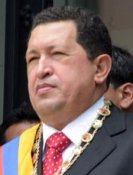
If you have the time to set aside, I’d strongly encourage you to read Socialism to the Highest Bidder, written by Nachie of the Red & Anarchist Action Network (2006-07-11). I mention the If because the time involved could be considerable; it’s a long and detailed essay, but rewarding if you’re interested in the topic. Here are some of the things that I took away from reading it.

When organized oil workers went on strike in 2003, Chávez and his revolutionary bureaucracy took the opportunity to fire 18,000 workers, to hire scabs and political favorites to cross the picket lines and replace them, and to create a new yellow-dog union federation that would support the official line of the government and the government-owned oil company:

The most important effect of the lockout was that it allowed Chávez to fire 18,000 PDVSA employees for walking off the job, including most of its technical staff of geologists, geophysicists and reservoir engineers, and then refill those posts with political supporters (this is the point at which the new PDVSA became the people's). In this process all forms of budding worker's self-management were quickly rolled back under the assurance that PDVSA now belonged to the people. Workers also managed to reoccupy a handful of other small factories, which are now being absorbed by the state and tokenized as symbols of co-management and glorious revolution. … The much-vaunted officialist UNT, (National Union of Workers) which was set up in April of 2003 in response to the collaboration of the old CTV (Confederation of Workers of Venezuela) with the bosses' lockout, is certainly doing the bulk of the labor organizing in the country, but even their efforts are limited in scope and have stalled over infighting, negotiations dealing with how exactly to make the union as participative as possible, and a lack of follow-through on the militant tactics such as factory occupations that they were supposedly to be advancing.

— Nachie, Red & Anarchist Action Network (2006-07-11): Venezuela, Socialism to the Highest Bidder

The creatures outside looked from pig to man, and from man to pig, and from pig to man again; but already it was impossible to say which was which.

This massive campaign of strike-breaking, union scabbing, and union-busting, which would have done Frick or Carnegie proud, is passed off today by compliant State Socialists in the U.S. as if it were a triumph for the working class. Meanwhile, in Argentina and then increasingly throughout South America, workers began to reclaim abandoned factories, and to run them under participatory, rotating worker self-management (autogesti?@c3;b3;n); when Chávez and his revolutionary bureaucracy took notice of the trend, they started to heavily promote their own favored alternative: government expropriation of factories and the institution of co-management (cogesti?@c3;b3;n), in which workers’ associations pay for the government’s help by ceding a substantial share of ownership (often up to 51%) and management (often filled by political appointees) to the Venezuelan government. The excuse for this gutting of worker management in favor of state bossism is that by putting the factory partly under government command, co-management ensures that it will produce in the interests of the public or the nation — as those interests are defined by detached government bureaucrats, rather than by the actual members of the public or the nation who happen to be engaged in doing all the work of making, buying, or using the factory’s products.

When Chávez, former leader of a military coup d’etat, rose to power, he took it upon himself to send out the military in virtually every one of his government welfare projects, and rather than altering, containing, or abolishing the existing military and the state security forces, he and his bureaucracy have taken deliberate efforts to militarize the civilian police forces and integrate paramilitary training and discipline throughout the government schooling system that they have been so assiduously expanding and remaking in their own Bolivarian image:

There has been absolutely no real judicial reform in the Fifth Republic, and as long as Chávez himself refuses to address this issue the rest of the government, for whom politics is merely a balancing act in which you do your best to appear in complete agreement with anything the president says, will continue to do nothing. In fact the Bolivarian Revolution has given the state a softer, friendlier image, which has encouraged an unprecedented rise in urban crime by those who expect to be able to get away with more. This has in turn been used by the government as a justification for the strengthening of the pre-existing repressive apparatus, which in April culminated in the chief of Caracas' police being replaced with a FAN brigadier general.

For all the talk of tribunals against impunity to investigate state repression, these bodies have been completely stacked with members of the National Guard and political armed forces. On January 30th in Barquisimeto, a committee of the victims and families of police abuse released a communiqué condemning the tribunals; these people guarantee the social peace, generate justice, and therefore the state cannot dismantle its own gang, it will never judge, much less condemn, itself. The continuation of police abuse is one of the most underplayed aspects of the Bolivarian Government, especially considering the lack of responses to it. In March, 21 year old Iván Padilla Alliot was severely beaten by the DISP and told that he was going to be disappeared after he ran in front of a government convoy while crossing through Caracas' hectic traffic. Only when it was discovered that he was the son of the Vice Minister of Culture was he released. If such a mistake is possible, one can only guess as to what happens when the pigs grab someone who's father is not a politician.

While Chávez speaks almost endlessly about his plans to benignly integrate the armed forces into society, in practice it is Venezuelan society that is forced to take on the nature of the armed forces. Although Article 61 of the Constitution guarantees freedom of conscience, Articles 130 and 134 then declare it obligatory to defend the patria. Among the largest changes we now see the country undergoing is the implementation of obligatory pre-military programs in all schools, which seek to indoctrinate the youth with a bizarre blend of nationalism and socialism (sound familiar?). These programs will of course be complimented by a wide variety of centrally planned — and approved — education initiatives, especially through the new Bolivarian University. This institution, which Chávez claims now hosts more students than all the independent ones put together, is rigorously controlled by the state so that all activism, cultural activities, and studies undertaken by the students fit into the prefabricated mold of Bolivarian Socialism (Alan Woods, for example, being a typical guest speaker). As a result one can expect to see significant deterioration in the quality and autonomy of student struggle, which had previously characterized the universities as traditional points of resistance throughout all of the past regimes. Meanwhile, like so many other vertically-implemented projects of the state, the Bolivarian University has been failing to live up to it's promise: the professor's union has publicly said that student desertion is at over 40%, and attendance statistics have been manipulated by the government. The curriculum has also had to be completely redesigned three times in the past four years.

— Nachie, Red & Anarchist Action Network (2006-07-11): Venezuela, Socialism to the Highest Bidder
In summary:

The Bolivarian Revolution and Chávez as a personality are increasingly intolerant of criticism, and even more so of projects that fall outside of their control. The much-lauded and incredibly tiny urban garden projects in Caracas, which were deliberately dressed up with things like premium fertilizer to look more impressive in the run-up to the FSM, actually predate the government but have been turned into clients of the state with the promise of funding. This has happened to untold numbers of community projects and autonomous organizations, with those who refuse to collaborate inevitably being called golpistas. As Humberto Decarli explained to me, Chávez' interest in Cuba is not so much an ideological common ground as it is an admiration for the raw efficiency of the repressive mechanisms that have allowed Castro to remain in power for so long, and a key part of this is the absorption or dismantling of all institutions and movements outside of the state.

— Nachie, Red & Anarchist Action Network (2006-07-11): Venezuela, Socialism to the Highest Bidder

Or, in other words, under the name and banner of a socialist and revolutionary movement, the emerging Boli-bureaucracy has used subsidy, co-optation, conversion, and violent repression to devour any and every independent project or association, whenever, wherever, and however it could get them into its ravenous maw. All too many Potemkin-tour Progressives and authoritarian Leftists have deluded themselves into believing that this process of the endlessly self-aggrandizing State bureaucracy engorging itself on the living remains of industrial and civil society, is something that Leftist, grassroots, and populist tendencies ought for some reason to support; the Libertarian Left — i.e., the real, anarchistic Left, unencumbered by the reactionary apparatus of Authority — knows better than that.

Government! Ah! we shall still have enough of it, and to spare. Know well that there is nothing more counter-revolutionary than the Government. Whatever liberalism it pretends, whatever name it assumes, the Revolution repudiates it: its fate is to be absorbed in the industrial organization.

— Pierre-Joseph Proudhon (1851), Reaction Causes Revolution, General Idea of the Revolution in the Nineteenth Century
Colonialist logic

Thanks to P.M. Lawrence @ LewRockwell.com (2008-03-10) for highlighting an interesting passage from an old book. Interesting to me, anyway, because of the way in which its aging rhetoric reveals what it once tried to conceal, and the way in which what it reveals lives on to this day, in the theory and practice behind countless privateering government development projects, both at home, and abroad. This is from Sonia E. Howe’s 1938 history of the French conquest and colonization of Madagascar, under the rule of political hit man Joseph Simon Gallieni.

There was the introduction of equitable taxation, so vital from the financial point of view; but also of such great political, moral and economic importance. It was the tangible proof of French authority having come to stay; it was the stimulus required to make an inherently lazy people work. Once they had learned to earn they would begin to spend, whereby commerce and industry would develop.

The corvée in its old form could not be continued, yet workmen were required both by the colonists, and by the Government for its vast schemes of public works.

No, they weren’t.

The General therefore passed a temporary law, in which taxation and labour were combined, to be modified according to country, the people, and their mentality. Thus, for instance, every male among the Hovas, from the age of sixteen to sixty, had either to pay twenty-five francs a year, or give fifty days of labour of nine hours a day, for which he was to be paid twenty centimes, a sum sufficient to feed him. Exempted from taxation and labour were soldiers, militia, Government clerks, and any Hova who knew French, also all who had entered into a contract of labour with a colonist. Unfortunately, this latter clause lent itself to tremendous abuses. By paying a small sum to some European, who nominally engaged them, thousands bought their freedom from work and taxation by these fictitious contracts, to be free to continue their lazy, unprofitable existence. To this abuse an end had to be made.

No, it didn’t.

The urgency of a sound fiscal system was of tremendous importance to carry out all the schemes for the welfare and development of the island, and this demanded a local budget.

No, it didn’t.

The goal to be kept in view was to make the colony, as soon as possible, self-supporting. This end the Governor-General succeeded in achieving within a few years.

No, he didn’t.

The Malagasy natives supported themselves well enough on Madagascar, through the sweat of their own brow, for centuries before ever a white man ever arrived. What the Governor-General succeeded in achieving within a few years was not to make Madagascar self-supporting, but rather to use a mixed system of robbery and involuntary servitude to coerce otherwise unwilling Malagasy workers into working more than they otherwise would, in return for less than they would otherwise get, so that a self-supporting population could be browbeaten and bullied into not only supporting themselves, but also supporting a parasitic new class of governors and land-grabbers in the style to which the kleptocrats had become accustomed.

Of course, it is typical enough for politicians and politically-connected businessmen with a vast scheme to call out armed men to seize taxes and force labor, on the excuse that something so big couldn’t ever be pulled off consensually, which amounts to nothing more than demonstrating that robbery and slavery are the necessary means to an unnecessary goal. But what’s especially interesting to me here is the classical colonialist rhetoric, to the effect that it must be the inherent laziness and moral turpitude of the Malagasy natives that made them more interested in living their own lives and freely pursuing their own projects and traditions, rather than happily turning over their wealth and their lives to the vast schemes of the Government and the enrichment of its sponsored privateers. If they dare to prefer working on their own stuff to working on white people’s stuff, then clearly it will take the cudgel to teach them some civilized manners.

For the colonial mindset, this kind of attitude was like oxygen is for us–pervasive, invisible, taken for granted, and absolutely essential. In 1938, a European historian writing about colonialism in Africa would think nothing of saying commonplaces like these, and if it is jarring to read now, it’s only because, in the intervening years, the most explicit statements of that mindset have been questioned, vigorously challenged, and cast down out of cultural favor in Europe and the U.S. But the mindset itself is not gone, and its legacy lives on in the new words that the new powers that be have crafted to conceal what these old words now reveal to us. This is true of the way that the ruling elite in the U.S. and the other Great Powers talk about their military and government-financing projects abroad; it’s also true of the way that the ruling elite in the U.S. and the other Great Powers talk about their government seizure and government financing projects at home–whether in the form of taxes, government-driven technology plans, or the seizure, bulldozing, transfer, and subsidized remaking of undeveloped land.

Rapists on patrol (#2)

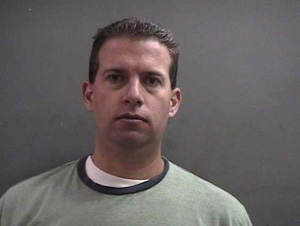
Rapist on patrol: Officer David Alex Park

(Story via smally.)

Last month, in Irvine, California, Officer David Alex Park, stalker and rapist, was acquitted by a jury of eleven men and one woman. He was acquitted, not because he is anything other than a stalker and a rapist–which he as much as admitted in open court, and which was proven well enough anyway by phone records, license plate requests, and DNA evidence. He was acquitted because he is a cop, and the woman that he harassed and sexually extorted danced at a strip club, and so the jury concluded that she made him do it, and besides, if she strips for a living, she must have been asking for it anyway.

You might think that I am exaggerating the defense’s position for polemical effect. No, I’m not. Here’s defense attorney Jim Stokke: She got what she wanted, … She's an overtly sexual person. And in cross-examination of Lucy, the survivor: You do the dancing to get men to do what you what them to do, … And the same thing happened out there on that highway [in Laguna Beach]. You wanted [Park] to take some sex!

Back in the real world, outside of Jim Stokke’s and Officer David Alex Park’s pornographic power-trip succubus fantasies, what actually happened is that a professional cop, while armed and on patrol, used the extensive arbitrary powers that the law grants to police in order to get personal records on several different women at the strip club, picked out the one he liked the best, followed her, waited for the first excuse to use his legally-backed coercive power against her, used the power of his badge and gun to force her to pull over, used that same power to bring her under his custody and keep her there against her will, threatened her with arrest and jail, and then forced her into sex against her will. He didn’t give a damn about what she wanted because she’s just a woman, and an overtly sexual one at that. And he could force what he wanted on her because he’s a cop–so he has the power to restrain and threaten her–and she’s a stripper–so he had every reason to believe that a jury would give him every possible (and some impossible) benefit of the doubt, while they treated her bodily integrity and her consent as worth less than nothing, and blamed her for anything that happened to her, anyway. As, in fact, they did.

As I said about a case with several male cops in San Antonio back in December:

What as at stake here has a lot to do with the individual crimes of three cops, and it’s good to know that the police department is taking that very seriously. But while excoriating these three cops for their personal wickedness, this kind of approach also marginalizes and dismisses any attempt at a serious discussion of the institutional context that made these crimes possible — the fact that each of these three men worked out of the same office on the same shift, the way that policing is organized, the internal culture of their own office and of the police department as a whole, and the way that the so-called criminal justice system gives cops immense power over, and minimal accountability towards, the people that they are professedly trying to protect. It strains belief to claim that when a rape gang is being run out of one shift at a single police station, there’s not something deeply and systematically wrong with that station. If it weren’t for the routine power of well-armed cops in uniform, it would have been much harder for Victor Gonzales, Anthony Munoz, or Raymond Ramos to force their victims into their custody or to credibly threaten them in order to extort sex. If it weren’t for the regime of State violence that late-night patrol officers exercise, as part and parcel of their legal duties, against women in prostitution, it would have been that much harder for Gonzales and Munoz to imagine that they could use their patrol as an opportunity to stalk young women, or to then try to make their victim complicit in the rape by forcing her to pretend that the rape was in fact consensual sex for money. And if it weren’t for the way in which they can all too often rely on buddies in the precinct or elsewhere in the force to back them up, no matter how egregiously violent they may be, it would have been much harder for any of them to believe that they were entitled to, or could get away with, sexually torturing women while on patrol, while in full uniform, using their coercive power as cops.

A serious effort to respond to these crimes doesn’t just require individual blame or personal accountability — although it certainly does require that. It also requires a demand for fundamental institutional and legal reform. If police serve a valuable social function, then they can serve it without paramilitary forms of organization, without special legal privileges to order peaceful people around and force innocent people into custody, and without government entitlements to use all kinds of violence without any accountability to their victims. What we have now is not civil policing, but rather a bunch of heavily armed, violently macho, institutionally privileged gangsters in blue.

— GT 2007-12-21: Rapists on patrol

In Irvine, the same thing is happening all over again–just another Bad Apple causing Yet Another Isolated Incident. Except that in Irvine, the legal system has not even gone so far as to get to the part about individual blame and personal accountability. Overt misogyny against women who dare ever to be overtly sexual, combined with overt authoritarianism in favor of any controlling macho creep with a badge and a gun and a pocketful of wet dreams, have combined to get this admitted sexual predator completely off the hook, and leave all of his old buddies back at the department free to stalk, harass, extort and rape suspect women, with every expectation of more or less complete impunity for their actions.

Christ, but there are days when I hate being proven right about the things I write about.

Further reading:

The purpose of government schools is to train your children to love the government.

And if you don’t like the training that the government is giving them, you can go to prison.

A California appeals court ruling clamping down on homeschooling by parents without teaching credentials sent shock waves across the state this week, leaving an estimated 166,000 children as possible truants and their parents at risk of prosecution.

… The ruling arose from a child welfare dispute between the Los Angeles County Department of Children and Family Services and Philip and Mary Long of Lynwood, who have been homeschooling their eight children. Mary Long is their teacher, but holds no teaching credential.

… The Second District Court of Appeal ruled that California law requires parents to send their children to full-time public or private schools or have them taught by credentialed tutors at home.

California courts have held that … parents do not have a constitutional right to homeschool their children, Justice H. Walter Croskey said in the 3-0 ruling issued on Feb. 28. Parents have a legal duty to see to their children’s schooling under the provisions of these laws.

Parents can be criminally prosecuted for failing to comply, Croskey said.

A primary purpose of the educational system is to train school children in good citizenship, patriotism and loyalty to the state and the nation as a means of protecting the public welfare, the judge wrote, quoting from a 1961 case on a similar issue.

— Bob Egelko and Jill Tucker, San Francisco Chronicle (2008-03-07): Homeschoolers’ setback sends shock waves through state

I suspect that if I knew the people involved in this case, I would have no particular sympathy for Philip Long, who came under the court’s scrutiny in the first place because one of his own children filed a complaint for child abuse and neglect.

If that individual child wants out of the Longs’ homeschooling, or for that matter wants out of the Longs’ home entirely, she or he should be able to get out, without any danger of being locked up, forcibly returned under the state’s Fugitive Child Laws, or getting beaten up by angry adults. Currently, children in the state of California don’t have that freedom. But the right way to address whatever abuse or neglect there may be in the Long family is precisely to recognize and respect that freedom for each individual child, rather than by forcing the parents to place all their children, regardless of what those individual children may want, under the surveillance, supervision, and power of even more adults — government-approved teachers, social workers, and other professional busybodies — with nothing better to recommend them than political connections and a sanctimonious sense of entitlement.

And the solution is certainly not to issue a general ruling claiming that the government has any business at all making sure that all children are indoctrinated to the fullest extent of the law in the government’s own ideas of patriotism and loyalty to the state and the nation. Using the threat of fines and prison in order to force all parents and all children, no matter what their family situation, to participate in a system of government-approved institutionalized schooling, explicitly for the propaganda purpose of training school children to love and serve the existing régime, is a case study in the most vile sort of authoritarian government.

(Via Dan Clore @ LeftLibertarian 2.)

Further reading:

Anticopyright. All pages written 1996–2026 by Rad Geek. Feel free to reprint if you like it. This machine kills intellectual monopolists.