Rad Geek People's Daily

official state media for a secessionist republic of one

Posts filed under Politics

Bureaucratic rationality #2: Government Issue edition


Two deploying soldiers and a concerned mother reported Friday afternoon that the US Army appears to be singling out soldiers who have purchased Pinnacle’s Dragon Skin Body Armor for special treatment. The soldiers, who are currently staging for combat operations from a secret location, reported that their commander told them if they were wearing Pinnacle Dragon Skin and were killed their beneficiaries might not receive the death benefits from their $400,000 SGLI life insurance policies. The soldiers were ordered to leave their privately purchased body armor at home or face the possibility of both losing their life insurance benefit and facing disciplinary action.

… On Saturday morning a soldier affected by the order reported to DefenseWatch that the directive specified that all commercially available body armor was prohibited. The soldier said the order came down Friday morning from Headquarters, United States Special Operations Command (HQ, USSOCOM), located at MacDill Air Force Base, Florida. It arrived unexpectedly while his unit was preparing to deploy on combat operations. The soldier said the order was deeply disturbing to many of the men who had used their own money to purchase Dragon Skin because it will affect both their mobility and ballistic protection.

We have to be able to move. It (Dragon Skin) is heavy, but it is made so we have mobility and the best ballistic protection out there. This is crazy. And they are threatening us with our benefits if we don’t comply. he said.

… Recently Dragon Skin became an item of contention between proponents of the Interceptor OTV body armor generally issued to all service members deploying in combat theaters and its growing legion of critics. Critics of the Interceptor OTV system say it is ineffective and inferior to Dragon Skin, as well as several other commercially available body armor systems on the market. Last week DefenseWatch released a secret Marine Corps report that determined that 80% of the 401 Marines killed in Iraq between April 2004 and June 2005 might have been saved if the Interceptor OTV body armor they were wearing was more effective. The Army has declined to comment on the report because doing so could aid the enemy, an Army spokesman has repeatedly said.

… One of the soldiers who lost his coveted Dragon Skin is a veteran operator. He reported that his commander expressed deep regret upon issuing his orders directing him to leave his Dragon Skin body armor behind. The commander reportedly told his subordinates that he had no choice because the orders came from very high up and had to be enforced, the soldier said. Another soldier’s story was corroborated by his mother, who helped defray the $6,000 cost of buying the Dragon Skin, she said.

The mother of the soldier, who hails from the Providence, Rhode Island area, said she helped pay for the Dragon Skin as a Christmas present because her son told her it was so much better than the Interceptor OTV they expected to be issued when arriving in country for a combat tour.

He didn’t want to use that other stuff, she said. He told me that if anything happened to him I am supposed to raise hell.

… Currently nine US generals stationed in Afghanistan are reportedly wearing Pinnacle Dragon Skin body armor, according to company spokesman Paul Chopra. Chopra, a retired Army chief warrant officer and 20+-year pilot in the famed 160th Nightstalkers Special Operations Aviation Regiment (Airborne), said his company was merely told the generals wanted to evaluate the body armor in a combat environment. Chopra said he did not know the names of the general officers wearing the Dragon Skin.

Pinnacle claims more than 3,000 soldiers and civilians stationed in Iraq and Afghanistan are wearing Dragon Skin body armor, Chopra said. Several months ago DefenseWatch began receiving anecdotal reports from individual soldiers that they were being forced to remove all non-issue gear while in theater, including Dragon Skin body armor, boots, and various kinds of non-issue ancillary equipment.

— Nathaniel R. Helms, DefenseWatch (2006-01-14): Army Orders Soldiers to Shed Dragon Skin or Lose SGLI Death Benefits (via TruthOut)

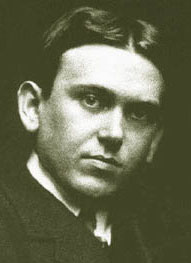
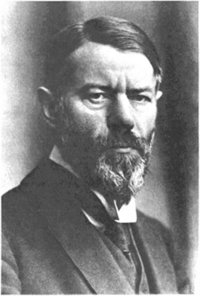
Once again, with apologies to Max Weber, H. L. Mencken, and myself, I think our theoretical lexicon needs revision. Thus:

Bureaucratic rationality, n.: The haunting fear that someone, somewhere, may have something good in their life without authorization.

Rad Money w/ John Brill

One of Mikhaela Reid’s latest cartoons, besides being grimly funny, makes an excellent point about the financial-advice industry: it offers sensible advice for people who have the time, money, security, and leisure to take advantage of it, but nothing beyond moralistic hectoring for those who don’t. (Not that this is the fault of, say, Suze Orman; it’s the fault of the way that comfortable members of the middle and upper classes use the ideas they get from the financial advice industry as another way to bully people who make less than they do.) As Mikhaela glosses it on her website,

I am of course, referencing financial-advice programs like the Suze Orman Show and CNBC’s Mad Money w/ Jim Cramer (a popular show described by Businessweek as Louis Rukeyser meets televangelism meets Pee-wee’s Playhouse). Not that Suze Orman doesn’t have sound financial advice, because she does–budget, save, invest, take realistic vacations, etc. (Jim Cramer, on the other hand, just strikes me as off his rocker, telling people to invest in crazy random stocks, but hey, what do I know?)

All of that is all very well for middle-class people (although maybe not as well as it could be when you think about college tuition and other skyrocketing costs). But there’s only so much people can do personally when they’re in really, truly horrible money situations and the social safety net has been pulled out from under them (see How Tax Cuts for the Rich Can Help You!).

With cuts to federal student aid, health-care programs, child-care programs, retirement programs, etc., the burden falls more and more on individuals. We hear more and more about individual responsibility to save for health-care, for retirement, for college. But you know what? When you make barely enough to feed your family, that’s a goddamned cruel joke. Expecting people who can hardly pay their rent in the moment to put away for the future is just bizarre. The math just doesn’t add up. There’s only so far you can squeeze a penny.

And these same jerks in the Bush Administration and Congress who are cutting the social safety net (didn’t they learn ANYTHING about poverty from the aftermath of Hurricane Katrina?) are happy to spend billions on the Pentagon, which then uses the money that could have gone to education and sound investments in the future of our country to bomb the crap out of innocent civilians in Iraq.

— Mikhaela’s News Blog (2006-01-15): New Cartoon: $AD MONEY! w/ Susie Poorman!

All of that’s true, of course. And well taken. But of course it leaves open the question: now what do we do about it?

One option that’s always available is to despair and do nothing. This seems, in fact, to be one of the most popular plans among professional-class Progressives who don’t actually need to worry about these issues in their everyday lives. Actually, that’s not a bad plan for them to follow; I’d be quite happy if all the Progressives out there kept doing nothing, given what happened the last time Progressives got enthusiastic and active. But not everyone has that luxury, so let’s move on.

Another option is that you could get back into the lists and fight to recover the alleged government protections that have been lost: more social welfare programs, more regulations demanding that bosses give such-and-such benefits or such-and-such a wage to workers, repeal of free trade agreements, nationalized medicine, or whatever your bag is. But besides having any number of moral and economic objections to these ideas, I also just think that this is unworkable advice for people who don’t have the money, time, security, or leisure to get involved in politics. If the kind of advice that Suzy Orman has to offer isn’t going to get you very far in personal finance when you’re living on the minimum wage, it’s not going to get you very far in politics either, because politicians respond to political pull, and rich people have more resources for buying political pull than you do. The welfare programs that you do get out of a strategy like this typically amount to little more than the bait on the steel trap of social control (government schooling, to take one obvious example; the government-sponsored dead-end employment agency known as TANF to take another). And what politicians give, they can easily take away, as recent experience shows. The labor regulations that you get, when you get anything at all, are no less easily taken away, and also usually amount to yet another silver cord to bind workers to the bosses. (These days a lot is made of the fact that boss-provided medical coverage and pensions are in a state of crisis. That’s true. It might help demonstrate why the tax and regulatory structure that encouraged workers to depend on the bosses for their pensions and medical insurance was a bad idea to begin with.)

So, fellow workers, here’s my financial planning advice for you. Planning, investing, and saving is as important for folks working at or near the minimum wage as it is for the comfortable and the wealthy, but a different situation means different strategies. My suggestion is that you invest in membership dues for a fighting union, plan on firing your boss, and save yourself from depending on the milder sentiments of corporate or government bureaucrats for your money, your raise, your benefits, or your retirement. Let’s call it the John Brill Working-Class Rad Money Plan.

Like any other financial planning advice program, this one needs some Real Life Success Stories. Need a raise? Immokalee farm-workers joined a fighting union, and that’s what it got them. Need more money and a better benefits package? New York transit workers joined a fighting union, and that’s what they got.

But that’s not all, either. Here’s a couple of new stories. Neal Rysdahl joined a fighting union, and here’s what it did for him:

On January 14, 2005, members of the Chicago General Membership Branch of the Industrial Workers of the World labor union (IWW) called for an informational picket to boycott the Ideal Hand Car Wash in Chicago’s Albany Park neighborhood after the managers and owners of the business refused to pay Neal Rysdahl, a longtime member of the IWW, the $227.50 he was owed for over 45 hours of work he preformed for them.

The highly visible protest began at 8 AM, with a small but dedicated group of picketers banging bucket drums, shaking noisemakers, passing out leaflets, and carrying signs reading, Ideal Car Wash Cheats Workers, and An Injury to One is an Injury to All! Notably, one picketer dressed in a clown costume held a sign reading, Ideal Bosses Are Bozos! to mock the clown Ideal usually uses to attract customers.

Humboldt Park Food Not Bombs showed up to serve bread, pastry, hummus, and coffee, and joined in the picket. I knew this was an important picket to support because it was an opportunity to make a real difference in someone’s life through direct action, said Robert Clack, a member of Humboldt Park Food Not Bombs.

The picket effectively shut down business at the car wash for the morning, as most drivers who intended to patronize Ideal drove away after talking with picketers or seeing signs blasting the business for unfair labor practices.

After only three hours of picketing, Eduardo Eddie Amanero, a manager of the car wash, agreed to pay Rysdahl in full, in cash, on the spot, in order to bring an end to the picket.

The point of all this is, if you mess with one of us, you mess with all of us, said Patrick Brenner, a members of the National Executive Board of the IWW. We stick up for our members.

… When asked what he was going to do with his back wages, Rysdahl said, I’m going to catch up on some debts. And, of course, I’m going to pay all of the back dues I owe to the IWW!

— Industrial Workers of the World (2006-01-15): Direct Action Gets the Goods! – IWW Chicago Victory for Unpaid Worker

And it’s important to remember that the success of the Brill Plan doesn’t depend on filling out the right set of forms. Of course a formalized union structure can help, but it isn’t necessary. The Brill Plan works from the bottom up; it begins when you get to know your fellow workers and agree to stand by each other. With no formal union and no government recognition, Wal-Mart employees in Florida still made a fighting union of their own, and here’s what it did for them:

In central Florida, Wal-Mart workers are fighting and sometimes winning campaigns using collective action to solve both shop floor and larger industry-wide problems.

In one rural Florida town, over 20 percent of workers in the local Wal-Mart had their hours cut. In response, workers went into their community with a petition to reinstate the workers’ lost hours, and collected 390 signatures in three days. Their hours were returned.

In South St. Petersburg, a popular third-shift employee was accused of theft and fired. The next day, half the day shift quit in protest. In another store, 20 workers marched on management after a 70-year-old workplace leader had her schedule changed. Her schedule was returned within days.

Several workers rode their bikes to work even though Wal-Mart didn’t provide a bike rack. With some co-workers, they demanded management buy a bike rack. When management refused, they bought a rack with their own money and demanded that management install it. Management gave in, and donated the cost of the rack to a local charity.

These actions were initiated and led by members of the Wal-Mart Workers Association (WWA), a growing group of 300 current and former Wal-Mart workers in over 40 stores.

This is a protest movement of Wal-Mart workers uniting to make their lives better at work and in their communities, said Rick Smith, WWA organizer and Florida director of the Wal-Mart Association for Reform Now (WARN), a coalition of labor, community, homeowner, and anti-poverty groups. It’s about Wal-Mart workers sticking together, honoring their work, arranging carpools, and providing child care for each other.

Non-majority unions such as the WWA don’t wait for a court to license workers’ use of collective action. They harness that anger and ingenuity to both win day-to-day victories and launch longer-term pressure campaigns. The strategy has roots in industries in which union recognition is rare: retail chain workers, state workers, and computer programmers and manufacturers.

We have the right to organization, regardless of what the boss or the state do, said Smith.

Infoshop News (2006-01-03): Even Without a Union, Florida Wal-Mart Workers Use Collective Action to Enforce Rights

There’s only so far you can squeeze a penny, but a fighting union means more dollars to squeeze or spend as you see fit. The Brill Plan works. When workers stand together, workers win. So if you’re working for a living and barely scraping by, the best financial advice that I can offer is: stop being sad and start getting rad.

MLK Monday #2

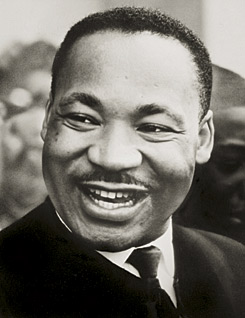
Today is Martin Luther King Jr. Day, a day to honor the life and the thought of Dr. King — a hagiographed, ignored, misunderstood, overrated, and indispensable man; one of our greatest Southern heroes; an agitator and a moral witness who gave long years of his life to the cause of the Freedom Movement, and who — underneath the television specials and the holy martyr imagery that so often serves to obscure and empty out his real, fallible, challenging, essential vision — played a vital role (together with Ella Baker, Fannie Lou Hamer, Rosa Parks, and countless others) in changing the world for the better, within living memory. If he were not taken from us, Dr. King would have celebrated his 77th birthday yesterday.

Most of what I want to say today, I said last year, in GT 2005-01-17: MLK Monday. So, instead of repeating myself, I link; and having linked, I step aside for the man himself.

I have been so greatly disappointed with the white church and its leadership. … I say it as a minister of the gospel, who loves the church; who was nurtured in its bosom; who has been sustained by its spiritual blessings and who will remain true to it as long as the cord of life shall lengthen. … In spite of my shattered dreams of the past, I came to Birmingham with the hope that the white religious leadership of this community would see the justice of our cause, and with deep moral concern, serve as the channel through which our just grievances would get to the power structure. I had hoped that each of you would understand. But again I have been disappointed. I have heard numerous religious leaders of the South call upon their worshippers to comply with a desegregation decision because it is the law, but I have longed to hear white ministers say, follow this decree because integration is morally right and the Negro is your brother. In the midst of blatant injustices inflicted upon the Negro, I have watched white churches stand on the sideline and merely mouth pious irrelevancies and sanctimonious trivialities.

— Martin Luther King Jr., Letter from Birmingham Jail

And also:

We know through painful experience that freedom is never voluntarily given by the oppressor; it must be demanded by the oppressed. Frankly, I have never yet engaged in a direct action movement that was well timed, according to the timetable of those who have not suffered unduly from the disease of segregation. For years now I have heard the words Wait! It rings in the ear of every Negro with a piercing familiarity. This Wait has almost always meant Never. We must come to see with the distinguished jurist of yesterday that justice too long delayed is justice denied.

We have waited for more than three hundred and forty years for our constitutional and God-given rights. The nations of Asia and Africa are moving with jet-like speed toward the goal of political independence, and we still creep at horse and buggy pace toward the gaining of a cup of coffee at a lunch counter. I guess it is easy for those who have never felt the stinging darts of segregation to say, Wait. But when you have seen vicious mobs lynch your mothers and fathers at will and drown your sisters and brothers at whim; when you have seen hate filled policemen curse, kick, brutalize and even kill your black brothers and sisters with impunity; when you see the vast majority of your twenty million Negro brothers smothering in an airtight cage of poverty in the midst of an affluent society; when you suddenly find your tongue twisted and your speech stammering as you seek to explain to your six-year-old daughter why she can’t go to the public amusement park that has just been advertised on television, and see tears welling up in her eyes when she is told that Funtown is closed to colored children, and see the depressing clouds of inferiority begin to form in her little mental sky, and see her begin to distort her little personality by unconsciously developing a bitterness toward white people; when you have to concoct an answer for a five-year-old son asking in agonizing pathos: Daddy, why do white people treat colored people so mean?; when you take a cross-country drive and find it necessary to sleep night after night in the uncomfortable corners of your automobile because no motel will accept you; when you are humiliated day in and day out by nagging signs reading white and colored; when your first name becomes nigger, your middle name becomes boy (however old you are) and your last name becomes John, and your wife and mother are never given the respected title Mrs.; when you are harried by day and haunted by night by the fact that you are a Negro, living constantly at tip-toe stance never quite knowing what to expect next, and plagued with inner fears and outer resentments; when you are forever fighting a degenerating sense of nobodiness; then you will understand why we find it difficult to wait. There comes a time when the cup of endurance runs over, and men are no longer willing to be plunged into an abyss of despair. I hope, sirs, you can understand our legitimate and unavoidable impatience.

You express a great deal of anxiety over our willingness to break laws. This is certainly a legitimate concern. Since we so diligently urge people to obey the Supreme Court’s decision of 1954 outlawing segregation in the public schools, it is rather strange and paradoxical to find us consciously breaking laws. One may well ask: How can you advocate breaking some laws and obeying others? The answer is found in the fact that there are two types of laws: There are just and there are unjust laws. I would be the first to advocate obeying just laws. One has not only a legal but a moral responsibility to obey just laws. Conversely, one has a moral responsibility to disobey unjust laws. I would agree with Saint Augustine that An unjust law is no law at all.

Now, what is the difference between the two? How does one determine when a law is just or unjust? A just law is a man-made code that squares with the moral law or the law of God. An unjust law is a code that is out of harmony with the moral law. To put it in the terms of Saint Thomas Aquinas, an unjust law is a human law that is not rooted in eternal and natural law. Any law that uplifts human personality is just. Any law that degrades human personality is unjust. All segregation statutes are unjust because segregation distorts the soul and damages the personality. It gives the segregator a false sense of superiority, and the segregated a false sense of inferiority. To use the words of Martin Buber, the Jewish philosopher, segregation substitutes and I-it relationship for an I-thou relationship, and ends up relegating persons to the status of things. So segregation is not only politically, economically and sociologically unsound, but it is morally wrong and sinful. Paul Tillich has said that sin is separation. Isn’t segregation an existential expression of man’s tragic separation, an expression of his awful estrangement, his terrible sinfulness? So I can urge men to disobey segregation ordinances because they are morally wrong.

I must make two honest confessions to you, my Christian and Jewish brothers. First, I must confess that over the last few years I have been gravely disappointed with the white moderate. I have almost reached the regrettable conclusion that the Negro’s great stumbling block in the stride toward freedom is not the White Citizen’s Counciler or the Ku Klux Klanner, but the white moderate who is more devoted to order than to justice; who prefers a negative peace which is the absence of tension to a positive peace which is the presence of justice; who constantly says I agree with you in the goal you seek, but I can’t agree with your methods of direct action; who paternalistically feels he can set the timetable for another man’s freedom; who lives by the myth of time and who constantly advises the Negro to wait until a more convenient season. Shallow understanding from people of goodwill is more frustrating than absolute misunderstanding from people of ill will. Lukewarm acceptance is much more bewildering than outright rejection.

I had hoped that the white moderate would understand that law and order exist for the purpose of establishing justice, and that when they fail to do this they become dangerously structured dams that block the flow of social progress. I had hoped that the white moderate would understand that the present tension in the South is merely a necessary phase of the transition from an obnoxious negative peace, where the Negro passively accepted his unjust plight, to a substance-filled positive peace, where all men will respect the dignity and worth of human personality. Actually, we who engage in nonviolent direct action are not the creators of tension. We merely bring to the surface the hidden tension that is already alive. We bring it out in the open where it can be seen and dealt with. Like a boil that can never be cured as long as it is covered up but must be opened with all its pus-flowing ugliness to the natural medicines of air and light, injustice must likewise be exposed, with all of the tension its exposing creates, to the light of human conscience and the air of national opinion before it can be cured. …

… You spoke of our activity in Birmingham as extreme. At first I was rather disappointed that fellow clergymen would see my nonviolent efforts as those of the extremist. … But as I continued to think about the matter I gradually gained a bit of satisfaction from being considered an extremist. Was not Jesus an extremist for love — Love your enemies, bless them that curse you, pray for them that despitefully use you. Was not Amos an extremist for justice — Let justice roll down like waters and righteousness like a mighty stream. Was not Paul an extremist for the gospel of Jesus Christ — I bear in my body the marks of the Lord Jesus. Was not Martin Luther an extremist — Here I stand; I can do none other so help me God. Was not John Bunyan an extremist — I will stay in jail to the end of my days before I make a butchery of my conscience. Was not Abraham Lincoln an extremist — This nation cannot survive half slave and half free. Was not Thomas Jefferson an extremist — We hold these truths to be self-evident, that all men are created equal. So the question is not whether we will be extremist but what kind of extremist will we be. Will we be extremists for hate or will we be extremists for love? Will we be extremists for the preservation of injustice–or will we be extremists for the cause of justice? In that dramatic scene on Calvary’s hill, three men were crucified. We must not forget that all three were crucified for the same crime–the crime of extremism. Two were extremists for immorality, and thusly fell below their environment. The other, Jesus Christ, was an extremist for love, truth and goodness, and thereby rose above his environment. So, after all, maybe the South, the nation and the world are in dire need of creative extremists.

— Martin Luther King Jr., Letter from Birmingham Jail

Elsewhere

  • GT 2005-01-17: MLK Monday: this is, as I mentioned, what I wrote last year. I still kind of like it.

  • Austro-Athenian Empire 2006-01-15: Happy Actual Birthday: Roderick remembers King on just and unjust laws.

  • Negro Please 2006-01-16: Repost in Honor of MLK, Jr. Day reposts his excellent tribute from two years ago

  • Pseudo-Adrienne 2006-01-16: Remembering Him: Never forget them, never forget him, and never forget what he struggled and died for. The dream that we would live in a color blind society and there would be racial equality. How far have we come? Or was Dr. King’s dream unfortunately just that, a dream, and therefore– given America’s ugly history of perpetuating racism and even sexism and other forms of bigotry sanctioned by the law– too fanciful to achieve. Nonetheless, the man was on one of the twentieth century’s greatest orators and noble leaders, and symbols of justice, racial equality, and freedom.

  • Chris Johanesen 2006-01-16: King’s Dream Still a Dream: Every Martin Luther King Jr day, whites all over the nation drag out King’s 1963 I Have a Dream, speech and pat themselves on the back about how far we’ve come as a just society. I suggest we try one of his other speeches for a change, Where Do We Go From Here?, from 1967: . . . I’m not saying we haven’t made progress since 1967–we surely have–but I would argue that we still have a very long way to go before we get anywhere near to realizing Dr. King’s dream.

  • Black Looks 2006-01-16: Martin Luther King Day: a wonderful, meditative photo of King, and a pointer to further discussion: The legacy of Martin Luther King is discussed in this weeks Black Commentator. The promised land and why we are still waiting by Anthony Asadullah Samad.

  • Echidne of the Snakes 2006-01-16: Messages from Martin Luther King remembers him through his words, including: Our lives begin to end the day we become silent about things that matter, and Nothing in all the world is more dangerous than sincere ignorance and conscientious stupidity.

  • Ed Brayton, Positive Liberty 2006-01-16: Martin Luther King’s Dream: … I cannot listen to King’s I Have A Dream speech without getting goosebumps. It is one of the most inspirational speeches you will ever hear …, made more so in my view because of his invocation of the Declaration of Independence as a promissory note. … I can’t even read those words on a page without getting goosebumps. American history, as I have often said, is largely the story of perpetually extending the principles found in the Declaration to cover more and more people. It should have been enough 230 years ago to cover everyone, but change is slow and sometimes it takes a long time for the true implications of our stated principles to rise to the top. It rose through the bravery and sacrifice of Elizabeth Cady Stanton and Susan B. Anthony and so many others, through the bravery and sacrifice of Martin Luther King and Malcolm X and so many others, just as today it continues to rise through the efforts of millions of people to bring equality and liberty to so many gay Americans who are still denied the basic dignities that the rest of us take for granted. Let freedom ring, indeed.

  • Dr. B’s Blog 2006-01-16: Lest you thought I forgot: The struggle continues!

  • David T. Beito, Liberty and Power 2006-01-16: King, Marx, and Statism: Last January, I put up these statements from Martin Luther King, Jr. in his book, Stride Toward Freedom: The Montgomery Story published in 1957, but they are well worth repeating … This deprecation of individual freedom was objectionable to me. I am convinced now, as I was then, that man is an end because he is a child of God. Man is not made for the state; the state is made for man. To deprive man of freedom is to relegate him to the status of a thing, rather than elevate him to the status of a person. Man must never be treated as means to the end of the state; but always as an end within himself.

  • to the barricades 2006-01-16: The speech that unfortunately never loses its relevance: Martin Luther King Jr, Beyond Vietnam.

  • Christine C., PopPolitics.com 2006-01-16: Remembering MLK, in Words and Images: I’ve just returned from lunch with a former priest from Chicago who marched in Selma and Montgomery with Martin Luther King Jr. He vividly recalled the hoof marks embedded in the Capitol lawn from police horses brought in to scare the marchers. He spoke of receiving King’s blessing before kneeling on the first two steps of the Capitol in prayer — a prayer that had to be negotiated with police, as the group was prohibited from moving even one step higher (though one priest suggested they make a break for it and run to the top). Driving between Montgomery and Birmingham in a convertible with black and white priests, they were stopped at a highway roadblock. They were eventually let through, but the fear he felt that day is still evident, more than 40 years later.

  • Fighting for a Lost Cause.net 2006-01-16: We’re still killing our prophets quotes Stephen Oates’s biography, telling the story of King’s final hours, memorial, and funeral.

  • Frank Newport, Gallup Polls 2006-01-16: Martin Luther King Jr.: Revered More After Death Than Before offers some interesting statistics about how King was thought of at the time and how he is thought of today. You’ll also find some interesting statistical grist for the mill if you want to think about the politics of popular admiration. It also ought to remind you that, in the midst of all the very public demonstrations of affection for King from the white moderates and even the hard Right, how genuinely challenging and polarizing his struggle — against racism, and poverty, and imperial war — was. (And still is, when it is actually taken seriously.)

  • Remember Segregation: a vivid memorial to Dr. King and the victims of segregation in the Jim Crow South

  • Slate 2006-01-16: Zoom In: Celebrating Martin Luther King, a retrospective photo essay.

  • Martin Luther King, Jr. Papers Project features printed volumes, electronic copies, and audio and video files of many of King’s essays, sermons and speeches.

Coda

It’s astonishing to realize that everything Dr. King was a part of, and everything he spoke out against, struggled against, and, in some tremendous cases, defeated, was happening while my parents were in college, just about 40 years ago. To think of what Dr. King’s efforts, and the efforts of the countless heroes–those whose names we know and the thousands of ordinary people who haven’t made it into the books or the teevee specials–have meant for the world in those few years. Yes, we are living through dark days, but think of what it was like just within our memory or the memory of our parents. As Dr. King put it: Let us remember that the arc of the Universe is long, but it bends toward justice.

I hope so. Happy MLK Day, y’all.

Over My Shoulder #6: Oliver Sacks’s Seeing Voices

You know the rules. Here’s the quote. This is from Oliver Sacks’s Seeing Voices: A Journey into the World of the Deaf (1989). I broke the rules a bit here: rather than a single passage of a few paragraphs, I have two, because the latter one reinforces one of the important points of the former, and also because it’s damn near impossible to pick out any one thing that is the most interesting from the chapter. So here goes:

The situation of the prelingually deaf, prior to 1750, was indeed a calamity: unable to acquire speech, hence dumb or mute; unable to enjoy free communication with even their parents and families; confined to a few rudimentary signs and gestures; cut off, except in large cities, even from the community of their own kind; deprived of literacy and education, all knowledge of the world; forced to do the most menial work; living alone, often close to destitution; treated by the law and society as little better than imbeciles–the lot of the deaf was manifestly dreadful.

But what was manifest was as nothing to the destitution inside–the destitution of knowledge and thought that prelingual deafness could bring, in the absence of any communication or remedial measures. The deplorable state of the deaf aroused both the curiosity and the compassion of the philosophes. Thus the Abbé Sicard asked:

Why is the uneducated deaf person isolated in nature and unable to communicate with other men? Why is he reduced to this state of imbecility? Does his biological constitution differ from ours? Does he not have everything he needs for having sensations, acquiring ideas, and combining them to do everything that we do? Does he not get sensory impressions from objects as we do? Are these not, as with us, the occasion of the mind’s sensations and its acquired ideas? Why then does the deaf person remain stupid while we become intelligent?

To ask this question–never really clearly asked before–is to grasp its answer, to see that the answer lies in the use of symbols. It is, Sicard continues, because the deaf person has no symbols for fixing and combining ideas … that there is a total communication-gap between him and other people. But what was all-important, and had been a source of fundamental confusion since Aristotle’s pronouncements on the matter, was the enduring misconception that symbols had to be speech. Perhaps indeed this passionte misperception, or prejudice, went back to biblical days: the subhuman status of mutes was part of the Mosaic code, and it was reinforced by the biblical exaltation of voice and ear as the one and true way in which man and God could speak (In the beginning was the Word). And yet, overborne by Mosaic and Aristotelian thunderings, some profound voices intimated that this need not be so. Thus Socrates’ remark in the Cratylus of Plato, which so impressed the youthful Abbé de l’Epée:

If we had neither voice nor tongue, and yet wished to manifest things to one another, should we not, like those which are at present mute, endeavour to signify our meaning by the hands, head, and other parts of the body?

Or the deep, yet obvious, insights of the philosopher-physician Cardan in the sixteenth century:

It is possible to place a deaf-mute in a position to hear by reading, and to speak by writing … for as different sounds are conventionally used to signify different things, so also may the various figures of objects and words …. Written characters and ideas may be connected without the intervention of actual sounds.

In the sixteenth century the notion that the understanding of ideas did not depend upon the hearing of words was revolutionary.

But it is not (usually) the ideas of philosophers that change reality; nor, conversely, is it the practice of ordinary people. What changes history, what kindles revolutions, is the meeting of the two. A lofty mind–that of the Abbé de l’Epée–had to meet a humble usage–the indigenous sign language of the poor deaf who roamed Paris–in order to make possible a momentous transformation. If we ask why this meeting had not occurred before, it has something to do with the vocation of Abbé, who could not bear to think of the souls of the deaf-mute living and dying unshriven, deprived of the Catechism, the Scriptures, the Word of God; and it is partly owing to his humility–that he listened to the deaf–and partly to a philosophical and linguistic idea then very much in the air–that of universal language, like the speceium of which Leibniz dreamed. Thus, de l’Epée approached sign language not with contempt but with awe.

The universal language that your scholars have sought for in vain and of which they have despaired, is here; it is right before your eyes, it is the mimicry of the impoverished deaf. Because you do not know it,you hold it in contempt, yet it alone will provide you with the key to all languages.

That this was a misapprehension–for sign language is not a universal language in this grand sense, and Leibniz’s noble dream was probably a chimera–did not matter, was even an advantage. For what mattered was that the Abbé paid minute attention to his pupils, acquired their language (which had scarcely ever been done by the hearing before). And then, by associating signs with pictures and written words, he taught them to read; and with this, in one swoop, he opened to them the world’s learning and culture. De l’Epée’s system of methodical signs–a combination of their own Sign with signed French grammar–enabled deaf students to write down what was said to them through a signing interpreter, a method so successful that, for the first time, it enabled ordinary deaf pupils to read and write French, and thus acquire an education. His school, founded in 1755, was the first to achieve public support. He trained a multitude of teachers for the deaf, who, by the time of his death in 1789, had established twenty-one schools for the deaf in France and Europe. The future of de l’Epée’s own school seemed uncertain during the turmoil of the revolution, but by 1791 it had become the National Institution for Deaf-Mutes in Paris, headed by the brilliant grammarian Sicard. De l’Epée’s own book, as revolutionary as Copernicus’ in its own way, was first published in 1776.

De l’Epée’s book, a classic, is available in many languages. But what have not been available, have been virtually unknown, are the equally important (and, in some ways, even more fascinating) original writings of the deaf–the first deaf-mutes ever able to write. Harlan Lane and Franklin Philip have done a great service in making these so readily available to us in The Deaf Experience. Especially moving and important are the 1779 Observations of Pierre Desloges–the first book to be published by a deaf person–now available in English for the first time. Desloges himself, deafened at an early age, and virtually without speech, provides us first with a frightening description of the world, or unworld, of the languageless.

At the beginning of my infirmity, and for as long as I was living apart from other deaf people … I was unaware of sign language. I used only scattered, isolated, and unconnected signs. I did not know the art of combining them to form distinct pictures with which one can represent various ideas, transmit them to one’s peers, and converse in logical discourse.

Thus Desloges, though obviously a highly gifted man, could scarcely entertain ideas, or engage in logical discourse, until he had acquired sign language (which, as is usual with the deaf, he learned from someone deaf, in his case from an illiterate deaf-mute).

–Oliver Sacks (1989), Seeing Voices: A Journey into the World of the Deaf, pp. 13–18.

And:

When Laurent Clerc (a pupil of Massieu, himself a pupil of Sicard) came to the United States in 1816, he had an immediate and extraordinary impact, for American teachers up to this point had never been exposed to, never even imagined, a deaf-mute of impressive intelligence and education, had never imagined the possibilities dormant in the deaf. With Thomas Gallaudet, Clerc set up the American Asylum for the Deaf, in Hartford, in 1817. As Paris–teachers, philosophes, and public-at-large–was moved, amazed, converted by de l’Epée in the 1770s, so America was to be converted fifty years later.

The atmosphere at the Hartford Asylum, and at other schools soon to be set up, was marked by the sort of enthusiasm and excitement only seen at the start of grand intellectual and humanitarian adventures. The prompt and spectacular success of the Hartford Asylum soon led to the opening of other schools wherever there was sufficient density of population, and thus of deaf students. Virtually all the teachers of the deaf (nearly all of whom were fluent signers and many of whom were deaf) went to Hartford. The French sign system imported by Clerc rapidly amalgamated with the indigenous sign languages here–the deaf generate sign languages wherever there are communities of deaf people; it is for them the easiest and most natural form of communication–to form a uniquely expressive and powerful hybrid, American Sign Language (ASL). A special indigenous strength–presented convincingly by Nora Ellen Groce in her book, Everyone Here Spoke Sign Language–was the contribution of Martha’s Vineyard deaf to the development of ASL. A substantial minority of the population there suffered from a hereditary deafness, and most of the island had adopted an easy and powerful sign language. Virtually all the deaf of the Vineyard were sent to the Hartford Asylum in its formative years, where they contributed to the developing national language the unique strength of their own.

One has, indeed, a strong sense of pollination, of people coming to and fro, bringing regional languages, with all their idiosyncracies and strengths, to Hartford, and taking back an increasingly polished and generalized language. The rise of deaf literacy and deaf education was as spectacular in the United States as it had been in France, and soon spread to other parts of the world.

Lane estimates that by 1869 there were 550 teachers of the deaf worldwide and that 41 percent of the teachers of the deaf in the United States were themselves deaf. In 1864 Congress passed a law authorizing the Columbia Institution for the Deaf and the Blind in Washington to become a national deaf-mute college, the first institution of higher learning specifically for the deaf. Its first principal was Edward Gallaudet–the son of Thomas Gallaudet, who had brought Clerc to the United States in 1816. Gallaudet College, as it was later rechristened (it is now Gallaudet University), is still the only liberal arts college for deaf students in the world–though there are now several programs and institutes for the deaf associated with technical colleges. (The most famous of these is at the Rochester Institute of Technology, where there are more than 1,500 deaf students forming the National Technical Institute for the Deaf.)

The great impetus of deaf education and liberation, which had swept France between 1770 and 1820, thus continued its triumphant course in the United States until 1870 (Clerc, immensely active to the end and personally charismatic, died in 1869). And then–and this is the turning point in the entire story–the tide turned, turned against the use of Sign by and for the deaf, so that within twenty years the work of a century was undone.

Indeed, what was happening with the deaf and sign was part of a general (and if one wishes, political) movement of the time: a trend to Victorian oppressiveness and conformism, intolerance of minorities, and minority usages, of every kind–religious, linguistic, ethnic. Thus it was at this time that the little nations and little languages of the world (for example, Wales and Welsh) found themselves under pressure to assimilate and conform.

–Oliver Sacks (1989), Seeing Voices: A Journey into the World of the Deaf, pp. 21–24.

In Their Own Words: Golden Weasel Award edition

Most of this I heard on the radio yesterday evening. I add only (1) that there are no good reasons to care about constitutionality, but lots of good reasons to care about likely case law on the right of privacy, and (2) that it’s impossible to adequately convey such an oily, palavering voice in print.

DURBIN: The reason I asked you about those two cases is that neither of those cases referred to explicit language in the Constitution. Those cases were based on concepts of equality and liberty within our Constitution.

And the Griswold case took that concept of liberty and said it means privacy, though the word is not in our Constitution. And the Brown v. Board of Education took the concept of equality, equal protection, and said that means public education will not be segregated. …

Yesterday, when you were asked about one man, one vote, you clarified it. You said those were my views then, they’re not my views now.

When Senator Kohl asked you about the power and authority of elected branches as opposed to others, no; you said I want to clarify that’s not my view now.

And yet, when we have tried to press you on this critical statement that you made in that application, a statement which was made by you that said the Constitution does not protect a right to an abortion, you’ve been unwilling to distance yourself and to say that you disagree with that.

I think this is critically important, because as far as I am concerned, Judge Alito, we have to rely on the Supreme Court to protect our rights and freedom, especially our right to privacy. And for you to say that you’re for Griswold, you accept the constitutional basis for Griswold, but you can’t bring yourself to say there’s a constitutional basis for the right of a woman’s privacy when she is deciding — making a tragic, painful decision about continuing a pregnancy that may risk her health or her life, I’m troubled by that.

Why can you say unequivocally that you find constitutional support for Griswold, unequivocally you find constitutional support for Brown, but cannot bring yourself to say that you find constitutional support for a woman’s right to choose?

ALITO: Brown v. Board of Education, as you pointed out, is based on the equal protection clause of the 14th Amendment. And the 14th Amendment, of course, was adopted and ratified after the Civil War. It talks about equality. It talks about equal protection of the law.

And the principle that was finally recognized in Brown v. Board of Education, after nearly a century of misapplication of the 14th Amendment, is that denying people of a particular race the opportunity to attend schools or, for that matter, to make use of other public facilities that are open to people of a different race denies them equality. They’re not treated the same way — an African-American is not treated the same way as a black (sic) person when they’re treated that way, so they’re denied equality.

And that is based squarely on the language of the equal protection clause and the principle, the heart of the principle that was — the magnificent principle that emerged from this great struggle that is embodied in the equal protection clause.

Griswold concerned the marital right to privacy. And when the decision was handed down, it was written by Justice Douglas. And he based that on his theories of his theory of emanations and penumbras from various constitutional provisions: the Ninth Amendment and the Fourth Amendment and a variety of others.

But it has been understood in later cases, as based on the due process clause of the Fourteenth Amendment, which says that no persons shall be denied due process — shall be denied liberty without due process of law.

And that’s my understanding of it. And the issue that was involved in Griswold, the possession of contraceptives by married people, is not an issue that is likely to come before the courts again.

It’s not likely to come before the 3rd Circuit; it’s not likely to come before the Supreme Court. So, I feel an ability to comment — a greater ability to comment on that than I do on an issue that is involved in litigation.

What I have said about Roe is that if it were — if the issue were to come before me, if I’m confirmed and I’m on the Supreme Court and the issue comes up, the first step in the analysis for me would be the issue of stare decisis. And that would be very important.

The things that I said in the 1985 memo were a true expression of my views at the time from my vantage point as an attorney in the Solicitor General’s office. But that was 20 years ago and a great deal has happened in the case law since then.

Thornburg was decided and Webster and then Casey and a number of other decisions. So the stare decisis analysis would have to take account of that entire line of case law.

And then if I got beyond that, I would approach the question. And of course, in Casey, that was that was the beginning and the ending point of the analysis in the joint opinion.

If I were to get beyond that, I would approach that question the way I approach every legal issue that I approach as a judge, and that is to approach it with an open mind and to go through the whole judicial process, which is designed, and I believe strongly in it, to achieve good results, to achieve good decision-making.

— CQ Transcriptions (2006-01-11): U.S. Senate Judiciary Committee Hearing on Judge Samuel Alito’s Nomination to the Supreme Court

Later the same day, from the other side of the aisle:

BROWNBACK: … Judge Alito, the Supreme Court has gotten a number of things wrong at times, too.

That would be correct. And the answer, when the court gets things wrong, is to overturn the case.

Is that — that’s the way it works, isn’t that correct?

ALITO: Well, when the court gets something wrong, and there’s a prior precedent, then you have to analyze the doctrine of stare decisis. It is an important doctrine, and I have said a lot about it…

BROWNBACK: Let me just ask you, is Plessy wrong, Plessy v. Ferguson?

ALITO: Plessy was certainly wrong.

BROWNBACK: OK. I mean, and you have gone through this.

Brown v. Board of Education, which is in my hometown of Topeka, Kansas — I was there last year at the dedication of the school house, 50 years ago — that overturned Plessy.

Plessy had stood on the books since 1896. I don’t know if you knew the number. And I’ve got a chart up here. It was depended upon by a number of people for a long period of time.

You’ve got it sitting on the books for 60 years, twice the length of time of Roe v. Wade. You’ve got these number of cases that considered Plessy and upheld Plessy to the dependency.

And yet Brown comes along, 1950s case, poor little girl has to walk by the all-white school to go to the black school in Topeka, Kansas. And the court looks at this and they say, unanimously, that’s just not right.

Now, stare decisis would say in the Brown case you should uphold Plessy. Is that correct?

ALITO: It was certainly — would be a factor that you would consider in determining whether to overrule it.

BROWNBACK: But obviously…

ALITO: Doctrine that would consider.

BROWNBACK: Obviously, Brown overturned it, and thank goodness it did. Correct?

ALITO: Certainly.

BROWNBACK: It overturned all these super-duper precedents that had been depended upon in this case, because the court got it wrong in Plessy.

BROWNBACK: Is that correct?

ALITO: The court certainly got it wrong in Plessy, and it got it spectacularly wrong in Plessy. And it took a long time for that erroneous decision to be overruled.

One of the things, I think, that people should have understood that separate facilities, even if they were absolutely equal in every respect, even if they were identical, could never give people equal treatment under the law.

BROWNBACK: They don’t.

ALITO: I think they should have recognized that.

But one of the things that was illustrated in those cases — and Sweatt v. Painter, the last one on the list, brought that out — was that, in fact, the facilities, the supposedly equal facilities, were never equal.

And the continuing series of litigation that was brought by the NAACP to challenge racial discrimination illustrated — if illustration was needed, the litigation illustrated that, in fact, the facilities that were supposedly equal were not equal.

And that was an important factor, I think, in leading to the decision in Brown v. Board of Education.

BROWNBACK: I want to give you another number, and that is that in over 200 other cases, the court has revisited and revised earlier judgments. In other words, in some portion or in all the cases, the court got it wrong in some 200 cases. And thank goodness the court’s willing to review various cases.

BROWNBACK: I want to give you an example of a couple, though, that the court hasn’t reviewed yet that I think are spectacularly wrong.

The 1927 case of Buck v. Bell; I don’t know if you’re familiar with that case. The court examined a Virginia statute that permitted the sterilization of the mentally impaired. Buck, a patient at the so-called Virginia State Colony for Epileptics and Feebleminded, was scheduled to be sterilized after doctors alleged that she was a genetic threat to the population due to her diminished mental capacity.

Buck’s guardian challenged the decision to have Carrie sterilized all the way to the Supreme Court, but in an 8-1 decision the court found that it was in the state’s interest to have her sterilized.

Majority opinion written by Justice Oliver Wendell Holmes said, We have seen more than once that the public welfare may call upon the best citizens for their lives. It would be strange if it could not call upon those who already sap the strength of the state for these lesser sacrifices, often not felt to be such by those concerned, in order to prevent our being swamped with incompetents.

Clearly, some precedents are undeserving of respect because they’re repugnant to the Constitution. Isn’t Plessy repugnant to the Constitution?

ALITO: It certainly was repugnant to the equal protection clause.

BROWNBACK: And the vision of human dignity.

Isn’t Buck and those sort of statements by Oliver Wendell Holmes repugnant to the Constitution?

ALITO: I think they are repugnant to the traditions of our country. I don’t think there’s any question about that.

— CQ Transcriptions (2006-01-11): U.S. Senate Judiciary Committee Hearing on Judge Samuel Alito’s Nomination to the Supreme Court

Anticopyright. All pages written 1996–2026 by Rad Geek. Feel free to reprint if you like it. This machine kills intellectual monopolists.