Rad Geek People's Daily

official state media for a secessionist republic of one

Posts filed under Smash the State

The edict of Gary Reese, Mayor Pro Tempore and Vaquero Supreme of the Vegas Valley

As you may recall, Ted Marshall owns a warehouse in downtown Las Vegas. Like many buildings in downtown Las Vegas, Ted Marshall’s warehouse has been repeatedly vandalized by taggers. Like many property-owners in downtown Las Vegas, he covered up the graffiti several times, only to have new taggers come by and paint more on. Then, one day, he found some graffiti on his wall that he kind of liked, and he decided that he wanted to leave that design up on his own building’s wall. So the city of Las Vegas fined him $930 for having graffiti he wanted up on a wall he owns.

Ted Marshall thought this was bull crap: the city government shouldn’t force him to pay to get rid of a design that vandals put up without his permission, and, while we’re at it, the city government shouldn’t force him to pay fines for leaving designs he wants to leave up on his own building. Ted Marshall’s representative on the city council, Mayor Pro Tem Gary Reese, replies:

I don’t want graffiti on any buildings in the city of Las Vegas. He said it was artistic or something, but for me, it’s a crime. For him to stand there and say he’s sick and tired and he’s going to leave it how it is — that’s bull crap.

Please remember that in the view of the Las Vegas city council, what matters is what Mayor Pro Tem Gary Reese does or does not want on buildings in the city of Las Vegas — certainly not what the mere owners of those buildings want or do not want on them.

Mary Price, falsely identified as a spokeswoman for the city of Las Vegas (actually, she speaks for the government, not for the city), adds:

It’s like any other situation where you have property damage, city spokeswoman Mary Ann Price explains. If you had a burned-out building … it creates a hazard. You as the property owner would be responsible for it.

She’s right that this is just like any other situation where you have property damage. As long as a burned-out building, no matter how hazardous, doesn’t actually threaten to damage anybody else’s property, the city government has absolutely no business forcing the property owner to fix that up, either, if she would rather not do so. Why should they?

The Review-Journal‘s editorial board informs us that The whole issue is surprisingly simple, once viewed through the lens of property rights. Indeed it is. The issue here is that Mary Ann Price and Gary Reese — by the grace of Law Mayor Pro Tempore, Defender of Order, and Vaquero Supreme of the Vegas Valley — believe that the whole city of Las Vegas is their own rightful property, by concession of the sovereign state and federal governments, which the supposed owners of land and buildings really only lease on Gary Reese’s terms and at his pleasure. They believe that they have the right to tell you what they do or don’t want to see, how they do or don’t want it used, and who you can or cannot invite to use it, in the name of maintaining what they see as good taste, or good business, or protecting the property values in their personal domains. If you’re not interested in helping them maintain a touch of class with the land or the buildings that you were foolish enough to think you owned, then they tell you that your claim is bull crap, that their opinions about the proper disposal of your building matter far more than yours, and they will send professional busybodies and armed thugs to inform you of your responsibilities, then to harass you, shove you around, fine you, and ultimately to jail you or kill you if you should resist their efforts to collect.
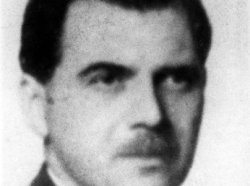
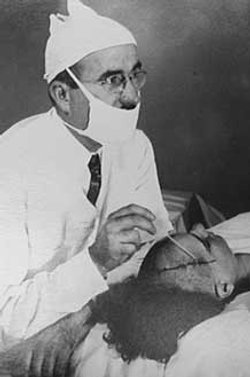
When the State gives doctors power over their patients, the doctors’ primary loyalty will be to the power of the State, not to their patients

(Via Cheryl Cline @ der Blaustrumpf 2008-12-02: Trusting Doctors.)

The first step is that the State grants legal privileges to doctors. Or, more specifically, to those doctors who practice medicine according to the approaches favored by the government and government-backed medical guilds like the American Medical Association. These privileges for officially-approved doctors to force their competitors out of business with threats of fines, jail, or death, and thus to force captive patients to seek their services. In many countries, these privileges include a large apparatus of government-subsidized healthcare, in which government-approved doctors are paid largely, or entirely, by funds that the government has taken from unwilling taxpayers. (Healers whose practices are not officially approved by the government, obviously, receive none of these subsidies.) In some cases, they also involve the power of doctors — especially psychiatrists, or other doctors treating children, or treating adults labeled as insane or feeble-minded — to force invasive treatment on unwilling patients through the use of deception, threats, restraint, and, if necessary, outright violence.

When the government gives doctors this kind of unaccountable, legally-backed plenary power to control or coerce their patients, it converts the medical profession into a class of legally elevated and legally regulated mandarins, who expect and enjoy considerable political power through their legally-privileged professional associations and through the State apparatus itself. Since doctors enjoy special privileges over their patients, and depend on legal force rather than on their patients’ judgment to get their way, the legal privilege helps foster a culture of arrogance and entitlement. And at the same time it creates a situation where doctors depend on government power for their wealth and cultural prestige, since they depend on it to create an artificial scarcity of medical services, and to keep patients captive to the doctor’s preferred regimen. Moreover, whenever medical doctors get special political privileges over their patients, politics defines what will be counted as legitimate medicine, and so medical doctors necessarily become politicians, acting a minor faction of the ruling class, just by establishing professional standards. When those professional standards are enforced by law, State-approved doctors’ professional associations are transformed from voluntary associations into a branch of the government, and medicine is transformed from a service to the patient into an arm of State policy.

And whenever, wherever, and exactly to the extent that the State gives doctors this kind of power over their patients, and makes them instruments of State policy, State-privileged doctors will owe their primary loyalty to power of the State, not to their patients.

The results of that shift in loyalty will depend on the nature of the State that claims their loyalty. When a State is relatively restrained, or simply incompetent, doctors will still help their patients, for the most part, rather than hurting them. When a State becomes more predatory, or lethal, politically-privileged doctors will be called on to be fine-tuned instruments of the predation or the murder. Since they depend on the State, politically-privileged doctors will usually answer the call, even if it means subjecting their victim-patients to malpractice, torture, or murder. Indeed, since a more powerful and invasive hygienic or therapeutic State means more power and influence for politically-privileged doctors, many of them will not only side with and collaborate with a predatory or lethal State, but will actively urge it onwards toward ever greater atrocities, and beg to be given the responsibility for carrying them out.


As Yoel Abells, a Toronto family doctor and medical ethicist, said of the experience in Germany under the Third Empire, and America under the United States government’s Global War on Terror:

One fact Abells found particularly disturbing was that doctors joined the Nazi Party in greater numbers than other professionals.

Almost half of all doctors were members of the Nazi Party, he said, compared with only a quarter of lawyers or musicians, and to the 9 per cent of the German population as a whole.

Joining Nazi groups, he said, was intoxicating for many doctors because of the power over life and death it gave them.

Today, Abells said, a disturbing number of doctors continue to be involved in genocidal campaigns, terrorist organizations, torture and the interrogation of prisoners of war.

A report in the New England Journal of Medicine in September found that the U.S. Army continues to use doctors in its interrogation of suspected terrorists, despite every major medical association condemning the practice.

— Stuart Laidlaw, HealthZone.ca (2008-11-05): Medical atrocities did not end with Nazi era

As Cheryl Cline writes:

The collusion of the medical profession with the State is certainly nothing new. And sadly, it is not all that surprising. Intuitively, the public trusts its doctors and others perceived as public servants more than it trusts, say, its lawyers or ad men. (The popular TV show Mad Men is a perfect example of capitalization on our distrust of the capitalist-minded. Can you think of a show that would portray doctors in a similar light?) With so many people putting blind faith in government bureaucrats to foster the public good, it’s hardly surprising to see the two entities take advantage of the public's trust to merge and consolidate power.

— Cheryl Cline, der Blaustrumpf (2008-12-02): Trusting Doctors

When doctors have this unchecked power to wreak torture or death on patients — whether it’s thrust upon them by an aggressive State, or whether they collaborate with an ambitious State to get it — then you will always get atrocities. And that’s an outrage. But it should not be a surprise. It is not an abuse of power; the power itself is the abuse, and doctors will always and everywhere sweep aside their ethical obligations to patients in favor of political obedience to the State, as long as it is State power rather than patients’ consent that determines what counts as legitimate medical practice, and as long as State privilege transforms medical practice from a consensual service into a forcibly-wielded instrument of public policy — which is to say, an instrument of State power. Sometimes it happens in little, obnoxious ways (under little, obnoxious legal regimes), and sometimes it happens in big, deadly ways (under big, deadly legal regimes), but it’s been going on for a long time now, and there’s no way around it. No way, that is, except genuine freed-market medicine, the only thing that can free the medical profession from the influence of State power and to make doctors accountable to patients rather than to power. No way, that is, except to abolish all forms of political command-and-control over the practice of medicine and to let doctors return to providing nothing more, and nothing less, than a consensual, life-affirming service to willing patients.

See also:

Don’t turn your back on the Wolfpack

The Las Vegas Metro police department has a new mobile gang of cops devoted to a saturation strategy in targeted inner city neighborhoods:

Before setting out, the team goes for dinner, and that’s where Palmer explains the mission of the Metropolitan Police Department’s saturation teams, or sat teams for short.

It’s an innovative, proactive approach to policing. Don’t handle calls for service. Leave that to the regular patrol cops. Talk to as many citizens as possible to find out who the bad guys are. Get people off the street who don’t belong, [sic] and maybe prevent a robbery or burglary, or worse, from happening.

We’re not worried about turning in tickets, he says. We’re trying to get the bad guys off the street.

— Lawrence Mower, Las Vegas Review-Journal (2008-11-30): Las Vegas police use saturation strategy to cool hot spots of crime; A bright light in a big city

Here are three things that you ought to know about how Metro decides who doesn’t belong, and how they get the bad guys off the street.

First, cops in the saturation team gangs pick and choose whether or not to come down on any given person who is breaking the law. They openly state that they make these decisions based on who they want to hassle and bust and pull off the street, and they openly state that they decide that based on where you’re from, how much money you make, and other proxies for racial and socio-economic status.

Sat team officers have to make constant judgment calls. They won’t pull over and arrest someone in Summerlin, for example, who doesn’t have bike reflectors. But if the area has seen a rash of burglaries, and the person on the bike has prior burglary convictions and doesn’t live there, they will. [Summerlin is a rich suburb of Las Vegas. –R.G.]

If you see a guy who jaywalks, and he’s a 42-year-old man who works at the Fremont casino and is heading home … shake his hand and let him go, Dixon said. If you stop a guy who jaywalks, and he’s a thug and he’s got a history of burglaries and he’s got a crack pipe in his pocket, you take him into jail.

— Lawrence Mower, Las Vegas Review-Journal (2008-11-30): Las Vegas police use saturation strategy to cool hot spots of crime; A bright light in a big city

Second, as you may have already guessed, if one of Metro’s sat gangs decides that you’re the sort of person they want to lock in a cage, rather than the sort of person they’ll shake hands with and let go, they will use any chickenshit charge they can make up in order to justify getting in your face, demanding that you explain yourself and justify your existence to them, and, if they aren’t satisfied, grabbing you off the street and throwing you in jail.

They use whatever laws are at their disposal: jaywalking, riding a bicycle without reflectors, outstanding warrants. They work together, swarming hot spots around the valley.

— Lawrence Mower, Las Vegas Review-Journal (2008-11-30): Las Vegas police use saturation strategy to cool hot spots of crime; A bright light in a big city

They use whatever laws are at their disposal because, of course, they don’t actually give a damn about the law. This is outcome-driven policing, and the law is just an excuse to bust the people that they’ve already decided don’t belong. That’s because the purpose of these teams is not to stop or respond to crimes; it’s to control people, and in particular to force the the socio-economic cleansing of undesirable people from the cop-occupied neighborhoods. For exmple:

It’s past 9 p.m., and officer Robert Boehm turns down a street near the Cheyenne Pointe apartments. He sees an 18-year-old on a bicycle rolling through a stop sign on a residential street.

The young man looks familiar. It’s because Boehm and other sat team members busted him the week before for stealing a BB gun from a Kmart.

Boehm says that BB guns have been the weapon of choice for making drug-related robberies right now.

He was released from jail just a few days ago.

This is the perfect example, Boehm says. What is he doing out here?

The man says he lives near Washington Avenue and Nellis Boulevard, about four miles away. His uncle lives at the Cheyenne Pointe apartments. He isn’t heading there or to his home, however, and can’t explain where he’s going.

Boehm searches him. No drugs. No weapons. But he is a person that is probably up to trouble, Boehm says.

He handcuffs him, stuffs his bike in the trunk of his patrol car and takes him down to the Clark County Detention Center. The charges are failing to obey a traffic control device and not having lights on a bicycle.

— Lawrence Mower, Las Vegas Review-Journal (2008-11-30): Las Vegas police use saturation strategy to cool hot spots of crime; A bright light in a big city

This kind of arbitrary rousting of someone, based on absolutely nothing other than a paper-thin pretext and the cop’s conviction that somebody’s probably up to trouble, is dignified by Las Vegas Metro cops and their sycophants at the Review-Journal as old-school policing with professionalism and an innovative, proactive approach to policing.

Third, here is how members of the saturation gangs talk about themselves to a sympathetic press:

The first week, the criminals were like deer caught in the headlights, he said.

Eyes opened, he said. Criminals said, Oh my god, what is this?

— Lawrence Mower, Las Vegas Review-Journal (2008-11-30): Las Vegas police use saturation strategy to cool hot spots of crime; A bright light in a big city

And:

Twenty people were booked this night during the shift. Nine were for felony crimes, including one for a stolen moped.

Honestly, best job in the world, Boehm says. I’m living the dream.

— Lawrence Mower, Las Vegas Review-Journal (2008-11-30): Las Vegas police use saturation strategy to cool hot spots of crime; A bright light in a big city

And:

We’re like wolves, officer Justin Gauker says. We travel in a pack.

— Lawrence Mower, Las Vegas Review-Journal (2008-11-30): Las Vegas police use saturation strategy to cool hot spots of crime; A bright light in a big city

Well. I feel safer already.

I should say that when I refer to cops as a street gang or Gangsters in Blue or what have you, I’m not indulging in metaphor. I don’t mean that cops act kinda like gangsters (as if this were just a matter of personal vices or institutional failures); I mean that they are gangsters — that is the policing system operating according successfully to its normal function — that they are the organized hired muscle of the State, and that the outfit operates just like any other street gang in terms of their commitments, their attitudes, their practices, and their idea of professional ethics.

— GT 2008-11-26: Professional courtesy, part 2: thugs on patrol

And let’s just say that Metro’s new roving wolfpacks have not done very much to make me reconsider that analysis.

See also:

Internet Anarchist Revision Brigade #2: Django at LibCom on the Stonewall/Bindel affair and the politics of transsexuality

So here is the latest action alert for the I.A.R.B.. (I fear that this is going to be a long-running series.) As a reminder of why we fight:

Bad writers, and especially scientific, political, and sociological writers, are nearly always haunted by the notion that Latin or Greek words are grander than Saxon ones, and unnecessary words like expedite, ameliorate, predict, extraneous, deracinated, clandestine, subaqueous, and hundreds of others constantly gain ground from their Anglo-Saxon numbers. The jargon peculiar to Marxist writing (hyena, hangman, cannibal, petty bourgeois, these gentry, lackey, flunkey, mad dog, White Guard, etc.) consists largely of words translated from Russian, German, or French; but the normal way of coining a new word is to use Latin or Greek root with the appropriate affix and, where necessary, the size formation. It is often easier to make up words of this kind (deregionalize, impermissible, extramarital, non-fragmentary and so forth) than to think up the English words that will cover one’s meaning. The result, in general, is an increase in slovenliness and vagueness.

. . . As I have tried to show, modern writing at its worst does not consist in picking out words for the sake of their meaning and inventing images in order to make the meaning clearer. It consists in gumming together long strips of words which have already been set in order by someone else, and making the results presentable by sheer humbug. The attraction of this way of writing is that it is easy. It is easier — even quicker, once you have the habit — to say In my opinion it is not an unjustifiable assumption that than to say I think. If you use ready-made phrases, you not only don’t have to hunt about for the words; you also don’t have to bother with the rhythms of your sentences since these phrases are generally so arranged as to be more or less euphonious. When you are composing in a hurry — when you are dictating to a stenographer, for instance, or making a public speech — it is natural to fall into a pretentious, Latinized style. Tags like a consideration which we should do well to bear in mind or a conclusion to which all of us would readily assent will save many a sentence from coming down with a bump. By using stale metaphors, similes, and idioms, you save much mental effort, at the cost of leaving your meaning vague, not only for your reader but for yourself. This is the significance of mixed metaphors. The sole aim of a metaphor is to call up a visual image. When these images clash — as in The Fascist octopus has sung its swan song, the jackboot is thrown into the melting pot — it can be taken as certain that the writer is not seeing a mental image of the objects he is naming; in other words he is not really thinking. Look again at the examples I gave at the beginning of this essay. . . . In [the example from a Communist pamphlet], the writer knows more or less what he wants to say, but an accumulation of stale phrases chokes him like tea leaves blocking a sink.

— George Orwell (1946): Politics and the English Language

Now here’s an example of exactly that kind of writing, which I’ve taken from an article recently printed over at LibCom. I take it that the article has something to do with radical feminism, gender identity, and sex-reassignment surgery. Beyond that–well, let’s just try to read it.

What matters, then, is the practical implications of the best insights of feminist theory. Clearly, the violence and intimidation transgender people routinely face is unconscionable. But the question again boils down to the contradictions between the politics of affirmation and the politics of negation. This may at first seem strange. As Slavoj ?@c5;bd;i?@c5;be;ek amongst others has argued, the difference between the politics of oppressed and marginalised groups seeking to defend themselves and the politics of class struggle is that class struggle seeks as its end point the abolition of class. "Class pride" is a reactionary concept, and though class relations can and do express themselves through communities and class identities, if class struggle is to be part of a revolutionary project rather than the affirmation of the working class within capitalism then it must abolish capitalism and with it abolish class. Class is furthermore a material position within capitalism – those who have nothing to sell but their labour and who must work for the money necessary to live, those dispossessed of ownership of capital and who must sell their labour time and labour power to those who have or administer it. It is not a sociological category, but a condition and a social relation. The struggles of women, ethnic minorities, gays and lesbians insofar as they are organised around the marginalised group must struggle for recognition of various kinds. But this, as so often, is an oversimplification. The various marginalised roles are themselves constituted within the process of their marginalisation – and though the material proletarian condition which is the prerequisite for capital accumulation is demonstrable in a different way to the constitution of various marginalised identities, we can still see the issue in terms of affirmation or negation: in the case of gender, either liberal feminism's affirmation of women as bourgeois subjects with equal legal standing, or the radical project of the negation of gender binaries and with it gender identity.

So what would this look like in practice? I don't pretend to have the answers. In the case of negating the proletarian condition, the answer is relatively straightforward: the direct communisation of the means of production, the abolition of wage labour and the replacement of the state by the construction of real human community through linked councils. Gender cannot be negated in the same way, though the same processes of seizure and transformation growing out of class antagonism. Its fairly easy to imagine that a society where the production of the entire social environment is no longer alienated would allow for a new kind of society and more radical possibilities, but its not enough to talk abstractly of revolution as being the cure-all we must invest our faith in.

But we do know where it can't start – certainly not from the reification of binary gender identities. The task must be to destabalise and desacralise gender, and this cannot be done whilst upholding a belief in the ability to "match" bodily organs to gendered behaviour. The critique of gender cannot be held back because it offends the sensibilities of marginalised groups, and whilst we recognise the difficulties transgender people face, we can't let those difficulties be an excuse to suspend critical thought.

— Django @ LibCom.org (2008-11-28): The Stonewall/Bindel affair, and the politics of transsexuality

I’d like to know what to say about this passage, or the point that the author is trying to make. But I’m not sure whether or not I can, because I’m not sure whether or not I even know what point the author is trying to make. I’m setting aside, for the moment, the fact that nothing after the eighth paragraph even attempts to connect the author’s points to the ostensible topic of the post — the radical feminist journalist Julie Bindel and her expressed views on sex-reassignment surgery. Because, even at a more local level, I think I understand most of the individual sentences, or at least clauses in the passage, but the way that it is written makes it nearly impossible for me to figure out what those parts add up to, or where that whole is supposed to be going by the end of the post, to the extent that I honestly don’t even know whether or how strongly I disagree or agree with what the author’s trying to say.

I suspect that the only way to understand it is for us to dig in and try to rewrite it, so that the author’s point, if he has any, isn’t lost beneath the dull, thudding drumbeat of his language. In any case, even if it turns out that there’s really nothing much, either good or bad, to find in this passage (a conclusion I haven’t yet drawn, but which I haven’t abandoned either), then it’s worth trying as an exercise, if nothing else. If we want to talk about the things we need to talk about, then we need to find better ways of saying things than this.

If you were going to try to rewrite a passage like this to try to make it more clear — especially to those who haven't spent years reading and writing in Marxian jargon — and more enjoyable to read even for those who have, how would you go about it? Just what is going on here? What conclusion does it seem to you he’s trying to get to, and what reasons is he using to get to that conclusion? If you were trying to say what he’s saying, how would you say it well?

See also:

Shawn Wilbur on counter-development strategery

In some neighborhoods in North Portland, where the gangs are gone and the worst of the development is not yet arrived, there are a number of attempts to organize local defense against the displacement of businesses and residents. Small, independent business and poor residents are, naturally, particularly at risk. People of color will bear a disproportionate burden as previously “bad” or transitional neighborhoods start to look good to developers. Some of the efforts are pretty obviously too little, too late. We’re talking about trying to secure property with rising values, at a time when pocketbooks are pretty bare for the at-risk segments of the population. And securing property has not necessarily been a priority among activists, many of whom have some basic issues with property in the first place. In Portland, motiveSpace, a radical architectural collective, promoting citizen-driven development, seems to be one of the more interesting voices in the conversation, with at least a general sense that this sort of civilian defense is going to require a variety of skills not necessarily found in the average radical toolbox, along with an ability and willingness to bring in some cold, hard cash to get things done. And they have been eager to reach out to other radical community groups. Only time will tell, I suppose, what can actually be accomplished, and to what extent the creation of new urban refugees can be stemmed.

Citizen-driven development–counter-development–is a skillset that counter-economic activists, of whatever particular school, are going to have to acquire, if we not simply to cede vast portions of the country to the other side. If we can’t find a way to make securing property a part of our strategy, then all our debates about the elasticity of land supply and the like will be essentially academic. Mutualist occupancy and use is precisely pie in the sky until we can secure territorial control somewhere, and any sort of homesteading is as unlikely as it is likely to be a mere stop-gap, given the dimensions of the broader housing crisis. There are probably still places where stands can be made, but we should be trying to identify them, while they remain.

— Shawn Wilbur, In the Libertarian Labyrinth (2008-11-08): Counter-development or Bust!

Read the whole thing, if you haven’t already.

See also:

Anticopyright. All pages written 1996–2026 by Rad Geek. Feel free to reprint if you like it. This machine kills intellectual monopolists.