Rad Geek People's Daily

official state media for a secessionist republic of one

Posts filed under Smash the State

Roe v. Wade Day #33

This post is part of Blog for Choice Day: January 22, 2006.

Today is the 33rd anniversary of the Supreme Court’s decision in Roe v. Wade, which took the boots of the State from off the necks of millions of women across the United States. There’s a lot not to like about the specifics of the reasoning, and it’s sometimes frustrating that Roe is the ruling that we’ve got to celebrate, or at least defend. But January 22 is a jubilee day, the capstone victory of a remarkable, explosive struggle — which took place over the course of just under 4 years, from the decisive beginning of the pro-choice movement among radical feminists in early 1969, to the decision in January 1973. (There was a small, barely effectual abortion law reform movement before 1969; but February and March 1969 marked the beginning of the abortion law repeal movement, and also the beginning of the pro-choice argument — that is, early 1969 is when the argument shifted from feeling sorry for the poor girl in dire circumstances, to women demanding that they had a right to the determine how their own bodies will or will not be used.

Abortion on Demand and Without Apology!

Like most anniversaries, this one is partly about remembering and honoring. Today there are three things that I want you to remember, or to learn.

First, you should know all about two months that made all the difference. This is from Susan Brownmiller’s In Our Time: Memoir of a Revolution:

February 1969 was an important month in the abortion struggle. Larry Lader, a biographer of Margaret Sanger, summoned a handful of professionals in law and medicine to the Drake Hotel in Chicago for the organizing conference of NARAL, the National Association for Repeal of Abortion Laws. (NARAL became the National Abortion Rights Action League in 1974.) The conferees targeted specific states where they believed the repressive codes could be knocked down. New York, with its liberal constituency, was a top priority. Bills ranging from modest reforms (in cases of rape and incest) to outright repeal of all criminal penalties were already in the legislative hopper.

Betty Friedan, one of the main speakers at the Chicago NARAL meeting, reflected the changing political climate. At NOW’s founding convention in 1966, she had bowed to a clique that insisted that abortion rights were too divisive, too sexual, and too controversial for the fledgling organization, but since then a groundswell of younger members had stiffened her spine. NOW was being inundated by kids, one member observed. The kids from New York, Michigan, Ohio, Texas, and elsewhere pushed through an abortion plank at NOW’s 1967 convention.

And the kids were forging ahead with their own tactics. On the same wintry day in mid-February when NARAL’s founders were traveling to Chicago for their first conference six state legislators held a public hearing in Manhattan on some proposed liberalizing amendments to the New York law. Typical of the times, the six legislators were men, and the spekaers invited to present expert testimony were fourteen men and a Catholic nun.

On the morning of the February 13 hearing, a dozen infiltrators camouflaged in dresses and stockings entered the hearing room and spaced themselves around the chamber. Some called themselves Redstockings, and some, like Joyce Ravitz, wre free-floating radicals who were practiced hands at political disruptions. Ravitz, in fact, had been on her way to another demonstration when she’d run into the Redstockings women, who convinced her to join them.

As a retired judge opined that abortion might be countenanced as a remedy after a woman had fulfilled her biological service to the community by bearing four children, Kathie Amatniek leaped to her feet and shouted, Let’s hear from the real experts–women! Taking her cue, Joyce Ravitz began to declaim an impassioned oration. Ellen Willis jumped in. More women rose to their feet.

Men don’t get pregnant, men don’t bear children. Men just make laws, a demonstrator bellowed.

Why are you refusing to admit we exist? cried another.

Girls, girls, you’ve made your point. Sit down. I’m on your side, a legislator urged, raising the temperature a notch higher.

Don’t call us girls, came the unified response. We are women!

The hearing dissolved in confusion. When the chairman attempted to reconvene it behind closed doors, the women sat down in the corridor, refusing to budge.

Stories appeared the next day in the Times (Women Break Up Abortion Hearing), the New York Post (Abortion Law Protesters Disrupt Panel), and the Daily News. Ellen Willis slipped out of her activist guise to do a report for Talk of the Town in The New Yorker. Nanette Rainone filed for WBAI radio and the Pacfica network. Barely a month old, Redstockings, with an assist from the radical floaters, had successfully dramatized the need for woman as expert in the abortion debate.

Five weeks later, on March 21, 1969, Redstockings staged a public speak-out, Abortion: Tell It Like It Is, at the Washington Square Methodist Church, a hub of antiwar activism in Greenwich Village. For some Women’s Liberation founders, the speak-out was the movement’s finest hour. Astounding, is the way Irene Peslikis puts it. It showed the power of consciousness-raising, how theory comes from deep inside a person’s life, and how it leads directly to action.

Peslikis had organized the panel and coached the women who were willing to speak. The idea, she says, was to get examples of different kinds of experiences–women who’d had the babies that were taken away, women who went to the hospital for a therapeutic abortion, women who’d gone the illegal route, the different kinds of illegal routes.

Three hundred women and a few men filled the church that evening as Helen Kritzler, Barbara Kaminsky, Rosalyn Baxandall, Anne Forer, and a few other brave souls passed a small microphone back and forth. Baxandall broke the ice with a touch of humor. I thought I was sophisticated, she joked into the mike. My boyfriend told me if he came a second time, the sperm would wash away, and I believed him.

Another woman recounted, So there I was in West New York, New Jersey, and the doctor had these crucifixes and holy pictures on the wall, and all he wanted was nine hundred dollars. I took out a vacation loan and I’m still paying it off.

Judy Gabree hurtled forward. I went to eleven hospitals searching for a therapeutic abortion. At the tenth, they offered me a deal. They’d do it if I agreed to get sterilized. I was twenty years old. I had to pretend I was crazy and suicidal, but having the abortion was the sanest thing I’d done.

More women added their personal testimony. I was one of those who kept quiet. Irene Peslikis had asked me to be one of the speakers, but I chose an easier path and played Village Voice reporter. My front-page story, Everywoman’s Abortions: The Oppressor Is Man, was the only substantive coverage the landmark speak-out received. Some retyped it in Chicago for the newsletter, which carried the news to activists around the country.

Another journalist, in aviator glasses and a miniskirt, was taking notes in the church that evening. She hovered near Jane Everhart, a NOW member, and whispered What’s going on?

Everhart whispered back, Sit down and listen!

Gloria Steinem was a friend of Women’s Liberation in 1969, but she had not yet thrown in her lot with the movement. Her plate was already overflowing with causes. Gloria spoke out against the war in Vietnam on late-night talk shows, raised money for liberal Democrats and Cesar Chavez’s farmworkers, and wrote earnest pieces on all of her issues for the popular magazines. Genetically endowed with the rangy limbs and sculpted features of a fashion model, Steinem glided through the rarefied world of radical chic expertly building her political connections. Beneath the exterior of the celebrity journalist was a woman who yearned to save the world.

Steinem received a shock of recognition when a Redstocking quipped, I bet every woman here has had an abortion. Hers had been done by a Harley Street practitioner in London during the late fifties after she’d graduated from Smith. Later she would say that the speak-out was her feminist revelation, the moment that redirected her public path. That night, however, she was working on a tight deadline. She threw together a hasty paragraph for the political diary she wrote for New York magazine. Nobody wants to reform the abortion laws, she explained in print. They want to repeal them. Completely.

The Redstockings abortion speak-out was an emblematic event for Women’s Liberation. Speak-outs based on the New York women’s model were organized in other cities within the year, and subsequent campaigns to change public opinion in the following decade would utilize first-person testimony in a full range of issues from rape and battery to child abuse and sexual harassment. The importance of personal testimony in a public setting, which overthrew the received wisdom of the experts, cannot be overestimated. It was an original technique and a powerful ideological tool. Ultimately, of course, first-person discourse on a dizzying variety of intimate subjects would become a gimmicky staple of the afternoon television talk shows, where the confessional style was utilized for its voyeuristic shock value. Back then, personal testimony was a political act of great courage.

–Susan Brownmiller, In Our Time: Memoir of a Revolution, pp. 106–109

Second, you should know why they were out there, putting themselves on the line for this, and why doing that had such a remarkable impact in so short of a time. I think we can find some of the reasons in Lucinda Cisler’s wonderful, hauntingly prescient Abortion law repeal (sort of): a warning to women (1969).

… The most important thing feminists have done and have to keep doing is to insist that the basic reason for repealing the laws and making abortions available is justice: women’s right to abortion.

… Until just a couple of years ago the abortion movement was a tiny handful of good people who were still having to concentrate just on getting the taboo lifted from public discussions of the topic. They dared not even think about any proposals for legal change beyond reform (in which abortion is grudgingly parceled out by hospital committee fiat to the few women who can prove they’ve been raped, or who are crazy, or are in danger of bearing a defective baby). They spent a lot of time debating with priests about When Life Begins, and Which Abortions Are Justified. They were mostly doctors, lawyers, social workers, clergymen, professors, writers, and a few were just plain women—usually not particularly feminist.

Part of the reason the reform movement was very small was that it appealed mostly to altruism and very little to people’s self-interest: the circumstances covered by reform are tragic but they affect very few women’s lives, whereas repeal is compelling because most women know the fear of unwanted pregnancy and in fact get abortions for that reason.

… These people do deserve a lot of credit for their lonely and dogged insistence on raising the issue when everybody else wanted to pretend it didn’t exist. But because they invested so much energy earlier in working for reform (and got it in ten states), they have an important stake in believing that their position is the realistic one—that one must accept the small, so-called steps in the right direction that can be wrested from reluctant politicians, that it isn’t quite dignified to demonstrate or shout what you want, that raising the women’s rights issue will alienate politicians, and so on.

Because of course, it is the women’s movement whose demand for repeal—rather than reform—of the abortion laws has spurred the general acceleration in the abortion movement and its influence. Unfortunately, and ironically, the very rapidity of the change for which we are responsible is threatening to bring us to the point where we are offered something so close to what we want that our demands for radical change may never be achieved.

–Lucinda Cisler, Abortion law repeal (sort of): a warning to women, ¶Â¶ 2–10

Cisler goes on to review four different restrictions or limitations on abortion-law repeal that she thinks could make for just this sort of roadblock. One of the best sections in the essay is her discussion a restriction with which we are all too familiar in the post-Roe world:

3: Abortions may not be performed beyond a certain time in pregnancy, unless the woman’s life is at stake. Significantly enough, the magic time limit varies from bill to bill, from court decision to court decision, but this kind of restriction essentially says two things to women: (a) at a certain stage, your body suddenly belongs to the state and it can force you to have a child, whatever your own reasons for wanting an abortion late in pregnancy; (b) because late abortion entails more risk to you than early abortion, the state must protect you even if your considered decision is that you want to run that risk and your doctor is willing to help you. This restriction insults women in the same way the present preservation-of-life laws do: it assumes that we must be in a state of tutelage and cannot assume responsibility for our own acts. Even many women’s liberation writers are guilty of repeating the paternalistic explanation given to excuse the original passage of U.S. laws against abortion: in the nineteenth century abortion was more dangerous than childbirth, and women had to be protected against it. Was it somehow less dangerous in the eighteenth century? Were other kinds of surgery safe then? And, most important, weren’t women wanting and getting abortions, even though they knew how much they were risking? Protection has often turned out to be but another means of control over the protected; labor law offers many examples. When childbirth becomes as safe as it should be, perhaps it will be safer than abortion: will we put back our abortion laws, to protect women?

… There are many reasons why a woman might seek a late abortion, and she should be able to find one legally if she wants it. She may suddenly discover that she had German measles in early pregnancy and that her fetus is deformed; she may have had a sudden mental breakdown; or some calamity may have changed the circumstances of her life: whatever her reasons, she belongs to herself and not to the state.

–Lucinda Cisler, Abortion law repeal (sort of): a warning to women, ¶Â¶ 19, 21

Third, you should know what the women of Jane did in Chicago to help make their sisters’ ownership of their own bodies a reality, without the blessing of the male experts and in defiance of the male State. Here’s Brownmiller, again:

Radical women in Chicago poured their energy into Jane, an abortion referral service initiated by Heather Booth, who had been a one-woman grapevine for her college classmates. In 1971, after Booth’s departure, some of the women took matters into their own hands and secretly began to perform the abortions themselves. Safe, compassionate terminations for a modest fee became their high calling–a model, as they saw it, for women’s empowerment after the revolution.

Leaflets appeared in the Hyde Park neighborhood of the University of Chicago bearing a simple message: Pregnant? Don’t want to be? Call Jane at 643-3844. The number rang at the home of one of the activists who volunteered to be Jane. As word spread and the volume of calls increased, the service acquired its own phone line and an answering machine, a cumbersome reel-to-reel device that was one of the first on the market. Volunteers, known inside the service as call-back Janes, visited the abortion seekers to elicit crucial medical details (most important was lmp, the number of weeks since the last menstrual period), then another level of volunteers scheduled an appointment with one of the abortionists on the group’s list.

At first the service relied on Mike in Cicero, who was fast, efficient, and willing to lower his price to five hundred dollars as the volume increased. Mike gradually let down his guard with Jody Parsons, his principal Jane contact, an artisan who sold her beaded jewelry and ceramics at street fairs and was a survivor of Hodgkin’s disease. The clandestine abortionist and the hippy artisan struck up a bond. When Mike confessed that he was not in fact a real doctor but merely a trained technician, she cajoled him into teaching her his skills. Jody’s rapid success in learning to maneuver the dilating clamps, curettes, and forceps demystified the forbidden procedures for another half dozen women in Jane. If he can do it, then we can do it became their motto.

Madeline Schwenk, a banker’s daughter who had married at twenty, six months pregnant with no clue whatsoever about how to get an abortion, moved from counseling to vacuum aspiration after Harvey Karman, the controversial director of a California clinic, came to Chicago to demonstrate his technique. Madeline was one of the few women in Jane who was active in NOW, and who stayed affiliated with the Chicago chapter during the year she wielded her cannula and curette for the service. I’d get up in the morning, make breakfast for my three kids, go off to do the abortions, then go home to make dinner, she reminisces. Pretty ourageous behavior when you think about it. But exciting.

Jane’s abortion practitioners and their assistants were able to handle a total of thirty cases a day at affordable fees–under one hundred dollars. A doctor and a pharmacist among the women’s contacts kept them supplied with antibiotics.

Fear of police surveillance in radical circles had its match among clandestine abortionists who relied on a complicated rigamarole of blindfolds and middlemen. Jane straddled both worlds. Abortion seekers gathered every Wednesday, Thursday, and Friday at a front apartment, usually the home of a Jane member or friend, and were escorted by Jane drivers to the Place, a rented apartment where the abortions were performed. The fronts and the Place changed on a regular basis. New volunteers, brought into the group by counselors and drivers, went through a probation period before they were told that women in Jane were doing the abortions. The news did not sit well with everyone. Turnover was high, from fear and from burnout, although the service usually maintained its regular complement of thirty members.

Jane lost most of its middle-class clientele after the New York law [repealing the state’s abortion ban] went into effect. Increasingly it began to service South Side women, poor and black, who did not have the money to travel out of state, and whose health problems, from high blood pressure to obesity, were daunting. Pressure on the providers intensified. Audaciously they added second-trimester abortionsby induced miscarriage to their skills.

On May 3, 1972, near the conclusion of a busy work day in an eleventh-floor apartment on South Shore Drive overlooking Lake Michigan, Jane got busted. Seven women, including Madeline Schwenk, were arrested and bailed out the following day. The Chicago Daily News blared Women Seized in Cut-Rate Clinic in a front-page banner. The Tribune buried Lib Groups Linked to Abortions on an inside page. Six weeks later the service was back in buinsess. Wisely, the women facing criminal charges selected a defense attorney who was clued in to and optimistic about the national picture. She advised them to hang tight–some interesting developments were taking place in Washington that could help their case. (After the January 1973 Roe decision, all outstanding charges against the seven were dropped.)

The activists of Jane believe they performed more than ten thousand abortions. It’s a ballpark figure based on the number of procedures they remember doing in a given week. For security reasons they did not keep records.

–Susan Brownmiller, In Our Time: Memoir of a Revolution, pp. 123–125

It’s important to remember that, although the occasion for celebrating January 22 is a Supreme Court decision, the repeal of abortion laws wasn’t a gift handed down out of benevolence by a gang of old men in robes. It was struggled for, and won, by women in our own times. Women who stood up for themselves, who challenged the authority of self-appointed male experts and law-makers, who spoke truth to power. Radical women who took things into their own hands and helped their sisters, in defiance of the law, because they knew that they had a right to do it. Radical feminists who built a movement for their own freedom over a matter of months and decisively changed the world in less than five years. It’s not just that we owe Kathie Sarachild, Joyce Ravitz, Ellen Willis, Lucinda Cisler, Heather Booth, Jody Parsons, Madeline Schwenk, and so many others our praise. They do deserve our cheers, but they also deserve our study and our emulation. They did amazing things, and we — feminists, leftists, anti-statists — owe it not only to them, but to ourselves, to honor them by trying to learn from their example.

Today

The other thing that anniversaries are good for is to renew commitments and lead us forward. What’s going on today, and what can we do?

(These are links I caught throughout the day of January 22. Most of them came from Feminist Blogs or from NARAL’s Blog for Choice Day round-up.)

Bureaucratic rationality #2: Government Issue edition


Two deploying soldiers and a concerned mother reported Friday afternoon that the US Army appears to be singling out soldiers who have purchased Pinnacle’s Dragon Skin Body Armor for special treatment. The soldiers, who are currently staging for combat operations from a secret location, reported that their commander told them if they were wearing Pinnacle Dragon Skin and were killed their beneficiaries might not receive the death benefits from their $400,000 SGLI life insurance policies. The soldiers were ordered to leave their privately purchased body armor at home or face the possibility of both losing their life insurance benefit and facing disciplinary action.

… On Saturday morning a soldier affected by the order reported to DefenseWatch that the directive specified that all commercially available body armor was prohibited. The soldier said the order came down Friday morning from Headquarters, United States Special Operations Command (HQ, USSOCOM), located at MacDill Air Force Base, Florida. It arrived unexpectedly while his unit was preparing to deploy on combat operations. The soldier said the order was deeply disturbing to many of the men who had used their own money to purchase Dragon Skin because it will affect both their mobility and ballistic protection.

We have to be able to move. It (Dragon Skin) is heavy, but it is made so we have mobility and the best ballistic protection out there. This is crazy. And they are threatening us with our benefits if we don’t comply. he said.

… Recently Dragon Skin became an item of contention between proponents of the Interceptor OTV body armor generally issued to all service members deploying in combat theaters and its growing legion of critics. Critics of the Interceptor OTV system say it is ineffective and inferior to Dragon Skin, as well as several other commercially available body armor systems on the market. Last week DefenseWatch released a secret Marine Corps report that determined that 80% of the 401 Marines killed in Iraq between April 2004 and June 2005 might have been saved if the Interceptor OTV body armor they were wearing was more effective. The Army has declined to comment on the report because doing so could aid the enemy, an Army spokesman has repeatedly said.

… One of the soldiers who lost his coveted Dragon Skin is a veteran operator. He reported that his commander expressed deep regret upon issuing his orders directing him to leave his Dragon Skin body armor behind. The commander reportedly told his subordinates that he had no choice because the orders came from very high up and had to be enforced, the soldier said. Another soldier’s story was corroborated by his mother, who helped defray the $6,000 cost of buying the Dragon Skin, she said.

The mother of the soldier, who hails from the Providence, Rhode Island area, said she helped pay for the Dragon Skin as a Christmas present because her son told her it was so much better than the Interceptor OTV they expected to be issued when arriving in country for a combat tour.

He didn’t want to use that other stuff, she said. He told me that if anything happened to him I am supposed to raise hell.

… Currently nine US generals stationed in Afghanistan are reportedly wearing Pinnacle Dragon Skin body armor, according to company spokesman Paul Chopra. Chopra, a retired Army chief warrant officer and 20+-year pilot in the famed 160th Nightstalkers Special Operations Aviation Regiment (Airborne), said his company was merely told the generals wanted to evaluate the body armor in a combat environment. Chopra said he did not know the names of the general officers wearing the Dragon Skin.

Pinnacle claims more than 3,000 soldiers and civilians stationed in Iraq and Afghanistan are wearing Dragon Skin body armor, Chopra said. Several months ago DefenseWatch began receiving anecdotal reports from individual soldiers that they were being forced to remove all non-issue gear while in theater, including Dragon Skin body armor, boots, and various kinds of non-issue ancillary equipment.

— Nathaniel R. Helms, DefenseWatch (2006-01-14): Army Orders Soldiers to Shed Dragon Skin or Lose SGLI Death Benefits (via TruthOut)

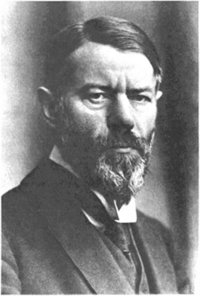
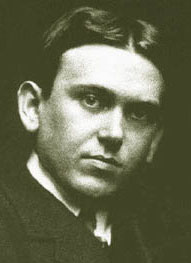
Once again, with apologies to Max Weber, H. L. Mencken, and myself, I think our theoretical lexicon needs revision. Thus:

Bureaucratic rationality, n.: The haunting fear that someone, somewhere, may have something good in their life without authorization.

The A Fortiori War Powers Quiz, Take One

Here’s a predictable pattern.

  1. A new revelation is published or broadcast about a controversial new policy or by-product of the War on Terror. (Abu Ghraib/torture, extraordinary rendition, the outing of Valerie Plame, an alleged plan to attack Iran, secret propaganda in Iraq, FISA-free NSA surveillance of Americans, and so on.)
  2. Some supporters of Washington’s foreign policy wonder whether the reporter or news organization or leaker who revealed the information might be guilty of aiding and abetting the enemy.
  3. The media, Democrats, and anti-war activists are criticized for piling on, for ignoring worse crimes committed by the enemy, and for hysterically exaggerating the underlying issue.
  4. Think-pieces are written about how this controversial or possibly illegal policy should actually be legalized and embraced.
  5. Some self-described small-government conservatives and libertarians exasperatedly ask if critics of the policy understand that we’re at war, and explain how this latest kerfuffle illustrates why libertarians should never be invited to the grown-ups’ table when discussing foreign policy.

— Matt Welch, Hit and Run 2006-01-05

… to which we can add,

6) The critics respond with expressions of horror at the idea that some particular group of people could be treated that way — American citizens, in particular — without giving any grounds for regarding that group of people as morally or politically special.

As for myself, I’m tired of softball. So, come one, come all, and take the A Fortiori War Powers Quiz, Take One. Liberal hawks, liberal doves, progressives, leftists, anarchists, and pro- and anti-war libertarians are all invited to play. Previous respondents — Cathy Young, Bill at So Quoted, Anthony Gregory, Matt Welch, Blar, etc. etc. — are all especially invited to play. (You should note that unless you scored pretty high on Welch’s quiz, your answers to this one are unlikely to be all that interesting — the a fortiori will run from your answers to Welch’s questions toward your answers to mine, rather than vice versa. Don’t worry, surveillance hawks; the A Fortiori War Powers Quiz, Take Two will be coming in a few days, and will have more interesting diversions for you.)

Anyway, here’s how the quiz works. The unifying theme is How far is too far in the War on Terror? The question is a bit open-ended, so it helps to come down to brass tacks, with yes / no hypotheticals. First, take Welch’s quiz to get the first ten. The next thirteen are below. My answers to every one of them is No. What about yours?

1a) Should the National Security Agency or CIA have the ability to monitor foreign phone calls or e-mails without obtaining judicial approval?

1b) Should the National Security Agency or CIA have the ability to monitor domestic phone calls or e-mails with judicial approval?

1c) Should the National Security Agency or CIA have the ability to monitor foreign phone calls or e-mails with judicial approval?

2) Should the government have the ability to hold a citizen of a foreign country without charge, indefinitely, without access to a lawyer, if he is believed to be part of a terrorist cell?

3) Can you imagine a situation in which the government would be justified in waterboarding a citizen of a foreign country?

4) Are there foreign journalists who should be investigated for possible treason or other crimes against the United States? Should Sedition laws be re-introduced?

5) Should the CIA be able to legally assassinate people in countries with which the U.S. is at war?

6) Should any cops (whether concerned with terrorism or not) be given every single law-enforcement tool currently available in non-terrorist cases?

7a) Should law enforcement be able to seize the property of a suspected (though not charged) foreign terrorist, and then sell it?

7b) Should law enforcement be able to seize the property of a charged (though not convicted) American terrorist, and then sell it?

7c) Should law enforcement be able to seize the property of a charged (though not convicted) foreign terrorist, and then sell it?

7d) Should law enforcement be able to seize the property of a convicted American terrorist, and then sell it?

7e) Should law enforcement be able to seize the property of a convicted foreign terrorist, and then sell it?

Now compare and contrast with your answers to these questions with the analogous questions from Matt Welch’s quiz. Are they the same or different? If they different, what, if anything justifies the difference in your answers?

I, too, would love to know.

Philosophers’ Carnival #24: an eternal golden braid

The Ministry of Enlightenment for this secessionist republic of one is proud to bring you the 24th installment of the Philosophers’ Carnival in the pages of the Rad Geek People’s Daily. The Philosophers’ Carnival has two primary purposes: (1) To provide lesser-known philosophy bloggers with the opportunity to gain some exposure and attract a wider audience, and (2) to showcase the best that a wide range of philosophy blogs have to offer, in one convenient location, for the benefit of philosophically-inclined readers. Some of the past carnivals have had a unifying theme; others have chosen to group related posts together by subject-heading. We here prefer to link each post in a chain by means of thin justifications for the transition, tenuous topical connections, and frequent red herrings. If you’re the type who likes to avoid that sort of thing (you probably hate candy and laughing babies, too), here’s the precis of what’s in the Carnival this time around:

  1. Henry Sidgwick @ Mind (April 1895): The Philosophy of Common Sense
  2. Jason Stanley @ Leiter Reports (2005-12-03): Scientific vs. Humanist Philosophy
  3. Will Wilkinson @ Happiness and Public Policy (2005-12-30): Is the Flat Trend in Self-reported Happiness a Problem?
  4. Roderick Long @ Austro-Athenian Empire (2006-01-06): The Value in Friendship
  5. Jerry Monaco (2005-12-18): The Break Between Sartre and Camus: Gossip, Invective, and the Meaning of History
  6. Aspazia @ Mad Melancholic Feminsta (2005-12-29): On Tolerance: Just Be Polite and Pass the Yams
  7. The Cynic Librarian (2005-12-15): Britian as New Islam Laboratory?
  8. Francois Tremblay @ Goosing the Antithesis (2005-11-14): Miracles and materialism
  9. Kenny Pearce (2005-12-22): Let’s Make Creation Science Not Suck
  10. Clayton @ Think Tonk (2005-12-31): Evolutionary naturalism undefeated?
  11. Chris @ The Uncredible Hallq (2006-01-02) in A Gambler’s Epistemology
  12. Richard Chappell @ Philosophy, et cetera (2006-01-06): Transcendental Arguments
  13. Doctor Logic (2006-01-03): More on explanation
  14. Ellis Seagh @ Consciousness and Culture (2005-12-21): Light and darkness: consciousness and reflex
  15. David Shoemaker @ PEA Soup (2006-01-02): Carnivores on the Run
  16. Rad Geek @ Philosophy, et cetera (2005-12-05): Freak intelligence, marginal cases, and the argument for ethical vegetarianism and Rad Geek @ Philosophy, et cetera (2005-12-07): The ends in the world as we know it
  17. Patrick @ Tiberius and Gaius Speaking… (2006-01-06): Capability and Potentiality

Fun challenge for the reader: try to guess what each post is about, and how I linked each one to the preceding post, before you scroll down and read the abstracts for yourself.

Ready? On, then, with the show:

Philosophers’ Carnival #24

  • We begin with post that’s been sitting in the queue for a little while: Henry Sidgwick @ Mind (April 1895): The Philosophy of Common Sense, recently brought to us courtesy of the Fair Use Repository. Sidgwick wants the Glasgow Philosophical Society (and, I suppose, us also) to consider how philosophy may be related to common sense, and how we should best understand philosophers such as Thomas Reid, who methodically and emphatically make appeals to the deliverances of common sense in order to do philosophical work. Far from being intellectual laziness in the name of unreflective gut feelings, Sidgwick notes how Reid refers to Hume’s account of the manner in which, after solitary reflection has environed him with the clouds and darkness of doubt, the genial influence of dinner, backgammon, and social talk dispels these doubts and restores his belief in the world without and the self within: and Reid takes his stand with those who are so weak as to imagine that they ought to have the same belief in solitude and in company. His essential demand, therefore, on the philosopher, is not primarily that he should make his beliefs consistent with those of the vulgar, but that he should make them consistent with his own; and the legitimacy of the demand becomes, I think, more apparent, when we regard it as made in the name of Philosophy rather than in the name of Common Sense.

  • Following on the theme of philosophy and common sense, Jason Stanley @ Leiter Reports (2005-12-03): Scientific vs. Humanist Philosophy offers a metaphilosophical guest post. Much of my blogging, he writes, has been devoted to trying to figure out which distinctions between kinds of philosophical approaches are merely sociological (e.g. reflections of the personal connections and academic credentials of particular philosophers) and which are genuinely substantive. I do think there are rather fundamental distinctions between kinds of philosophers, but (as I’ve been arguing this week) I don’t think they correspond to any kind of division between departments or nexuses that clearly divide two or three kinds of departments (such nexuses exist, but they are considerably more sociological in character). Nevertheless, I think that Brian Leiter has been on to something by his division of naturalistic vs. humanist philosophy. I just don’t think that this division explains anything about the sociology of department relations. I just haven’t been able to put my finger on what it is. He thinks that his finger has been moved somewhat closer to the mark, though, by Michael Strevens’ suggestion that the division is centrally concerned with the relationship that the philosopher sees between philosophy and our ordinary, common-sense self-understanding. Fodor, we are told, is a humanist insofar as his work on the mind is an attempt to vindicate our self-understanding, our human picture of the mind, but Stich, by contrast, uses the tools of philosophy to undermine our conception of ourselves, to alienate us from our own minds. Stanley goes on to consider some more typical points of contrast (such as the use of technical apparatus in logic or the appeal to the history of philosophy) that simply cut across the humanistic-scientific divide, and considers the points at which this division connects with Strawson’s division between descriptive and revisionary metaphysicians.

  • Reflections on our ordinary self-understanding, and of alienation from or comfort with that, easily bring us to questions about satisfaction, happiness, and our ordinary understanding of how happy or how satisfied we happen to be (or fail to be). Will Wilkinson @ Happiness and Public Policy (2005-12-30): Is the Flat Trend in Self-reported Happiness a Problem? looks at that, and specifically at studies of happiness based on self-reports. Wilkinson challenges a couple of presumptions that seem to be universal in the reports on, and analysis of, this kind of happiness study: (1) presuming that a flat trend in self-reports of happiness reliably indicates a flat trend in how happy people in fact are, and (2) presuming that a flat trend in how happy people in fact are would constitute some sort of deep problem that demands policy solutions. Why prefer we are getting no happier over we have been, and remain, extremely successful at creating happiness? The main reason why, I take it, is that it’s impossible to use the happiness data to drum up demand for one’s favorite unpopular policies without framing it in a way that makes it look like there’s some kind of problem that needs to be fixed. If you say that data show that we’re just as happy as our grandparents in America’s nuclear family, bowling together, Leave it to Beaver golden age, we’ll never socialize medicine! Anyway, the point is: at the very least, you need to at least try to eliminate the most plausible competing interpretations of the data before you move on to try to use happiness data to mount your favorite policy hobby horse. No. At the very least, you need to acknowledge that there are alternative interpretations. Until they do that, people trying to sell policy on the basis of happiness research don’t deserve to be taken very seriously.

  • Speaking of happiness, one of the many things — perhaps one of the most important things — that we’re inclined to connect — in some sense or another — with happiness — in some sense or another — is friendship — in some sense or another. But all three of those in some sense or anothers are tricky philosophical terrain. Roderick Long @ Austro-Athenian Empire (2006-01-06) recently posted an online copy of his essay from a roundtable on friendship, The Value in Friendship, which sets itself to learning how to ask the questions we need to ask about happiness, friendship, and the connection between them. The purpose of this essay is to ask a question. The question is: What is it that we value in friendship? The purpose of this essay is not to answer the question. That’s a more daunting task than I intend to tackle here. Rather, my purpose is simply to ask the question. You may think I’ve already asked the question; so my essay has achieved its purpose and I should stop right now. After all, didn’t I just say that my question was: what do we value in friendship? But I haven’t really succeeded in asking that question yet, because I haven’t yet clarified what question I am asking. That is, I haven’t yet distinguished the question I want to ask from other questions that are easily confused with it. So we’re not yet at the point of being able to ask my question. We need to wander about in the wilderness a little bit–though hopefully not for forty years–before we can get to the promised land of my question. As we get closer to the question, we see that there’s quite a bit of explaining that we need to do about what you value inside a friendship once you’ve got it, and what you value outside friendship that leads you to become friends in the first place, and the relation of both of these questions to happiness, to pleasure, and to satisfaction. Along the way, we also see how friendship (in both of the separate questions we’ve just posed) exposes thorny problems for two of the perennial candidates for theoretical understandings of how we should value people: strictly partial concern for yourself (represented by egoism) and strictly impartial universality (represented by utilitarianism, among others).

  • One of the reasons you might want to know better what it is that we value, in becoming friends and in being friends — or at least to know better how to start asking those questions — is to get a better grasp on the limits of friendship, on what it can (or should) survive, and when it can (or should) end. To take a very public example, Jerry Monaco (2005-12-18): The Break Between Sartre and Camus: Gossip, Invective, and the Meaning of History nicely takes us through the causes, the effects, and the historical and cultural context of the bitter end Albert Camus and Jean-Paul Sartre’s friendship (as it proceeded from Francois Jensen’s fusillade-review on Camus’s The Rebel in Sartre’s journal Les Temps Moderns). Aside from the (very real, and very damaging) effects of an overheated intellectual culture of invenctive and literary celebrity in post-war Paris, Monaco also draws out some underlying differences of deep moral and philosophical principles, which were expressed in the feud and which ultimately made friendly engagement not only difficult but intolerable for Sartre and Camus: If one remembers that, at this time (1952), France was actively trying to recover its empire in Indochina and Africa, and that Sartre was actively opposing French colonialism, whereas Camus believed that the anti-colonialists had no moral legitimacy, then one can get a sense of what the feud was really about from Sartre’s point of view. If one remembers that Sartre was trying to existentialize Marxism and therefore not offering very acute criticism of the political acts of the Stalinists, then one can get a sense of what the feud was really about from Camus’ point of view. For both writers the basic principle was how to oppose oppression. For Camus collective resistance to oppression only leads to more oppression. For Sartre Camus’ quietism could only lead to the triumph of the oppressors. Camus believed that Sartre had become an ideologue giving cover to Stalinist domination, while he, Camus, was the advocate of individual human dignity. Sartre believed, that Camus was an apologist for French Imperialism, while he, Sartre was simply choosing to be in history and Camus was choosing in bad faith. Monaco argues that there are important senses in which they were both right and both confused; what he suggests is most important is the way in which the end of their friendship and the limitations of each’s thought came from an inability to work out a common understanding of what questions to ask, how to ask them, and thus what the debate between them was really about in the first place. For us, then The question of who was correct in this argument is not the correct question. The question is how can we come to an historical understanding of the moral issues presented by Camus and how can we come to a moral understanding of the historical issues presented by Sartre. In many ways, in 1952, each represented the missing center in each other’s thought.

  • These considerations on friendship, and how clash of deep philosophical and moral principle shattered the friendship of Sartre and Camus, brings us to the question of friendship, toleration, and the limits of each. We normally think that tolerance, especially amongst your friends and family, is a virtue–but also a virtue with limits, a virtue that must give way to confrontations with the intolerable. But how do we conceive of the virtue, and where do the limits come from? Aspazia @ Mad Melancholic Feminsta (2005-12-29): On Tolerance: Just Be Polite and Pass the Yams asks what we should make of tolerance: A few years ago I challenged my students to take tolerance seriously as a concept. I was witnessing wacky folks use this concept to push their questionable hypotheses, practices, and policies. In particular, I was concerned with the religious right’s determination to infiltrate school boards in order to bully well-meaning folks to be open-minded and teach Intelligent Design (aka Creationism). She investigates two different (even antagonistic) notions of tolerance — tolerance as respect and tolerance as politeness — and the role that appeals to tolerance played in her students’ linguistic practice: For them tolerance meant that you sort of put up with someone you didn’t like, you know, like your annoying great-Aunt who spouts utter nonsense and lives with 8 cats. My students taught me that most people understand tolerance to mean being polite. Perhaps, it’s a WASPy sort of relic. Don’t ruffle feathers, just smile and pass the yams. Thus, she wonders whether tolerance can be rehabilitated as a virtue, or whether We might be better served by a more robust notion than tolerance.

  • Of course, one of the original cases for which the question of tolerance arose was religious toleration within civil society. The Cynic Librarian (2005-12-15): Britian as New Islam Laboratory? takes issue with those rabid anti-Moslems who would say that a moderate, modern Islam is a contradiction in terms, but (with the help of an essay by Tahir Abbas) wants to take a hard look at the genuinely hard problems about the relationship between Islam, Muslims and modernity: not only how far modernity can tolerate Islam, but how far Islam can tolerate modernity. [T]he larger question, as I see it, [is the question] of what will happen to Islam as secularism and consumerist values seep slowly into the bones of the young. They will face the question of either rejecting the faith outright, watering the faith down to a shell of its former self, or reacting in fundamentalist rage at the surrounding profane society. Does the solution lie in politics? In civil society? In religion? Or in rethinking all of the above?

  • And from the debate over religious faith and modernity, where else could you go but a discussion of natural science and the concept of a miracle? Francois Tremblay @ Goosing the Antithesis (2005-11-14): Miracles and materialism reviews the Humean epistemological argument against believing in miracles, and then offers a metaphysical argument that the concept of a miracle (as something that contravenes materialistic natural causation) entails the non-existence of God, by virtue of the (materialistic) form of causal explanation that theists need to identify with natural law in order to make sense of the concept of a miracle: For a miracle to be a miracle, it must be miraculous, that is to say, it must break natural law. And natural law is the result of materialist causation. So the definition of a miracle itself implies that materialism is true ! For it includes both material causation and its break for a specific event. If there is no material causation, then the concept of miracle is meaningless. An embarassing predicament for the theist, if the argument works.

  • Meanwhile, Kenny Pearce (2005-12-22): Let’s Make Creation Science Not Suck offers a Christian attack on the notion of contra-causal miracles, drawing on arguments from Leibniz. He argues that both naturalist opposition to Christianity, and Christian opposition to natural science, are the result of bad theology and bad science; specifically the mistaken belief in a conflict between the scientific understanding of the world and the reality of miracles — as embodied in the very concept of a miracle as a contravention of natural law. Thus, with Leibniz, Pearce says, I continue to hold that it would essentially amount to God making a mistake if he had to break his own physical laws in order to bring about his will miraculously. Rather, the perfect wisdom and infinite power of God should lead us to conclude that he made a world in which his laws hold always, and that he is able to bring about his will, even in those things we consider miraculous, without breaking physical laws. If I am right about this, then the enterprise of science seen as the attempt to explain everything in the physical world by efficient causes is theologically legitimate. If Creation Science is not to suck, Pearce suggests, it has to give up the idea that it is confronting natural science with a conflicting (miraculous, revealed) explanation of worldly happenings, and instead return to a Leibnizian program of theology of nature, in which theists should make use of final causes in their investigations of nature as a means both to scientific discovery and a better understanding of the ways of God. As an example of how this might work, he points out Leibniz’s example of Snell (whose development of optics, Leibniz claims, depended in part on reasoning from God’s perfection), and also asks us to lee[ am eye on the aesthetic criteria which mathematicians and physicists increasingly make heuristic use of.

  • But even if the use of God-inspired heuristic principles produces good results, does having once made use of them require us to continue to take them seriously in order to avail ourselves of the results? Along these lines, Clayton @ Think Tonk (2005-12-31): Evolutionary naturalism undefeated? closed out the year by trying to kick the ladder out from under Plantinga’s argument that evolutionary naturalism (E&N) is epistemologically self-defeating; his response is to argue that even if Plantinga’s argument initially works, it gives us no lasting reason to insist on the hypothesis of an Intelligent Designer. Once we’ve reasonably determined that having reliable cognitive capacities (R) supervenes on a particular constitution (C), even if we have to begin with the hypothesis that God created us so that R is true in order to reasonably make that discovery, Clayton argues that, since Plantinga is not claiming that God makes it the case that the conditional probability of R on C is high, [but] that by accepting T, we learn that R on C is high, then if we take him at his word in this claim, the conditional probability of R on C is high enough that we can rationally believe R and can rationally believe that R would be true so long as C is true even if E&N were true, too. But if that’s so, it seems we’ve climbed the ladder and are ready to kick it away. And once we’ve done that, we have no reason to think E&N cannot be accepted. Thus, it may be Plantinga’s justification for theism, and not naturalism, that contains the seeds of its own destruction.

  • Questions about self-defeating hypotheses, intelligent design and the chances that our world would turn out to be the way it is tangentially inspired Chris @ The Uncredible Hallq (2006-01-02) in A Gambler’s Epistemology, where he considers how far a common response to radical skepticism can be rationally sustained. A common response to radically skeptical thesis (we can’t know if the sun will rise tomorrow, we can’t know whether we’re living in a Matrix-type world or not) is, well, true, but if the sun won’t rise tomorrow, there’s nothing we can do about it. [I’ve] toyed with a broader form of that idea in a previous post on proof. The broad form is reject possibilities that cannot be evaluated on the evidence, because if they’re true, there’s nothing we can do about it. For example, if there’s some evidence that we do in fact live in a Matrix-world, we could consider the evidence, but we must reject the idea of a Matrix-world that is impossible to identify as such. But, Chris worries, discarding a hypothesis just because it defeats our epistemological hopes seems shaky; it seems to rely on a postulate to the effect that a world without undiscoverable secrets are more likely to be the world we live in than a world with undiscoverable secrets. And if ID theorists don’t have a right to the apriori determinations of probabilities that they often lay claim to in order to justify their arguments against naturalism in general or evolution specifically, then it seems that anti-skeptics don’t have a right to apriori determinations of probabilities in order to defeat skepticism, either.

  • Meanwhile, Richard Chappell @ Philosophy, et cetera (2006-01-06): Transcendental Arguments also considers a form of argument from self-defeat, which he calls Transcendental Arguments, or Practical Arguments. (It’s unclear to me whether what Richard has in mind is identical with what Kant famously had in mind when he talked about transcendental arguments. I expect that it has a lot to do with how you spell out the details.) What I have in mind, he says, are those assumptions that we must make as a precondition to any sort of intellectual progress. Or, more generally, those things that we ought to believe because we’ve got nothing to lose by doing so. If they’re false then we’re screwed anyway, so we might as well just believe them and hope for the best …. it’s not as if the arguments do anything to establish the truth of the belief in question; they merely show that we might as well believe it. As an example, he offers arguments for believing in free will and the laws of thought based on the principle that if we can choose to believe anything, or if we can rationally demonstrate any belief, then there must be free will and the laws of logic must apply; and if we can’t, then we didn’t make the wrong choice or else we couldn’t gain a justified belief by believing otherwise (since without the laws of logic there is no rational justification at all). Wagering against them is in some important respect self-defeating (since at best it is no better justified than the competing view), so go ahead and place your bets on free will and logic. Richard closes by asking whether this sort of reasoning is in fact any good, and where else it might be applied if it is. This may be a good reply to Hallq’s worries as to where the evidential force of the nothing to lose comes from when we dismiss undiscoverable secrets (including radical skepticism) from consideration in looking for good explanations of the world; or it may be subject to exactly the objection to that strategy that Hallq raises. Beware: dialogue may be close at hand!

  • On the topic of good explanations and undiscoverable secrets, Doctor Logic (2006-01-03): More on explanation offers an attempt to work out just what explanation is, and how a good explanation might or might not relate to explainers that are beyond our ken. The good Doctor suggests that the essential feature of an explanation is a predictive function from causes to effects; he suggests that as long as the predictive function is there, the cause could be either visible or secret, but that purported explanations where the purported cause is such that it leaves no evidential trace, then what we have is not even a bad explanation or an unscientific one, but simply fails to give an explanation of the phenomena at all. If this account of explanation works, it would mean (among other things) that radically skeptical hypotheses fail to even offer an alternative explanation of our experiences for us to consider.

  • Thinking about explanation and the limits thereof naturally brings us to the explanation of thinking, and whether those limits can encompass explanations of conscious mental states by means of natural facts. Ellis Seagh @ Consciousness and Culture (2005-12-21): Light and darkness: consciousness and reflex takes issue with Chalmers’ claim of an inevitable explanatory gap between natural (neurochemical) properties and first-person phenomenal properties. Why is the performance of these functions [that are in the vicinity of experience] accompanied by experience? Chalmers asks, in the paper that re-introduced the idea of an explanatory gap in all attempts to construct an explanation of consciousness. A little later he puts the same question a bit differently: Why doesn’t all this information-processing go on in the dark, free of any inner feel? It was, presumably, his inability to find an answer to such questions that lay behind his use of the zombie thought-experiment to argue against a materialist, and in favor of a dualist, approach to comprehending consciousness as a phenomenon. My argument here, however, is that he gave up too quickly. Specifically, Seagh argues, there seem to be obvious differences between typical examples of unconscious mental functions and typical examples of conscious mental functions, and these differences seem to have a natural explanation: conscious experience. But if phenomenal properties play an explanatory role in natural processes, then Chalmer’s claim of a systematic explanatory gap seems to be premature.

  • From one sort of explanatory gap to another: we’ve looked at the purported gap between the natural and the phenomenal; now let’s look at the purported gap between the natural and the normative. It’s common enough to note cases in which an is fails to completely account for an ought; but David Shoemaker @ PEA Soup (2006-01-02): Carnivores on the Run looks at a case in which an ought fails to determine an is, even though it seems that it should — I’m a carnivore. Yes, I said it. But I’m finding there to be less and less of a rational justification for this position. (That’s probably an inaccurate way of putting it, for it may be that there just is no rational justification for it, and never has been, in which case the scalar dimension of this comment refers literally to the degree of scales that have fallen from my eyes, rather than to the degree of justification itself.) Nevertheless, I also find myself utterly unmotivated to change my ways. And I know I’m not alone here (I know for a fact that there’s at least one other PEA brain, for example, who is in the same situation). So what’s going on? David goes on to briefly outline the standard marginal case arguments for ethical vegetarianism, and then asks: if you find the arguments for ethical vegetarianism convincing, but keep on eating meat anyway, what sort of ethical and cognitive position might you be in? Broadly speaking, what do we say about everyday habits that go against the ethical principles we find intellectually convincing?

  • Marginal cases and meat-eating brings us to a couple of guest posts I recently contributed. There’s Rad Geek @ Philosophy, et cetera (2005-12-05): Freak intelligence, marginal cases, and the argument for ethical vegetarianism and Rad Geek @ Philosophy, et cetera (2005-12-07): The ends in the world as we know it. The first concerns the argument itself: I think that we have some pretty substantial ethical obligations toward non-human animals (hereafter: “animals”; sorry, taxonomic correctness). In fact, I think those obligations are substantial enough that we’re ethically bound, among other things, to stop slaughtering cattle, pigs, chickens, etc. for food. I can’t say, though, that I’m particularly thrilled with the state of the philosophical debate, and in particular I’m not particularly thrilled with a lot of the arguments that try to defend something like my conclusion. Part of the problem is a problem that’s general in a lot of applied ethics: the desire to make arguments that seem to be compatible with a lot of very different philosophical or meta-ethical views tends to end up with arguments that are actually compatible with only a very narrow view of what the world contains. (That’s because, by design, anything that looks too philosophically murky or controversial is pared away in order to make the argument’s appeal broad enough. But what if the world really does have philosophically murky or controversial features?) As a chief example, take the argument over so-called marginal cases and the ethical significance of belonging to a particular species. I go over marginal case arguments more closely and try to set out a response making use of Michael Thompson’s work in The Representation of Life on aristotelian categoricals (which are explored at greater length in the second guest post) and the natural properties of living creatures; the upshot is that carnivores might be able to defend themselves by an appeal to the natural capacity for rationality (of some kind or other) that humans have. (I don’t think the defense is convincing, but showing why requires detail work on the relation between moral standing and rationality, rather than a schematic marginal cases argument.)

  • The question of marginal cases and natural capacities brings us to Patrick @ Tiberius and Gaius Speaking… (2006-01-06): Capability and Potentiality: The philosophical debates over abortion and the rights of animals are beset by a common question: what characteristic(s), if any, can be listed and described to correctly pick out members of our moral community? In the abortion debates, the worry is that all the arguments that demonstrate the permissibility of abortion also establish the permissibility of infanticide. And since infanticide is pretty roundly condemned, that’s a problem. Similarly, many have argued that no account of what constitutes humanity will include marginal cases like infants or the cognitively disabled but exclude more sophisticated animals. Patrick suggests that a distinction among different kinds of natural capacity — specifically, between potentiality and capability, and then between physical capability and what he calls actual capability, may make some progress toward a solution. If the moral standing of human beings is connected with rationality (as is often suggested in both abortion and animal rights debates), then you’ll get different rules depending on whether you are citing the actual capability for minimal rationality (which would allow for killing fetuses, infants, adults with severe cognitive disabilities, and beasts), bare potentiality for minimal rationality (which would prohibit killing not only fetuses and infants, but perhaps even sperm, eggs, or skin cells under the right conditions), or physical capability for minimal rationality (which might–pending further results from developmental physiology, anyway–allow for killing beasts and aborting early pregnancies, but draw the line somewhere fairly late in pregnancy). Patrick favors physical capability for minimal rationality as drawing the line in something like the intuitive place.

As always, you really should read the whole thing.

The 25th installment will appear at The Uncredible Hallq, sometime in late January. Keep your eyes peeled!

Free Cory Maye

Roderick’s recent post (2006-01-06) reminded me: Cory Maye needs our help, and we need to keep eyes on his case. About a month ago, I mentioned the case of Cory Maye in the course of my commentary on the premeditated murder of Tookie Williams by the state of California. Maye was sentenced to die by poisoning on January 23, 2004. Now, as far as the death penalty is concerned, I just don’t care whether Maye is innocent or guilty. Innocent or guilty, the state of Mississippi has no right to kill him when he poses no threat; that’s premeditated murder, with or without the black hood and the Crown on the heads of those responsible. (See GT 2004-12-15: God damn it and GT 2005-12-13: Murder in the first for further discussion in the context of different cases.)

But there are good reasons to think that Maye is innocent, and that the crime of murdering him would be doubly foul. Radley Balko has been talking this up since discovering the case in early December. There are lots of legalistic worries about the conduct of the police and the progress of the trial. It’s important to keep track of those for the purposes of defending Maye’s life, but it’s also important to remember that the pretext on which the narco-cops were storming Maye’s house in the first place — the so-called War on Drugs — is itself a massive, systematic, and senseless paramilitary assault on innocent people, for committing the crime of taking drugs without a permission slip — an act which is at worst foolish, perhaps a vice, but which can at worst hurt only themselves. The cops, in other words, had no damn right to storm Maye’s house, and the state of Mississippi couldn’t give them one even if they had complied with all the official paperwork (which it seems that they didn’t). Whether or not a judge wrote them a warrant that covered Maye’s home, they had no right to be there. Whether or not they knocked and identified themselves, they had no right to break into Maye’s house by force. And when an armed gang that has no right to be there invades your home without your permission and comes after you, you have a right to defend yourself, by force, if necessary. Balko’s right to say:

Maye’s case is an outrage. Prentiss, Mississippi clearly violated Maye’s civil rights the moment its cops needlessly and recklessly stormed his home in the middle of the night. The state of Mississippi is about to add a perverse twist to that violation by executing Maye for daring to defend himself.

— Radley Balko, The Agitator (2005-12-17): Cory Maye

But it’s important to note that that’s true even if the police and D.A.’s version of the story were (as it almost certainly is not) true from beginning to end. The War on Drugs is indeed a war — but it’s a war on people, not substances, and those people have done nothing to deserve being attacked by the paramilitary forces of the State. The warriors are trying to make Cory Maye its latest casualty. They must be stopped.

WikiPedia’s article on Cory Maye summarizes the details of the case. There’s a new website, MayeIsInnocent.com, that provides a clearing-house for information and news about the fight for Maye’s life. If you want to help, here are three things you can do:

  1. Write a couple letters: Read over the information on Maye’s case at The Agitator, at WikiPedia, and at MayeIsInnocent.com. Write a polite, well-considered letter to Governor Haley Barbour (for an example, see Silent Running (2005-12-10): An Open Letter) mentioning the legalistic details that I’ve mostly set aside here, and ask him to grant clemency or a pardon. Be sure to mention what you’re going to do next: take that letter, pare it down to 300 words or fewer, make it a bit less polite, and send it to your local newspapers. Be sure to include URIs for Balko’s coverage and/or MayeIsInnocent.com. The more heat that Barbour gets, and the more that it makes its way into the Op-Ed pages of newspapers across the country, the more pressure there will be to act. And the more that it appears in those Op-Ed pages, the more people will learn about the case.

  2. Post news or commentary on your website about the case. If you haven’t done so already, get on it. If you have, mention anything that’s new since your last post. Why? Because this is important, but it’s in danger of receding into bloggers’ archive sections and out of public sight. Keep the debate alive online and it will have a better chance of reaching more ears both online or offline. If you’ve written letters, you can post copies online for other people to see. If it’s nothing more than a Cory Maye is still in jail and the state of Mississippi still threatens to murder an innocent man, there’s nothing wrong with that, either. Because he is still in jail and the state of Mississippi is still threatening to murder an innocent man; the sword over his head hasn’t moved away just because your attention has. (If you’re the sort to post buttons or banners at the top of your page, Roderick (2006-01-08) and Laura Denyes (2006-01-04) have some suggestions. Don’t forget to link the image to MayeIsInnocent.com or a similar clearing-house.)

  3. Help Cory defend himself in court. If you have the money, you can help by contributing to [Cory Maye’s legal defense fund]. Even small contributions ($10, $20) can be immensely helpful in a case like this. Maye’s case is on appeal, but his current lawyer is a public defendant and needs financial help to be able to continue his investigative and advocacy work on Maye’s case. Contributions can be sent by mail to:

    Cory Maye Justice Fund
    c/o R.E. Evans
    P.O. Box 636
    Monticello, MS 39654

    See Balko’s post (2005-01-06 for the details.

Battlepanda (2005-12-13) suggests some more ways you can try to raise a ruckus about this. Let’s get on with it: an innocent man’s life is on the line.

Anticopyright. All pages written 1996–2026 by Rad Geek. Feel free to reprint if you like it. This machine kills intellectual monopolists.