Rad Geek People's Daily

official state media for a secessionist republic of one

Posts filed under The Long Memory

This just in…

Generalísimo Francisco Franco is still dead.

In honor of the 29th anniversary of this joyous day, you may enjoy reading about the memorial anti-fascist demonstrations held across Spain, or by reading about the life and work of Buenaventura Durruti–an anarchist and a hero of the anti-fascist struggle in the Spanish Civil War, who happens to share the anniversary: Franco passed into his well-deserved oblivion 39 years to the day after Durruti was killed on the way to Madrid.

(Thanks, To the Barricades 2004/11/21.)

These old stories

It’s all coming down to the last few days before The Election now; and in all the (understandable! sympathetic! important!) rush and clamor it’s important to remember that we live in a wide, old world and that there has been a lot more before this November and there will be a lot more after every last one of these men and their works on the earth has crumbled into dust and ashes. So it’s hard to say just how glad I read a beautiful, moving article by Alina Stefanescu on living in history–on history, and living memory, and making our way in the midst of horror and hope.

History inspires, as it legitimizes and shames. The Bush administration has attempted to legitimize the Afghan and Iraqi transition to a democracy by involving historical institutions assumed to resonate with the local public. The extent of Russian and Chinese liberalization is constantly conveyed as a grappling with history– scholars resort to descriptions of strong-man rule and reverence for authory as stumbling-blocks in the path to free societies. Dale Richmond even goes so far as to define “South Eastern European values” entirely with reference to historical political institutions in the area.

While government-oriented institutional theories prove effective in short-term comparisons, their comparisons are often limited to explaining the political behavior of elites. Truly effective institutional paradigms would encompass social and non-governmental institutions, for it is these institutions which act as incubators of social change, creating classrooms of oral history and legendry, encouraging the laboratories of revolution. You don’t have to be a radical deconstructionist to acknowledge that the tale told by history textbooks is often a politically-motivated one, which sustains and reinforces current political arrangements. And you don’t have to worship Howard Zinn to acknowledge that the most crucial history for transition states is “the people’s history”– the one that legitimates and supports regime change.

Clausen’s includes a moving quote from one of my favorite authors, William Faulker. In “The Jail” (1951), Faulkner channeled the memory of a Alabama Civil war soldier’s widow to unveil the vividness and poignancy of historial memory:

“so vast, so limitless in capacity is man’s imagination to disperse and burn away the rubble-dross of fact and probability, leaving only truth and dream…there is the clear, undistanced voice as though out of the delicate antenna-skeins of radio, futher than the empress’s throne, than the splendid instantiation, even than matriarch’s peacful rocking chair, across the vast instantaneous intervention, from the long long time ago: Listen, stranger, this was myself: this was I.”

Who am I? Who were “we”? Must the “we” be delegitimized to make room for the repentant “I”? Every time I return to Romania, I silently observe the reckonings of individuals seeking to reconcile their present conceptions of morality with their past communist complicity (or lack). The older generation brushes off such difficult reflection with statements like, “It was better then..” or “Who cares? Politicians are all the same– I just did what I had to do to put food on the table”.

How we justify past horrors is the cornerstone of future political arrangements. How governments obscure past and present horrors can be exhumed through an analysis of propaganda. The stories we tell to hold our worldviews and self-images together cannot be discounted, especially when the stories don’t quite match the official explanation.

You should read it all. I’ve talked a lot, especially over the past year or so, about history and its importance, but I couldn’t hope to say why I do it better than Alina already has. All I can add is how much her post reminded me of another remarkable talk about history, from Utah Phillips, recorded on Fellow Workers (one of his collaborative albums with Ani DiFranco). The album–you really ought to get a copy of it, now, if you don’t already have it–is a passionate, moving, and often very funny collection of stories and songs from the anarchist workers’ movement of the early 20th century. And along the way, Utah Phillips muses on history, memory, and coming to terms. I couldn’t hope to duplicate in print that achingly earnest passion or that long, steady rumble of his voice. But here it is; listen to it some day, as soon as you have the chance:

The old songs, these old stories… why tell them? What do they mean?

When I went to high school–that’s about as far as I got–reading my U.S. history textbook, well I got the history of the ruling class; I got the history of the generals and the industrialists and the Presidents who didn’t get caught. How about you?

I got the history of the people who owned the wealth of the country, but none of the history of the people who created it… you know? So when I went out to get my first job, I went out armed with someone else’s class background. They never gave me any tools to understand, or to begin to control the condition of my labor.

And that was deliberate, wasn’t it? Huh? They didn’t want me to know this. That’s why this stuff isn’t taught in the history books. We’re not supposed to know it, to understand that. No. If I wanted the true history of where I came from, as a member of the working class, I had to go to my elders. Many of them, their best working years before pensions or Social Security, gave their whole lives to the mines, to the wheat harvests, to the logging camps, to the railroad. Got nothing for it–just fetched up on the skids, living on short money, mostly drunk all the time. But they lived those extraordinary lives that can never be lived again. And in the living of them, they gave me a history that is more profound, more beautiful, more powerful, more passionate, and ultimately more useful, than the best damn history book I ever read.

As I have said so often before, the long memory is the most radical idea in America….

–Utah Phillips, The Long Memory, Fellow Workers (with Ani DiFranco)

Suffer not the old King

In international politics, there is some good news and some bad news.

In international politics, the good news is that Cambodia’s king abdicated two days ago.

The bad news is that they’re going to get another one.

But even that cloud has a silver lining. Whatever the faults of quasi-hereditary monarchy, and whatever sort of political tool the new king may turn out to be, he is still someone other than old King Sihanouk.

BANGKOK — Southeast Asia’s wiliest political survivor yesterday completed his own intricately scripted exit from the stage. King Norodom Sihanouk, who first took Cambodia’s throne when Nazi-backed Vichy France controlled Indochina in 1941, stunned his subjects last week by announcing he would voluntarily abdicate and allow his untested son, Prince Norodom Sihamoni, to replace him.

The formal transfer, endorsed in yesterday’s unanimous decision by the country’s nine-member throne council in Phnom Penh, thrust the 51-year-old prince, a trained classical dancer based in Paris since the 1970s, into the international limelight and ended the reign of the only monarch most Cambodians have ever known.

It’s insufferable enough to read whitewashed obituaries of rotten people–let alone to read this kind of kid-glove treatment when the asshole isn’t even deceased yet. A certain degree of restraint toward the recently dead is one thing; shameless kissing of the royal rings is another. King Sihanouk spent the past 63 years as either a tyrant, a pretender, or a figurehead; during that time he consorted with and covered for the French colonialists, Imperial Japan, the Vietminh, North Vietnam and the Vietcong, the Khmer Rouge, and finally the United States and the United Nations. His “wily survival” consisted in murdering and suppressing political opposition, and ingratiating himself with the murderers of millions.

When communist fighters in Vietnam, Cambodia and Laos achieved victory in 1975, Pol Pot’s Khmer Rouge immediately ordered all residents to leave Phnom Penh and all other cities overnight, inaugurating their killing fields regime.

But the king flew to New York in 1975 and told the United Nations that the Khmer Rouge evacuation of cities had been achieved without bloodshed and he convinced exiled Cambodian intellectuals, military officers and others to return home to support the new regime.

When they did, they were killed alongside more than 1 million other Cambodians, victims of the Khmer Rouge’s policies of mass executions, enslavement, torture and starvation.

After King Sihanouk’s return in 1976, the Khmer Rouge put him under house arrest and murdered several of his relatives.

Vietnam invaded in 1979 and ousted Pol Pot. In 1982, King Sihanouk lent his support to a loose, Khmer Rouge-led, U.S.-financed guerrilla alliance, to end the Vietnamese occupation.

The Washington Times describes such a man as Southeast Asia’s wiliest political survivor, a tough act … to follow, and a unique figure among world leaders (I suppose that Idi Amin was a unique figure, too.)

For Pete’s sake. Just what does a King have to do to get some disrespect around here?

Today in History

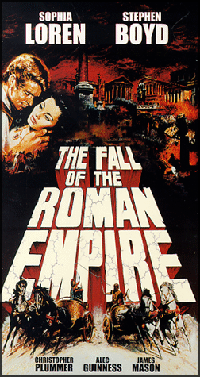
On a brighter note, today is September 4, and I would like to wish you all a very happy Fall of the Roman Empire Day. 1,528 years ago today, Romulus Augustulus, the last Emperor of the West, was deposed by the barbarian king Odoacer. Odoacer, unlike the petty tyrants who had spent the past century grabbing at the purple, declined to proclaim himself Emperor, and at last the long Roman nightmare in Western Europe slid into its well-deserved oblivion.

Your gift for this joyous occasion is a game to play with the neo-conservatives creepy spendthrift fascists. Next time some neo-conservative creepy spendthrift fascist starts waxing poetic about the glories of a future Pax Americana, ask him what the Jews, or the Dacians, or the Christians, thought of the Pax Romana.

Here’s to many happy returns–and the hope that we might add the fall of certain other empires to our holiday calendar soon!

Further reading

Quote for the Day

In our time, political speech and writing are largely the defense of the indefensible. Things like the continuance of British rule in India, the Russian purges and deportations, the dropping of the atom bombs on Japan, can indeed be defended, but only by arguments which are too brutal for most people to face, and which do not square with the professed aims of the political parties. Thus political language has to consist largely of euphemism, question-begging and sheer cloudy vagueness. Defenseless villages are bombarded from the air, the inhabitants driven out into the countryside, the cattle machine-gunned, the huts set on fire with incendiary bullets: this is called pacification. Millions of peasants are robbed of their farms and sent trudging along the roads with no more than they can carry: this is called transfer of population or rectification of frontiers. People are imprisoned for years without trial, or shot in the back of the neck or sent to die of scurvy in Arctic lumber camps: this is called elimination of unreliable elements. Such phraseology is needed if one wants to name things without calling up mental pictures of them. Consider for instance some comfortable English professor defending Russian totalitarianism. He cannot say outright, I believe in killing off your opponents when you can get good results by doing so. Probably, therefore, he will say something like this:

While freely conceding that the Soviet regime exhibits certain features which the humanitarian may be inclined to deplore, we must, I think, agree that a certain curtailment of the right to political opposition is an unavoidable concomitant of transitional periods, and that the rigors which the Russian people have been called upon to undergo have been amply justified in the sphere of concrete achievement.

— George Orwell, Politics and the English Language, 1946

(recommended in an excellent post by Billmon)

Anticopyright. All pages written 1996–2025 by Rad Geek. Feel free to reprint if you like it. This machine kills intellectual monopolists.