Rad Geek, to-day:
To-day: Helmut Walser Smith, The Butcher’s Tale: Murder and Anti-Semitism in a German Town. Prologue and Chapter 1.
official state media for a secessionist republic of one
Rad Geek, to-day:
To-day: Helmut Walser Smith, The Butcher’s Tale: Murder and Anti-Semitism in a German Town. Prologue and Chapter 1.
Rad Geek, to-day:
Die drei Räuber
What the hell just happened here.
Rad Geek, to-day:
To-day: rsync and PHP; Ira Berlin, MANY THOUSANDS GONE, Part III, “Slave and Free: The Revolutionary Generation”; and an inaugural meet-up for Auburn University Greek & Latin Club.
Sometimes radgeek.com gets reader questions. I try to answer them if I can. Here is the latest one to come in through my feedback form. The abrupt cut-off of the text is sic in the original e-mail I received. Names have been changed to protect the innocent.
You need your cop dad. Your cop dad keeps the lights on and the bad guys away from your doorstep. Do you really want anarchy? Do you really want to live in a world without law and order (the
–Paternal in Poughkeepsie
Email, 27 Sextilis 2015.
I– I never had a cop dad… (weeping, swelling after-school special music in the background)
* * *
… O.K. Now that I’ve collected myself, a couple quick answers.
Yes, I really want anarchy.
This is a complex question:
2a. Yes, I really want a world without law.
2b. It’s complicated. I want a world with less of some kinds of order, and with more of other kinds of order.
In any case, there are a couple of things that are essential to realize. First, social order is not always and everywhere a good in the first place; it depends on the means by which the order is achieved, and the employment to which the order is put. Second, law
is not the only means of attaining social order;
the standard governmentalist view is that social order order can only come about through social control, and social control can only come about through political power and legal enforcement. But the standard governmentalist view is utterly and completely wrong.
Hey, read this. Seriously.
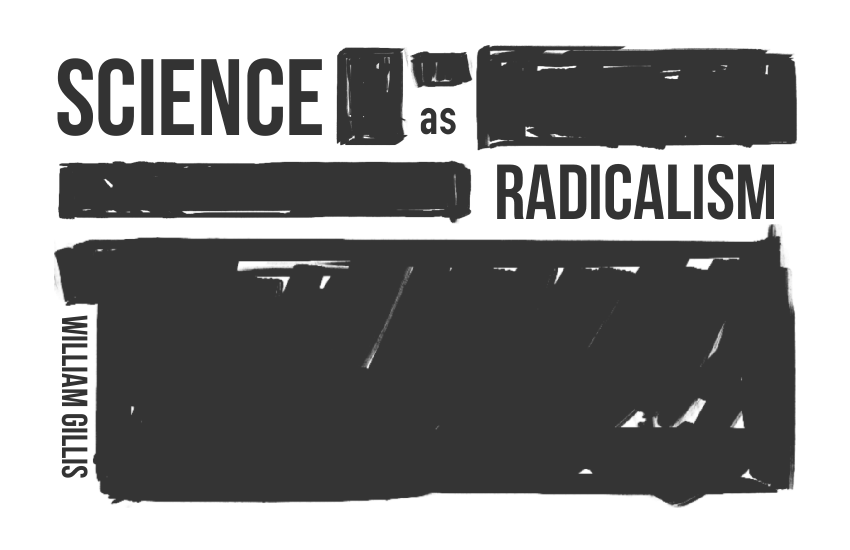
Science as Radicalism
William Gillis
It's no secret that a good portion of the left today considers science profoundly uncool. A slight affinity with it persists among a majority, but few asides of scorn by the continental philosophers influential in the contemporary leftist canon see spirited response and science's most prominent champions remain dated historical figures like Peter Kropotkin and Élisée Reclus. Indeed there's a lingering whiff of technocratic stodginess and death that the word "science" has never quite shaken. Those leftists most associated with it have a tendency to either be authoritarians looking to legitimize near-fascist narratives, or doe-eyed activists enchanted by saccharine visions of self-managed bureaucracies and The Meeting That Never Ends. To a great many who identify as radicals "science" appears in our lives primarily as a place our various enemies habitually retreat to conjure the authority their shoddy arguments couldn't.
. . .
The fact of the matter is that the remarkably successful phenomenon that the term "Science!" has wrapped itself around is not so much a methodology as an orientation. What was really going on, what is still going on in science that has given it so many great insights is the radicalism of scientists, that is to say their vigilant pursuit after the roots (or !!!@@e2;20ac;2dc;radis'). Radicals constantly push our perspectives into extreme or alien contexts until they break or become littered with unwieldy complications, and when such occurs we are happy to shed off the historical baggage entirely and start anew. To not just add caveats upon caveats to an existing model but to sometimes prune them away or throw it all out entirely. Ours is the search for patterns and symmetries that might reflect more universal dynamics rather than merely good rules of thumb within a specific limited context. As any radical knows "good enough" is never actually enough.
–William Gillis, Science as Radicalism
Human Iterations, 18 Sextilis 2015