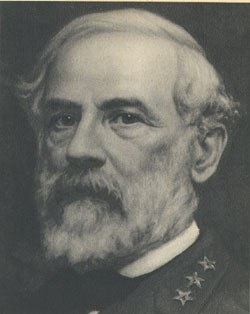
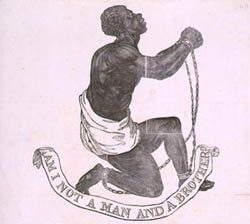
Robert E. Lee owned slaves and defended slavery (posted 3 January 2005)


I’ve spent some time ragging on neo-Confederate mythistory here before; today I’d like to take a bit of time to talk about another of the idiot notions popular with the Stars-and-Bars crowd: the idea that Robert E. Lee opposed slavery, or that he didn’t own any slaves. No he didn’t, and yes he did. Robert E. Lee defended the institution of slavery and personally owned slaves.

Lee cheerleaders love to point out that Lee wrote to his wife, in 1856, that In this enlightened age, there are few I believe, but what will acknowledge, that slavery as an institution, is a moral & political evil He did write that, but the use of the quotation is dishonest. The quote is cherry-picked from a letter that Lee wrote to his wife on December 27, 1856; the passage from which it was taken actually reads:

In this enlightened age, there are few I believe, but what will acknowledge, that slavery as an institution, is a moral & political evil in any Country. It is useless to expatiate on its disadvantages. I think it however a greater evil to the white man than to the black race, & while my feelings are strongly enlisted in behalf of the latter, my sympathies are more strong for the former. The blacks are immeasurably better off here than in Africa, morally, socially & physically. The painful discipline they are undergoing, is necessary for their instruction as a race, & I hope will prepare & lead them to better things. How long their subjugation may be necessary is known & ordered by a wise Merciful Providence.

Robert E. Lee, letter to his wife on slavery (December 27, 1856)

Lee, in other words, regarded slavery as an evil—but a necessary evil ordained by God as the white man’s burden. Far from expressing opposition to the institution of slavery, the purpose of his letter was actually to condemn abolitionists; the letter was an approving note on a speech by then-President Franklin Pierce, which praised Pierce’s opposition to interference with Southern slavery, and declared that the time of slavery’s demise must not be sped by political agitation, but rather left to God, with whom two thousand years are but as a Single day. After that reassuring note, Lee goes on to offer an impassioned plea for toleration of the Spiritual liberty to enslave an entire race:

Although the Abolitionist must know this, & must See that he has neither the right or power of operating except by moral means & suasion, & if he means well to the slave, he must not Create angry feelings in the Master; that although he may not approve the mode which it pleases Providence to accomplish its purposes, the result will nevertheless be the same; that the reasons he gives for interference in what he has no Concern, holds good for every kind of interference with our neighbors when we disapprove their Conduct; Still I fear he will persevere in his evil Course. Is it not strange that the descendants of those pilgrim fathers who Crossed the Atlantic to preserve their own freedom of opinion, have always proved themselves intolerant of the Spiritual liberty of others?

And what did the painful discipline … necessary for their instruction mean? One of the sixty-three slaves that Lee inherited from his father-in-law explains:

My name is Wesley Norris; I was born a slave on the plantation of George Parke Custis; after the death of Mr. Custis, Gen. Lee, who had been made executor of the estate, assumed control of the slaves, in number about seventy; it was the general impression among the slaves of Mr. Custis that on his death they should be forever free; in fact this statement had been made to them by Mr. C. years before; at his death we were informed by Gen. Lee that by the conditions of the will we must remain slaves for five years; I remained with Gen. Lee for about seventeen months, when my sister Mary, a cousin of ours, and I determined to run away, which we did in the year 1859; we had already reached Westminster, in Maryland, on our way to the North, when we were apprehended and thrown into prison, and Gen. Lee notified of our arrest; we remained in prison fifteen days, when we were sent back to Arlington; we were immediately taken before Gen. Lee, who demanded the reason why we ran away; we frankly told him that we considered ourselves free; he then told us he would teach us a lesson we never would forget; he then ordered us to the barn, where, in his presence, we were tied firmly to posts by a Mr. Gwin, our overseer, who was ordered by Gen. Lee to strip us to the waist and give us fifty lashes each, excepting my sister, who received but twenty; we were accordingly stripped to the skin by the overseer, who, however, had sufficient humanity to decline whipping us; accordingly Dick Williams, a county constable, was called in, who gave us the number of lashes ordered; Gen. Lee, in the meantime, stood by, and frequently enjoined Williams to lay it on well, an injunction which he did not fail to heed; not satisfied with simply lacerating our naked flesh, Gen. Lee then ordered the overseer to thoroughly wash our backs with brine, which was done. After this my cousin and myself were sent to Hanover Court-House jail, my sister being sent to Richmond to an agent to be hired; we remained in jail about a week, when we were sent to Nelson county, where we were hired out by Gen. Lee’s agent to work on the Orange and Alexander railroad; we remained thus employed for about seven months, and were then sent to Alabama, and put to work on what is known as the Northeastern railroad; in January, 1863, we were sent to Richmond, from which place I finally made my escape through the rebel lines to freedom; I have nothing further to say; what I have stated is true in every particular, and I can at any time bring at least a dozen witnesses, both white and black, to substantiate my statements: I am at present employed by the Government; and am at work in the National Cemetary on Arlington Heights, where I can be found by those who desire further particulars; my sister referred to is at present employed by the French Minister at Washington, and will confirm my statement.

Testimony of Wesley Norris (1866); reprinted in John W. Blassingame (ed.): Slave Testimony: Two Centuries of Letters, Speeches, and Interviews, and Autobiographies Baton Rouge: Louisiana State University Press (ISBN 0-8071-0273-3). 467-468.

Some Lee hagiographers seem to be completely unaware that Lee ever owned slaves, much less treated them like this. Part of that’s just the warping of tidbits they heard elsewhere—it’s true that Lee did not own any slaves during most of the Civil War—and part of it is, frankly, dishonest fudging—Lee’s sixty-three slaves were, in spite of being legally under his control and forced to work on his plantation, not held under his own name, but rather temporarily under his control as an inheritance from his father-in-law, G.W.P. Custis. Other Lee cheerleaders recognize that Lee did own slaves, but give him props for manumitting them. What they leave out of the record is that Custis’s will legally required Lee to emancipate the slaves that passed into his control within five years of Custis’s death. Custis died October 10, 1857 and his will was probated December 7, 1857 (about a year after Lee wrote his letter on slavery); Lee kept the slaves as long as he could, and finally filed the deed of manumission with Court of the City of Richmond on December 29, 1862—five years, two months, and nineteen days after Custis’s death.

Custis actually gave freedom to his slaves without qualification in his will; the matter of the five years was supposed to be time for Custis’s executors to do the legal paperwork for emancipation in such manner as may to [them] seem most expedient and proper. There’s good reason to read the clause as intending for the five years to serve as an upper bound on settling the legal details, not as five more years for driving the slaves for whatever last bits of forced labor could be gotten. Lee, however, did not see it that way, and set the slaves to for his own profit for as long as he could. We have already seen that some of the slaves disagreed with Lee on this point of legal interpretation, and how he treated those who acted on their legal theory by seceding from his plantation.

Of course, Lee never was very big on secession at all. Those who love to haul out the Confederacy — Lee included — as heros for secessionist self-determination tend to neglect comments such as this one:

Secession is nothing but revolution. The framers of our constitution never exhausted so much labor, wisdom, and forbearance in its formation, and surrounded it with so many guards and securities, if it was intended to be broken by every member of the Confederacy at will. It was intended for perpetual union so expressed in the preamble, and for the establishment of a government, not a compact, which can only be dissolved by revolution, or the consent of all the people in convention assembled. It is idle to talk of secession. Anarchy would have been established, and not a government, by Washington, Hamilton, Jefferson, Madison, and the other patriots of the Revolution.

—Robert E. Lee, letter, 23 January 1861

Secession allowed; anarchy established, and not a government; one sighs—if only.

Robert E. Lee is no hero. He was a defender of slavery and a harsh critic of abolitionism; he was also a slaver who brutally punished those who sought their rightful freedom. There are many reasons to damn the Federal government’s role in the Civil War, but none of them offer any excuse for celebrating vicious men such as Lee.

Update 2005-07-03: Since this page is written for Google, I’ve made a couple revisions: (1) The title has been lengthened from Robert E. Lee owned slaves to Robert E. Lee owned slaves and defended slavery, to more accurately reflect the full contents, and the full text and a link to an online transcription of the Testimony of Wesley Norris was added.

Replies to Robert E. Lee owned slaves and defended slavery (118 so far…) Syndication feed

  1. Linked by » Geekery Today:

    He who controls the past, controls the future; he who controls the present, controls the past

    In case you’re wondering what recent development demanded a debunking of the neo-Confederate myth that Robert E. Lee opposed slavery, the answer is: nothing. Lack…

    [More at Geekery Today...]

  2. DSwogger replied:

    I suspect that Robert E. Lee, for his era, is somewhere more than what you’ve characterized and less than what “devout confederates” would have us believe. The totality of the evidence supporting the attributes of a well respected officer, both Union and Confederacy, and a compassionate gentleman far outweigh what has been presented here. And that includes former slaves of Lee.

  3. Rad Geek replied:

    I’m not sure, Dan, what it is you mean when you say that Robert E. Lee is “more than what [I’ve] characterized”, and doubly unsure when you add the qualifier “for his era.” This article is not an attempt to give you a picture of Robert E. Lee’s whole character. Much less is it an attempt to compare Robert E. Lee’s character or actions with those of his contemporaries. All that I have discussed here is the fact that (1) Robert E. Lee did not oppose slavery in any meaningful sense (he was a harsh critic of abolitionism, not a supporter); (2) Robert E. Lee personally owned slaves, and those who claim that he did not are operating on incomplete or inaccurate information; (3) that Lee treated a couple of slaves who tried to run away very cruelly; and (4) that the picture neo-Confederates would like to give you of Lee is, therefore, almost always radically incomplete, whether out of ignorance or dishonesty or both.

    This in and of itself is important enough information, whatever conclusions you might draw from it about Lee’s character. It would be possible to acknowledge everything said here and still claim that Lee was a decent or even an admirable human being. I think that’s judgment is profoundly wrong, and—dare I say—deeply racist. But whether it’s right or wrong it is a judgment that should be made in light of all the facts about Lee, and not in light of the bowdlerized mythistory that Lee boosters so often give of his life. It’s one thing to face up to the fact that Lee forcibly held 63 human beings in chattel bondage and flayed those who tried to escape, but say that he’s a decent guy anyway. It’s quite another thing to make the case for him being a decent guy without ever mentioning the fact that he was a slaver, or spreading (either knowingly or unknowingly) the lie that he did not.

    As it happens, I do think that, besides serving as historical data, the information that I’ve repeated here does tell you something important about Lee’s character. You’re right that doesn’t give you a complete picture of the sort of man Lee was. But it does give you a pretty definite picture of some things that Lee was not.

    For example, he was not a hero (in spite of what is said on his behalf of neo-Confederates) and he was not a compassionate gentleman (in spite of what you have said). I’m sure that Lee was widely admired and respected in the military; but who cares? Whether someone is well-liked or not in a particular social circle may tell you much more about the social circle than it does about their character. And I’m well aware that Lee was a scrupulously courteous and cordial man who could behave very kindly to many people in his social circle. But again, who cares? He was a slaver who violently held 63 of his fellow human beings in bondage for as long as he could legally get away with extracting a profit from them. Isn’t that enough to say that he was, therefore, not a compassionate man? How could a compassionate gentleman stand by and watch another human being lashed, and exhort the man doing the flogging to “Lay it on well”? Would a compassionate gentleman then go on to demand that their lacerated backs be rubbed with brine? If I said, “Look, I know that Albert DiSalvo raped and murdered all those women, but if you look at the whole picture, he was really a nice guy,” would you take me seriously?

    Lee’s kindness to people who happened to share his own skin color and class background was only the superficial appearance of compassion; that he did not care about their worth or dignity as human being becomes clear enough when you look at his unrepetant barbarity toward Black human beings. Lee was certainly something, alright, but a “compassionate gentleman” or a “hero” certainly isn’t it.

  4. Dorothy replied:

    i totaly disagree wiht everything you said. all of it is a lie. Lee was a complete southern gentleman and a wonderful hero. one of his slaves wrote this, and for that matter wrote a whole book on this, “I was raised by one of the greatest men in the world. There was never one born of a woman greater than Gen. Robert E. Lee.” I think this is all just your opinion and not based on actual research, because if you researched, you would see that he hated slavery and would have rather fought for the North than South…so think about that

  5. Rad Geek replied:

    Dorothy:

    i totaly [sic] disagree wiht [sic] everything you said. all of it is a lie. Lee was a complete southern gentleman and a wonderful hero. … I think this is all just your opinion and not based on actual research, because if you researched, you would see that he hated slavery

    It is a known and documented fact that Robert E. Lee held 63 of his fellow human beings in bondage. You can find out more about this by reading Lee’s letters, or by (for example) consulting his father-in-law’s last will and testament. (I have done these. That’s called “research.”)

    It is a known and documented fact that Robert E. Lee flayed at least two of his slaves who had tried to escape from his slave-driving, and had brine rubbed on their backs. You can find out more about this by reading the testimony of Wesley Norris, one of the victims of this barbarous treatment. (I have read it. This is also called “research.”)

    It is a known and documented fact that Robert E. Lee supported the institution of slavery. He did not “hate” it; he regarded it as a necessary evil. Thomas Jefferson regarded the American Revolution as a necessary evil (he would have preferred a peaceful separation), but he did not “hate” the American Revolution. The people who did condemn slavery and acted to end it were called abolitionists. Lee regarded the abolitionists’ cause as an “evil Course” and praised President Franklin Pierce’s promises to protect Southern slavery from the abolitionists’ “interference.” You can find out more about this by reading (for example) Lee’s letter to his wife on the President’s speech. (I have read it. That’s also called “research.”)

    These are not lies and they are not mere opinions. They are the truth and they are directly supported by documentary evidence.

    The purpose of this post is not to argue about whether Robert E. Lee was a gentleman or a thug; whether all of his slaves hated him or only a few; whether he can properly be regarded as a hero; or anything of the sort. It is to establish these known and documented facts about Robert E. Lee’s life and make them available to the public, because apologists for the Confederacy routinely fudge, ignore, or lie about them in order to try to glorify Robert E. Lee. I have my own opinions about whether Robert E. Lee should be glorified at all—some of which I mentioned in my reply to Dan Swogger—but whether you agree with those or not, you do have an obligation to form your own opinions about him on the basis of the known and documented facts, not on facile half-truths or comfortable myth-making.

  6. ryan replied:

    you are wrong, i agree with Dorothy, her evidence is way more believable than yours. maybe you should take down this site and accept that you are wrong. i have also done great research in lengths and 100% agree with Dorothy.

  7. Paul replied:

    I’ve spent years studying the Civil War, the era leading up to it and the social views of the various regions of the United States that existed. My view of Lee is framed in the context of mid-19th century America. Basically, he was a man of his time. I would dare say that 90% of the white population of his day would be characterized as racists today. Prior to and during the early months of the war, even Lincoln did not readily accept that blacks were the equals of whites. Lincoln did eventually see the light and made the evils of slavery the rallying point of the struggle. However, I refuse to brand Lee as an evil man. His views on race were not that far off from the average person, north or south. We have to accept the fact that people were not as enlightened as they are today. Slavery had been around since the earliest civilizations and was embedded in the psyches of many. My assesment of Lee is more based on what he accomplished after the war. He retired to a peaceful life as an educator and did much to heal animosities between north and south. He accepted and embraced the outcome of the war, including that all men are free and equal. That is eveidence enough for me that he was a decent, moral person at heart.

  8. Jeff Fitzpatrick Jr replied:

    Most southerners do know that Robert E. Lee owned slaves. I don’t know anyone who denies it. However, General Lee’s slave, Rev. William Mack Lee, wrote a little book about his days as a slave and it is obvious you haven’t heard of it or read it. Rev. Lee considered his master to be a great man and continued that all the slaves that Lee owned were free ten years prior to the war. Not all southerners who are proud of their heritage are idiots as you like to call us. Your an idiot because of your ignorance. Of course your not to blame, you just weren’t educated or brought up very well. We live in a country today where you are supposed to be tolerant and accept others no matter what their beliefs are. There is not a man in his right mind who thinks slavery was a good thing. 75% of southerners before and during the Civil War didn’t own slaves. My family was a bucnh of poor farmers from Claxton, GA. defending their home from people like Sherman who stole cattle, money, etc. but he is glorified as a hero. Robert E. Lee fought the war like a gentleman and surrenderd like a gentleman. He is glorified because he knew he made mistakes just like every man does. He was and still IS one of the greatest general’s in AMERICA’S history. While people are so upset over Lee owning slaves and being glorified, what about George Washington? Jefferson? No one is taking down their monuments because they owned slaves now are they? We need the past because it reminds us of what we did wrong and to celebrate a group of men who were fighting for what they believed in, right or wrong. No matter how many times people like you complain about us southerners glorifying a man we respect, you aren’t gonna change anything. Especially down here. I’m, proud of my southern heritage and so are a lot of other people.

  9. DA VAUGHN replied:

    I HAVE TO AGREE A GOOD BIT WITH JEFF—LEE WAS A GREAT MAN, BUT HE WAS A MAN! HE LIVED AND FUNCTIONED IN A FAR DIFFERENT TIME—-WE SHOULD NOT JUDGE OUR ANCESTORS TOO HARSHLY LEST WE BE JUDGE HARSHLY BY OUR CHILDREN. GEN. GRANT ALSO WAS A SLAVE HOLDER FOR A BREIF TIME AND HIS WIFE WAS ALMOST A LIFELONG SLAVE HOLDER !!!! WHEN YOU LOOK BACK YOU MUST LOOK AT THE WHOLE PICTURE.

    DAVE.

  10. bob replied:

    this is stupid

  11. Paul replied:

    No, Bob. It’s not stupid. It’s just an exchange of opinions, strong or otherwise, about one of the more complex and interesting persons in US history.

  12. cody replied:

    The truth is General Lee was one of the greatest generals too ever live.

  13. stephen Musgrave replied:

    Lee did not like slavery and this fact was well known.he did have slaves until 1851 when the last was released through manumission. Lee did have a body servant who was a freedman who stayed with Lee thorugh the War. Rev. William Lee who became a minister financed by a gift from Gen lee, repudiated the claims of who were trotted out by the Radical Republicans at the end of the war claiming to have been abused by Gen Lee.Those claims were never in any way substantiated. Rad geek gives the the NACCCP comic book version of Civil War History.

    For one too judge in 19th-century man by 20th-century standards is idiotic. It is true that Gen Lee could not muster the moral courage to completely admit to the fact that his ancestors were wrong in holding slaves and looked for a divine reason for it.A very calvinist thing to do.

    The same people who spend hours bashing General Lee never mention the fact that Abraham Lincoln was an avowed racist who believed in apartheid, was president of the Illinois colonial society, whose goal was to send all Blacks back to Africa. Lincoln also stated unequivocally that he felt Negroes were inferior to whites and should never be allowed to hold office and or vote. General Grant still had two slaves,house servants ever kept by his wife and were not released until the 14th amendment was ratified.(Grant said “if the war was about Slavery I would resign my commision and offer my sword to my enimie” I might add Grant and Lincoln adorn our money not Lee so you might start your political correct purge there.

    There were several thousand slave owners who fought for the union. Not to mention that there was a substantial number of black slave owners in the South.

    Nor is their mention of the fact that the noble Yankees offered a compromise in the form of a ratified 13th amendment signed by Lincoln which would grant the South slavery in perpetuity, in return for a return to the union and accepting the odious tariffs on Southern agriculture, such as the Morill tariff.

    So much for the wAR TO END SLAVERY NONSENSE.

    The radical Republicans were so vile that after the kangaroo court convicting Capt WerTz of crimes in thE andersonville prison, they went to him the night before his execution and offered him a parole and TO BE returned to Switzerland if he would implicate Jefferson Davis and Robert E. Lee in the conditions at Andersonville.

    These are the same fellows to trotted out the so-called abuseD slaves. I don’t make a habit of arguing with NAACP types since they are almost always BLACK racists anymore. Nor do I listen to Southern apologists who explain away slavery. The fact is however Slavery was an American institution not just a Southern one. It was New England slave ships who brought Africans over not Southern ones. The North profited hugely from the cheap products of the South knowing full well the nature of the labor used. Such universities as at Harvard and Yale were built as much on the blood of slaves as the plantations of the South. In the Constitutional convention the question of slavery was brought to a vote only tWo Southern states voted for keeping slavery, Georgia and South Carolina. However the entire block of New England states which were making millions off of slavery threatened not to join the union is slavery was abolished.

    There were mass desertions and riots in the north because of the emancipation proclamation. I might add that Lincoln only argued one case as a trial lawyer involving slavery, he argued for the slave master, that since he was a resident of Kentucky and his slaves escaped in Illinois they should be returned to him.

    I’m amused by these reparation for lunch bunch types who want to correct history, yet ignore a good part of it.

    I believe the biblical passage is remove the log from buying own I before you remove the splinter from mine.

    Anytime anyone uses the term Neo Confederate you know exactly where they’re coming from. When I see the war crimes of the North investigated and illuminated as vigorously as the condemnation of Southern slavery then I will start to believe there is something beyond an anti southern agenda to their remarks. These Neo historians are made up of left-wing academics, and that very small segment of the African-American community, which clutches slavery to their bosom like the Holy Grail,as a passport to a lifetime of free indugences and greased careers.

  14. bob replied:

    Rad Geek’s info on Lee is interesting, but DSwogger’s point that it is difficult to generalize about the character and beliefs of a man from such a narrow sliver of fact holds, I think. Most people are complex enough that there are odd little shady deals contained in a generally honest life, acts of cruelty hidden in a pattern of overall kindness, and so on. The analogy to a serial murderer who maintained polite manners in company was egregious, and the dismissal of all military perception of Lee as mere croneyism is far too simple.

    I truly enjoyed, however, the stinging ripostes from Dorothy and ryan, who possess that wonderful characteristic of being able to reject anything that smells heretical without even having to consciously process it.

    Steven Musgrave’s analysis, though more demanding (assertions such as “I believe the biblical passage is remove the log from buying own I before you remove the splinter from mine” have a pucker factor rating of 7)is also more richly rewarding. There is something deeply satisfying about the argument “Never mind about the guy we’re talking about - these other guys were just as bad”. I was only disappointed that Bill Clinton was not mentioned. One can only admire his forthright refusal to listen to those whose views are idiotic over a wide and varied range of distantly related subjects, and his recognition of the agendas of all manner of agents who seek to adulterate the purity of his thoughts.

  15. the other bob replied:

    Sorry, I should have distinguished myself from the other bob, further above, whose determination of pan-stupidity is breath-taking in its simplicity and breadth of vision.

  16. steve musgrave replied:

    . Winston Churchill viewed Lee as “one of the noblest Americans who ever lived,” why British Field Marshall Viscount Wolseley called him, “the most perfect man I ever met,” and why Theodore Roosevelt honored him as, “the very greatest of all the great captains that the English-speaking peoples have brought forth. Lord Acton also felt Lee was a man among men.

    Lee never personally owned slaves,thye were owned by his wife. He was given charge of his father-in-law’s slaves after the man died. Lee freed them all, in slow stages. By the time Lincoln issued the Emancipation Proclamation in 1863, every slave in Lee’s charge had been freed. At a service in St. Paul’s Episcopal Church in Richmond, a black man created a stir by rising to receive communion.

    One witness reported that the parishioners “retained their seats in solemn silence and did not move,” while the priest looked “embarassed.”

    It was Robert E. Lee who strode up the aisle and knelt beside the black man to take communion. Others then rose and followed his lead. Booker T Wasdhington once said no man could be in the presence of Robert E Lee and not be enobled.

    Those that condemn Lee are nothing more than honorless rascals.Lee was the finest man this Nation ever produced. My great grandfater fought with General Jackson he was a southern abholitionist believing like Lee in gradual manumission. I would turn those who wish to discredit Lee to their task at hand,correcting the problems of the african american community instead of digging up the past. The great Booker t Washington said “Great men cultivate Love only little men cherish the spirit of hatred.”

  17. Anonymous replied:

    thx cody and everyone who agrees

  18. CANDI replied:

    “Rad Geek” i might not know some of the words u used, but SHOVE IT!!!!!!!!! btw(by the way) i fully agree w/ dorothy.

  19. steve musgrave replied:

    The point is Bob, Lincoln was a contemporary of Lee those who bash Lee still praise him. One standard for one man another for another.

    To bring up Licoln’s views shows quite clearly that Lee’s were not some sort of racist abberation. They are much less mean spirited than Abe’s and others of this era. To elucidate this fact given that we are arguing about a man of the nineteenth century, would seem to be appropriate.

    Not in any way is this arguement meant to be, Yah, but the other guy was bad too.My statements were meant rather look at his(Lee’s) views in the light of the the majority of his contemporarys,of which i belive Old Abe to be pretty representative.

    Yes the correct quote is remove the Mote from thine eye before you remove the splinter from mine.

    Approximately one million people died because of that war.Six hundred thousand soldiers and it is estimated 300 to 400 thousand freed slaves died of disease and malnutrition due to the Unions inability to provide for them, after they fled from slavery.

    “root hog or die” was Lincolns responce to Vice President Stephens question about what would become of the freed slaves.He was not kidding either.

    The North’s campaign of total war and there gross mishandling of the freedmen and womens provisioning and care,make any possible hypocricy of Confederate apologists about Lee’s character pale in comparison. this is swallowing camesl and straining at gnats.

    I will go with the opinions I have already stated of General Lee and and and that of his long time body servant and cook, and life long friend, Rev William Mac Lee,”I was raised by one of the greatest men in the world. There was never one born of a woman greater than Gen. Robert E. Lee”.

  20. Rad Geek replied:

    Here’s a few tips for recent commentators who have found this page but don’t know much about me or my interests.

    1. You will not get very far lecturing me about “Southern heritage” or invoking the imperial “we” to talk about what “we Southerners” believe. If you have a brief to argue against the Yankees you can go ahead and do so, but you’re wasting your time directing it at me: I am myself from Alabama and my family has been in the Southeastern United States—Virginia, North Carolina, Tennessee, Alabama, Mississippi, Texas—since Jamestown. (Yes, that Jamestown. Yes, this is reliably documented.) I was educated in Southern schools and have spent the overwhelming majority of my life talking with Southern people. I don’t think that this automatically gives me any special authority or knowledge about the South or about Robert E. Lee in particular, but it does mean that you won’t earn any special credibility for your differing opinions on the matter just by appealing to your Southern background. And it also means that I don’t have much patience for you lecturing me about what my heritage as a Southerner is. (The history of the South belongs to people like Martin Luther King Jr., Fannie Lou Hamer, Sarah and Angelina Grimke, and other heroes just as much as it belongs to slavers like Lee. I find it insulting when Dixie revivalists insist that the latter rather than the former represent my “heritage” as a Southerner.)

    2. This page is not about Lee’s merits or faults as a general. Far less is it about Abraham Lincoln, Ulysses S. Grant, William Tecumseh Sherman, the Civil War, the NAACP, Andrew Jackson, Theodore Roosevelt, Winston Churchill, or Attila the Hun. If you want to argue about the talents of Lee vis-a-vis other military commanders you should take it up with someone who cares; I don’t, because I believe that the Civil War was like most wars in history—a senseless bloodbath—and that we would be much better off if we stopped obsessing about Great Generals and studied how to beat swords into plowshares instead. If you want to know what I think about Abraham Lincoln, I hint at it in GT 2004-12-17: The Hand of DiLorenzo?; to be more explicit, I think that he was a shameless opportunist, one of the closest things this country has ever had to a dictator, and a mass murderer. That doesn’t change the fact that Robert E. Lee owned slaves one bit, and in fact has absolutely nothing to do with it at all. Lee held fellow human beings in chattel slavery. A few of them earlier in his life and some 63 of them from 1857-1862. He also supported the institution of slavery and opposed campaigns to end it. These are known and documented facts, but I have seen plenty of Lee cheerleaders deny them outright. The endless diatribes against Lincoln (for example) that I am treated to whenever I try to state simple facts about things that Lee (for example) did that were wrong are just a change of subject.

    3. The primary purpose of this page is to document facts about Lee’s life, not to convince anyone one way or the other about what those facts, alone or together with other facts about his time, suggest about his character. I am much more interested in getting people to own up to all the important facts about Lee’s life when they make statements about what sort of man he was than I am in getting people to make one sort of statement or the other. But I would like to point out that (i) slavery was as wrong in the 19th century as it is today, (ii) that holding 63 of your fellow human beings as slaves is not just a minor human foible or an “imperfection”, (iii) that the notion that 19th century slavers should be evaluated only in terms of what their contemporaries thought about slavery is the worst sort of moral relativism; and (iv) that it’s historical bunk, anyway, to claim that there wasn’t substantial moral opposition to the institution of slavery in the 1850s-1860s (there was a whole movement of people who were morally opposed to slavery; they were called abolitionists and Lee condemned their efforts; as it happens, the abolitionists were right and Lee was wrong).

    4. Nobody cares whether you “agree” or “disagree” with me. If you have evidence that undercuts or supports a particular claim that’s made on this page, you should feel free to offer it, but just expressing your agreement or disagreement over some point without offering evidence or analyzing the facts on the table is a waste of your time and mine. This is a matter of documented history; it’s not up for a vote.

    5. Please do everyone a favor and edit your posts with full line breaks between paragraphs and using standard English capitalization. Shouting and mashed-together paragraphs hurt my eyes.

    Thank you.

  21. CANDI replied:

    u make a very good point.

  22. CANDI replied:

    btw, i was talking 2 steve.

  23. CANDI replied:

    I some what agree w/ u, “Rad Geek”, and u don’t need 2 get your panties in a twist about the statement i made. and just so u won’t ball like a 3yr old, i apolagize. i’m only 15 so what do i know. and i’ll gladly find my way of this page. and thanks 4 your hospitality.

  24. steve musgrave replied:

    . Perhaps you did not know that your could not just release slaves willy nilly. There were strict laws of manumission. These people(slaves) were almost helpless because for the most part they were uneducated and untrained,there was no safety net.

    Lee was known to given money to everyone that left and he personally saw to it that they had some direction.We know this from the writings of William Mac Lee and othewrs. This responsibility was also part of the will of Custis.There are worse things than slavery for instance starving to death.

    You are only kidding yourself your a typical, as you described radical. Everyword that flows from you is archtypical left wing academic auto speak..

    Spouting the NAACP party line on Lee is really infantile. it is about as historically accurate and truthfull as its counter part the Southern Leaguevgersion of the Civil War

    Self reflection and honesty are far more important than vomiting out a bunch of philosophical clap trap you learn from academics.

    You love to bait your enimies admit it.You want to hurt their feelings,slander thier heros it gives you an ego boost. Kicking the Neo confederate ass.

    The same way the right wing talk jocks put down the liberals. It starts with labeling your opponent and making that label a perjorative in and of itself. Liberal or Neo con.Radicals at both end right or left are really brothers under the skin.They are far more interested in the clever bon mot,the ad hominem than they are a socratic investigation of truth. Ann Coulter and Julian Bond same animal diffent hair cut.Also,your facts are sadly not that imposing because of the reasons I have already have put forth. Enough already I have said too much.

  25. Simon replied:

    RadGeek:

    So much for your desired observance of Point #5, basic grammar and punctuation.

    For what it’s worth, I think people’s views do need to be judged in context to the era in which they live.

    We in the 21st century have the benefit of hindsight to the 19th and can see (some of us anyway) much of the nonsense of that era for what it was. And, no doubt, people a century from now may laugh and shake their heads at what is common today.

  26. Tony replied:

    Your focus and analysis is narrow minded and taken out of 19th Century context, is highly inaccurate. The fact remains that slavery was legal in Virginia until 1865 (unless you count honest Abe freeing slaves he did not control with the Emancipation Proclamation), and Lee�s foray into it from 1857 through 1862 was by your own admission brought about by the death of his relative. He did not seek to purchase these people, and freed them in the manner that was acceptable for that time. Your opinion that �Lee, however, did not see it that way, and set the slaves to for his own profit for as long as he could� was not supported by any facts in your original writing, and you spared nothing there, so one can only assume the data does not support your statement.

    To whine and cry about the flogging of runaway slaves in 1859 is like complaining about the number of animals euthanized in the United States everyday. It was a standard practice of the day, and it was necessary to keep the balance of the slave population in check. By the way, you forgot to mention that the interview of Mr. Norris was conducted as part of the American Freedmen�s Inquiry Commission Interviews, at a time when the federal government still wanted to try and execute or at least imprison Robert E. Lee. I am sure it was an entirely unbiased, uncoached, and truthful interview:) To finish up this point, the reason the federal government decided against prosecuting Lee, was that the South would never have stood for it.

    Robert E. Lee was a great American hero, regardless of your OPINION. He was a leader of men who was admired if not loved by all that met him. Your little diatribe cannot change that no matter how hard you huff and puff.

    I have a suggestion. Do some research about the slave uprisings of the 18th and 19th centuries. They were key among the problems of freeing the slaves. In nearly every instance, the slaves in rebellion killed not only white slave holders, but every white man, woman and child they encountered. In Turner�s rebellion in VA, they killed infant children in their cribs, and a teacher and school full of children. These rebellions resulted in the deaths of hundreds of slaves both guilty and innocent, but never resulted in anyone attaining freedom. Not just slave owners, but all whites were concerned that slaves would not handle freedom well, and these insurrections did little to ease that concern. It is my OPINION that these uprisings had the opposite of their desired effect. Had it not been for these unfortunate events, I believe there would not have been a war, and that slavery would have been nearly finished by the middle of the 19th century. Advances in agriculture and machinery were already greatly reducing the number of people it took to efficiently run a farm, but the slaves were not prepared to care for themselves yet. Events of the last 140 years have shown some accuracy in this belief. Education and direction were key, and if the slave was to be tuly free, he should have been given these things first. The war only guaranteed �freedom� would come sooner, but the slaves and their descendants would spend another 100+ years attaining real freedom, and the federal government, not the South, was the biggest obstacle in their way.

  27. Paul replied:

    It’s worth noting Lincoln’s views on slavery prior to the war. The following is a quote from his debate with Douglas:

    “I will say then that I am not, nor ever have been, in favor of bringing about in any way the social and political equality of the white and black races - that I am not, nor ever have been, in favor of making voters or jurors of Negroes, nor of qualifying them to hold office, nor to intermarry with white people; and I will say in addition to this that there is a physical difference between the white and black races which I believe will forever forbid the two races living together on terms of social and political equality. And inasmuch as they cannot so live, while they do remain together there must be the position of superior and inferior, and I as much as any other man am in favor of having the superior position assigned to the white race.”

    I will not judge Lincoln harshly for this position. He was a man of his time, as Lee was. Both Lincoln and Lee eventually reconciled themselves to freedom and equality, the former about three years sooner. They were both great men who recognized their mistakes and rose above their contemporaries in the end.

    This comparison is not the “worst form of moral relativism”. It is simply fact. Overall, our nation is fortunate today because our founders, many of whom held beliefs that were as imperfect and flawed as Lee’s or Lincoln’s, had the wisdom to create an unparalled constitution and a process to amend it.

  28. Sergio M�ndez replied:

    Tony:

    What are you suggesting? That slaves were not in their right to rebel? That maybe slave brutality against their masters wasnt comprehensible considering the brutality those masters have aplied to them during centuries? You patetic attemps to make the victims victimaries and guilty for rebeling against their slavers is ludicrous at most.

  29. akgraumlich replied:

    In my study of Robert E. Lee I learned that he freed his father in laws slaves as he found jobs and shelter for them. To turn them out, without jobs or shelter would have been irresponsible. I am a Yankee from Ohio. My great great grandfather served in the 131st volunteer Ohio regiment. Perhaps my study is wrong, but I have never read an explanation of his administration of his father in laws estate as you have alleged. I have been a member of two Civil War Roundtables for many years and have heard speakers from all over the country. I have never heard this accusation before.

  30. tony replied:

    You are missing the point Sergio, it is not that slaves had no right to rebel, but that the result of these rebellions, and the excessive tacticts of murdering-non participants in the plight of the slaves (unless you will hold infants accountable for the sins of their fathers) caused the reactions to them to be severe to the point that I truly believe these uprisings perpetuated the institution of slavery by causing a general fear of a freed black population. Hundreds of slaves both guilty and innocent were killed as a result of these uprisings. My point here is that many abolitionists of the day recognized these events as inadequate and inflammatory, and they had absolutley no bearing on the eventual end of the peculiar institution. I find it a bit awkward that you do not understand my analysis. I am not blaming the slaves for rising up, but the methods they used did nothing to further their cause, and harmed many more slaves than they helped. Nat Turner, who led the rebellion in Virginia, was a well educated slave for his day who had been groomed and educated to become a preacher. It was foolish on his part to be so excessive, and he paid a dear price for it. He was hanged and skinned for his troubles. If they had not commited wholesale and brutal murder, and simply fled they would have been better off. The result of the insurrection was that Virginia considered ending slavery, but instead imposed more stringent laws on both slaves and freed blacks. Had this not been such a violent and murerous event, the outcome could have been different. These events stayed in the collective memories of everyone, and did more to keep slavery alive as a way of segregating the races, and maintaining control over a potentially dangerous black population. That is what I am trying to convey Sergio.

  31. Rad Geek replied:

    Tony:

    Your focus and analysis is narrow minded and taken out of 19th Century context, is highly inaccurate.

    The purpose of this page is to document a simple historical fact: that Robert E. Lee held slaves. This fact is often denied outright, or dissembled about, by apologists for Lee or for the Confederacy; since it’s better for people to believe truths than to believe falsehoods, it’s worth documenting it. In case you’re interested, Lee did not, actually, just control the 63 that he enslaved from 1857-1862; he also held about a half-dozen slaves under his own name throughout his life (this is documented by the will that he made while in the army). The 63 are the main topic here because they are the ones that we know the most about, and because their curious legal status has made them the victims of a lot of dishonest fudging by Lee’s hagiographers. If you want to complain about the commentary on the sidelines, feel free to, but the primary point of this article is not the commentary. It’s the historical facts.

    Tony:

    To whine and cry about the flogging of runaway slaves in 1859 is like complaining about the number of animals euthanized in the United States everyday.

    Except, of course, that in the one case you are talking about dumb beasts and in the other you are talking about your fellow human beings. (Incidentally, I think the number of animals euthanized in the U.S. is a serious matter of concern. But the likening of the situation to the abduction, enslavement, rape and torture of your fellow human beings is so appallingly racist, not to mention callously cruel, that it defies any criticism beyond just pointing to it.)

    Tony:

    It was a standard practice of the day, and it was necessary to keep the balance of the slave population in check.

    I hear that during the Nazi invasion of Eastern Europe it was standard practice to send mobile killing units to round up Jews and Romani, take them to open fields or ravines at the edge of conquered towns, and open fire on them. It was also standard practice to send those who survived the wave of mass executions to concentration camps like Auschwitz, Sobibor, and Treblinka. I also gather that this sort of thing was necessary for the Nazis to carry out their political and ideological goals for the ever-expanding Reich.

    But so what? The fact that something is common has no bearing at all on whether or not it is right, and the fact that brutal means happen to be necessary for some end could only justify the means if the end was just, and the means appropriate to it. Neither was the case when it came to preserving race slavery by the use of flogging your fellow human beings and rubbing brine on their lacerated backs. Or, as [Edmund Burke put it in 1757][2]:

    [2]: http://oll.libertyfund.org/Texts/LFBooks/Burke0061/Vindication/0339_Bk.html “Edmund Burke (1757): Vindication of Natural Society”

    To prove, that these Sort of policed Societies are a Violation offered to Nature, and a Constraint upon the human Mind, it needs only to look upon the sanguinary Measures, and Instruments of Violence which are every where used to support them. Let us take a Review of the Dungeons, Whips, Chains, Racks, Gibbets, with which every Society is abundantly stored, by which hundreds of Victims are annually offered up to support a dozen or two in Pride and Madness, and Millions in an abject Servitude, and Dependence. There was a Time, when I looked with a reverential Awe on these Mysteries of Policy; but Age, Experience, and Philosophy have rent the Veil; and I view this Sanctum Sanctorum, at least, without any enthusiastick Admiration. I acknowledge indeed, the Necessity of such a Proceeding in such Institutions; but I must have a very mean Opinion of Institutions where such Proceedings are necessary.

    Tony continues:

    By the way, you forgot to mention that the interview of Mr. Norris was conducted as part of the American Freedmen’s Inquiry Commission Interviews, at a time when the federal government still wanted to try and execute or at least imprison Robert E. Lee. I am sure it was an entirely unbiased, uncoached, and truthful interview:)

    Do you believe that aggrevied Jews made up the Holocaust too? That testimony was gathered by the victors in a major war too, you know.

    Incidentally, Norris’s testimony in 1866 is corroborated by a letter to the editor of the New York Tribune from 1859, the year of Norris’s escape, and (I might add) two years before Lee accepted his Confederate command. Thanks for trying, though.

    He was a leader of men who was admired if not loved by all that met him.

    Do you think that Wesley Norris, his sister Mary, or their cousin admired Lee? Or do you just not count Negroes as part of “all that met him”?

    Tony:

    I have a suggestion. Do some research about the slave uprisings of the 18th and 19th centuries. They were key among the problems of freeing the slaves. In nearly every instance, the slaves in rebellion killed not only white slave holders, but every white man, woman and child they encountered. In Turner’s rebellion in VA, they killed infant children in their cribs, and a teacher and school full of children.

    I already know about them; the question is how much you actually know about them. The claim that “in nearly every instance” the slave uprisings resulted in indiscriminate massacres of whites; you seem to be basing that characterization entirely on the portrayal of Nat Turner’s uprising in Virginia, and perhaps whatever knowledge you have of the Caribbean slave revolutions. It has nothing in particular to do with the other major slave uprisings of the period—such as Gabriel Prosser’s uprising in Virginia or Denmark Vesey’s in South Carolina. (According to some sources, Prosser planned to take the city of Richmond and, if the whites would not surrender peacefully, to massacre all the whites except for the Quakers, Methodists, and Frenchmen. But whatever his plans, he never had the chance to carry them out.)

    In any case, what has this got to do with Lee? The slaves he whipped didn’t try to kill anybody. All they tried to do was to leave and all they hoped for was to be left alone.

    These rebellions resulted in the deaths of hundreds of slaves both guilty and innocent, but never resulted in anyone attaining freedom.

    Again, this is not true. You might look up the history of the revolution in Haiti, or the effects that the revolution in Jamaica had on the British movement for emancipation in the colonies.

    In any case, what has this got to do with Lee? The slaves he whipped didn’t try to kill anybody. All they tried to do was to leave and all they hoped for was to be left alone.

    Not just slave owners, but all whites were concerned that slaves would not handle freedom well, and these insurrections did little to ease that concern.

    Who cares? There were many acts during Nat Turner’s uprising, or the revolution in Haiti (particularly under Dessalines) that were merciless, cruel, and blameworthy. But the reason that they were wrong is because they were merciless, cruel, and blameworthy, not because they offended whites’ sensibilities. The point of the slave uprisings was not to impress whites. Nor should it have been.

    In any case, what has this got to do with Lee? The slaves he whipped didn’t try to kill anybody. All they tried to do was to leave and all they hoped for was to be left alone.

    Paul:

    It’s worth noting Lincoln’s views on slavery prior to the war.

    No, it’s not. The article is not about Lincoln. It’s about Lee. If you want to know my opinion of Lincoln, it’s already been mentioned above; but it’s also completely irrelevant to the discussion of whether or not Robert E. Lee owned slaves.

    However, I will note that you are not only changing the subject, but also doing so dishonestly. The quote that you included, from his fourth joint debate with Douglas at Charleston, Illinois, does not express Lincoln’s views on slavery. It’s an endorsement of racist policy (specifically, denying full civil rights to Black people), but the parts of the quote which you have edited out make it clear that his racism did not prevent him from opposing slavery itself:

    I will say then that I am not, nor ever have been, in favor of bringing about in any way the social and political equality of the white and black races, that I am not, nor ever have been, in favor of making voters or jurors of negroes, nor of qualifying them to hold office, nor to intermarry with white people; and I will say in addition to this that there is a physical difference between the white and black races which I believe will forever forbid the two races living together on terms of social and political equality. And inasmuch as they cannot so live, while they do remain together there must be the position of superior and inferior, and I as much as any other man am in favor of having the superior position assigned to the white race. I say upon this occasion I do not perceive that because the white man is to have the superior position the negro should be denied everything. I do not understand that because I do not want a negro woman for a slave I must necessarily want her for a wife. My understanding is that I can just let her alone.

    Lincoln’s racial politics were execrable, but to present his support for racist law as support for racial slavery, when he explicitly opposed the latter in the same speech that you cite, is to tell lies.

    akgraumlich:

    In my study of Robert E. Lee I learned that he freed his father in laws slaves as he found jobs and shelter for them. To turn them out, without jobs or shelter would have been irresponsible. … Perhaps my study is wrong, but I have never read an explanation of his administration of his father in laws estate as you have alleged.

    Lee had five years in which to emancipate Custis’s slaves in such manner as may to [him] seem most expedient and proper. According to Wesley Norris, he did not tell the slaves this, but rather told them that they would remain slaves for five years. According to documents from the time, Lee hired out the slaves to neighboring plantations and to eastern Virginia — which is to say, he forced them to work for his own profit. And when some of the slaves that he was allegedly in the process of emancipating decided that they were ready to leave already in 1859, he did not let them go and file the papers for manumission; he had them caught, returned, whipped, and their backs rubbed with brine.

    These are not the actions of a willing liberator. They are the actions of a man who is trying to hold his fellow human beings in bondage as long as he can legally get away with it. Lee did not begin to free any of Custis’s slaves, so far as I know, until the winter of 1862. If you have any documentation of his doing so, I’d be obliged if you would post it.

    As for providing them with jobs and shelter, it wouldn’t have been hard. He could, for example, have released them immediately, begun the legal paperwork for manumission, and deeded to them with seed and parcels of his own land as partial compensation for their lifetime in bondage. This wouldn’t even have been hard for him to afford; Lee had just come into substantially more land through his wife’s inheritance. But, then, he’d have to treat Black people as if they were due the moral considerations that are due to any other human being who has been wronged. Pretending as if his sluggish progress towards manumission was motivated by humanitarianism is frankly nothing more than sentimental rot, or perhaps farce.

  32. Kevin replied:

    Rad Geek:

    I agree with your assertion that we should judge acts of the past with 21st Century goggles. There are those that would defend the crimes of history by stating, “hindsight is 50/50” or “most of the population found it acceptable back then”. To that, I respond with the fact that it doesn’t take a minority for something to be considered wrong. 90% of a group could be committing horrible acts, and the 10% who disagree can be correct. It may take decades or centuries for that 10% to be vindicated, but it doesn’t mean that we should forgive the 90% when that time passes, as simply being “representative of their time”. Additionally, it is my personal belief that “hindsight” is a simply a scapegoat concocted by those who have no “foresight”; Some people can’t see the train coming, so they say, “There is no train coming” and so they continue to lie on the tracks. Some of us, however, get off when we hear the whistle.

  33. Michael the Vrginian replied:

    Has any body ever read evangelist Billy Graham’s comments praising Robert E. Lee?

  34. Paul replied:

    I certainly did not mean to imply that Lincoln was sympathetic to slavery. However, as most of America in those days, he was not as consumed with the issue as the abolutionists. Regarding your remark that this page is about Lee, not Lincoln (or anyone else, for that matter): when you open a forum regarding the actions or life of an individual from another era, you have to deal with that person’s contemporaries and the society he lived in to appreciate or critique him. Discussing one’s life in a vacuum is unrealistic. This is not a laboratory where you can control input to produce a specific result. Life is far more complex than that. You are far too narrow to think otherwise.

  35. Linked by » Geekery Today:

    Lost Causes

    DiLorenzo and the LewRockwell.com Fact-Checking Team unwind after a hard day of defending free markets and individual rights against the warfare State. Tom DiLorenzo…

    [More at Geekery Today...]

  36. L. replied:

    Paul:

    As you say, many people in the United States were �consumed with the issue� of abolishing slavery. They were �consumed with the issue� because they saw it as one of great moral importance. They were certainly aware of how much the economy depended on slavery, and yet they did not regard it as a �necessary� evil. Abolitionist literature was widely available, and lectures by abolitionists could be heard all across the country. There were far fewer anti-racist whites than racists at the time, but they were not nonexistent, and they were not silent— nor was there any shortage of eloquent first-person testimonies from former slaves. Why not judge Lee by that �standard of his time�?

    This business of judging Great Men �by the standard of their times� seems to be more a provision for our comfort than anything else. It prevents us from having to feel bad about admiring the wrong people, and it prevents us from having to think too clearly about the people our heroes have wronged.

  37. AC replied:

    How can it possibly cover up the brutality of slavery for even one human to suffer such indignation, horror of all magnitude,spiritually, physically and mentally, there is no amount of ”praising” Robert E. Lee from the North or South to justify before God and all that is morally right, (not laws twisted to say what is morally right, then or now) anyone condoning to what he did to his slaves either ”free” or ”in hidden bondage by greed”. And I am from the South, but thanks to God and the person who wrote these truths, helps even over a hundred years later another human to be set free mentally in one part of this abomination during our ”Human History”.

  38. Carol A. Harrington replied:

    Robert E. Lee was one of America’s greatest sons. Shame on YOU for trying to make him look bad. He freed those slaves he inherited long before the Civil war , and he did it the Right way, you named one incident, which may or may not be true, I, for one, don’t believe Wesley Norris’s story . William Mac Lee was one of those slaves that didn’t want to leave , in fact didn’t. They were the best of friends,this is what William Mac Lee said of Robert E. Lee , “I was raised by one of the greatest men in the world. There was never one born of a woman greater than Robert E. Lee” Most of those slaves held dear the time that they had with him. You’ve accomplished nothing, by trying to make him look bad, you’ve only made yourself look bad.

    Robert E. Lee was a great American, if more of us would pattern ourselves after him, this world would be a better place.

    Proud to be a Lee
    Carol Kenner Harrington

  39. Dan replied:

    I have thought long and hard about R. E. Lee…and suspect that most words written about him are simply….let’s say…too kind. I think he was a Southerner…and I think he was a Southern gentleman in the full meaning of that term. I find myself troubled by one particular instance (beyond the above letter to his wife which I too thinks smacks of being “cherry picked” and this instance is the Gettysbury campaign. If one holds to the common belief that Lee was such a great entity…why did he permit…and he did permit it….allow his men…to round up blacks during the Gettysburg campaign. Ex slaves…free blacks…all of them encountered were trundled up and sent back South. Why did Lee permit this? Are we to believe his soldiers…and subordinates wouldn’t obey him if he gave the order? But…he did not…and I can not believe he did not know it was taking place. This to me speaks more to the man Lee actually was than anything else. It says a lot…does it not? I rather think Lee embraced it fully within the context of Southern culture. I have a hunch…his closed mouth after the war was possibly more a result of worrying about potention prosecution than anything else.
    I would love to see a pyschological study of this man based on things we know. Don’t you wonder about a man that could not suffer to have his daughter’s married and away from him? Just another issue…but one I always think of when I consider Lee.

  40. John Murry replied:

    What you have written is reactionary and uncomplete. You see the world as definitive and marked in convenient black and white/right and wrong segments. Southerners understand life’s duality.

  41. Phil replied:

    I’ve found your comments to be amusing, particularly so given that you’re desperately trying to wriggle and twist. You state in one of your replies that the purpose of this article is to prove that Lee owned slaves. That’s not in doubt. However, lets be honest here - that’s not what you want to achieve with this article. If it was, you could simply have stated facts and left it at that. On the contrary, your language and description of Robert E Lee clearly shows your opinion. That you have an opinion is fine; everyone is entitled to it, but to try and cover this up you refer to ‘research’, which in this instance is very poor, to say the least.

    In your ‘research’ you have found the testimony of Wesley Norris, but you fail to entertain the possibility of why he said what he did. You take it as an accurate account, without examining the circumstances under which the account was made. This is not research, it’s merely repeating something parrot fashion, and is what I would expect of a school child - ‘research’ is rather more than that.

    You also fail to mention, for example, the views of his son, who wrote ‘Recollections of General Lee’, in which he quotes his father as saying ‘As regards the liberation of these people, I wish to progress in it as far as I can… I should like, if I could, to attend to their wants and see them placed to the best advantage… They are entitled to their freedom and I wish to give it to them.’

    Now, you can argue that this is not an unbiased account, and I would agree with you on this. However, if you are going to take that stand, you should also agree that the Norris testimony is not unbiased either. Of course, I doubt that you’ll do that, since the purpose of your article is not to discuss slave ownership at all, but as you have made clear in your post, your sole reason for writing is to blacken both his name and character as much as possible.

    That you try and explain this as ‘research’ is quite frankly laughable, and because of your very biased opinion, makes your work in this area (and I use the term ‘work’ very loosely here) both meaningless and worthless.

    You get a C- and ‘could do much better’.

    One final point - I am neither from the South or the North; I’m from the UK and have no particular axe to grind or bias in this area. Consequently I’m in a rather better position than you to look at the situation inpassionately.

    Phil.

  42. Rad Geek replied:

    Carol Harrington:

    He freed those slaves he inherited long before the Civil war ,

    This is a lie. As is documented above, Lee did not file the manumission papers for the slaves until December 1862 (the very latest date that he could continue to hold the slaves under the terms of Custis’s will). You will note that the Civil War was already well underway by December 1862; in fact Lee’s son Robert E. Lee Jr. claimed that his father ought to be applauded for taking the time out to fulfill his legal obligations in the middle of the war. (It’s also factually incorrect, incidentally, to claim that Lee “inherited” any slaves at all. The titles to the slaves were not willed either to him or his wife; rather, Custis granted his slaves freedom directly, with his executors only being given temporary control in order to make the necessary legal arrangements.)

    Carol Harrington:

    and he did it the Right way, you named one incident, which may or may not be true, I, for one, don�t believe Wesley Norris�s story .

    Do you believe that keeping people in slavery for five years longer than you have to, and (setting aside the question of whether anyone was whipped) capturing those who leave and forcing them back into slavery is “the Right way” to do anything? Really?

    As for the rest, who cares whether or not you believe Wesley Norris’s story? This isn’t an opinion poll and the matter isn’t up for a vote. If you have some specific reason for doubting that Lee whipped the Norrises and rubbed their backs with brine, you are, of course, free to disclose it, but you have not done so here.

    William Mac Lee was one of those slaves that didn�t want to leave , in fact didn’t. … Most of those slaves held dear the time that they had with him.

    Do you have any basis at all for the claim that “most of those slaves held dear the time that they had with him”? Lee held some 70 people in slavery over the course of his life. I for one have no idea how most of them felt, and you probbly don’t either; that’s a lot of people and most of them did not (as far as I know) write much of anything about their experiences. All that I do know is that William Mack Lee (a house servant) was devoted to him, a family of slaves that he manumitted on the condition that they left the continent seem to have gotten along well enough in Liberia, and wrote cordial letters back asking for aid, and that the Norrises said he lied to them about the will and cruelly tortured them for trying to leave. If you know of some more cases than these, you’re free to mention them, but unless and until you do so, I have to say that this is precious little basis for making any assertion at all about “most” of Lee’s slaves. (All I would note here is that enslaving people and forcing them back into slavery when they try to leave is a nasty enough thing to do even without whippings, and that many slave-holders who were quite proud to behave with superficial niceness towards their slaves as long as they “behaved” but quite willing to descend into the cruelest sorts of violence in order to enforce order. Pointing out that one or another of Lee’s slaves did not remember him as harsh several decades after being released, is no reason to conclude that he was not harsh to others.)

    John Murry:

    You see the world as definitive and marked in convenient black and white/right and wrong segments. Southerners understand life’s duality.

    I am a Southerner.. Try to keep up, please.

    Incidentally, whether or not Robert E. Lee held slaves, and whether or not he whipped them when they tried to run away, and whether or not he supported the institution of slavery, are all questions that just have simple yes-or-no, black-or-white answers. (And as I’ve argued, the answers are yes, yes, and yes, in spite of neo-Confederate obfuscation.) Further, slavery really is wrong and not at all right. Whipping people and rubbing their backs with brine, just for trying to leave of their own free will, also really is wrong and not at all right. No amount of mealy-mouthed weaseling about “life’s duality” can change that. I don’t think that these points should be controversial at this point.

    Phil:

    You state in one of your replies that the purpose of this article is to prove that Lee owned slaves. That�s not in doubt.

    I did not state this in one of my replies, but rather in several; I’ve had to repeatedly state it because commenters here repeatedly engage in a classic tactic of neo-Confederate apologists: changing the subject. Here are three different topics, all of which have been mooted in the replies to my article:

    1. Whether or not Lee (i) held people in slavery, (ii) treated those people cruelly, and (iii) defended slavery. Call these the historical issues.

    2. Whether or not the answers to (1) indicate that Lee acted wrongly, or was a bad human being. Call these the ethical issues.

    3. Whether Lee was a good or bad general, what Winston Churchill thought of Lee, whether Lincoln was for or against slavery, whether or not Lincoln was a racist, whether or not Union generals such as Ulysses S. Grant or William Tecumseh Sherman did nasty things, whether or not slave revolts were justified, what you should think about the activism of the NAACP, etc. Call these the irrelevant issues.

    I clearly state, both in the article and the replies, that my primary interest here is in the historical issues. I have my own opinions, and make comments to the side, concerning the ethical issues, because they are important and I think that once you are clear on the historical issues the answers to the ethical questions ought to be obvious. But they are not at all the primary focus of the article; and the irrelevant issues are not the focus of the article at all. Yet (3) seems to be the set of topics to which the most words have been devoted by apologists for Lee, and (2) following up after that. Coming from the South, and having had these arguments before, that’s about what I expected to happen, although I regret that it did: the favorite argumentative tactic of neo-Confederates is almost always the red herring.

    So that is why I have stated (and state here again) that my primary concern, as stated in the first paragraph of the article and repeated several times, is to counter misinformation. The claim that Lee’s status as a slaver is “not in doubt” is factually mistaken; it is widely claimed, by several apologists for Lee, that (a) he held no slaves at all, or (b) that he held no slaves at the time of the Civil War, or (c) that he chose to emancipate the slaves he held, or (d) that he always treated his slaves humanely, or (e) that he opposed slavery (c and even d are often offered as evidence for e; e is often offered as an explanation for c and d). If you want examples, it’s not hard to find them; here, for example, are some blanket denials that Lee held slaves ([1], [2]); some assertions of all of (b)-(e) ([3]); some claims that he opposed slavery and freed his slaves ([4] — a quote printed in the New York Times, no less), and so on. These are quick examples of examples that I found in a few minute’s trawling of Google; I’m sure you could find many more on your own.

    Thus, the facts documented in this article — that Lee in fact held as many as 63 people in slavery, that he held them until the end of 1862 (when the war was already well in progress), that he did not choose to emancipate them, but rather was required to under the terms of Custis’s will, that he did not treat them “humanely”, and that he did not oppose slavery, cannot accurately be described as “not being in doubt.” They ought not to be in doubt, because the evidence is readily at hand, but as I document here and elsewhere, Lee’s boosters often simply lie about it, either through malice or carelessness, through tactics such as selective quotation, fudging of facts in the public record, ignoring direct testimony in favor of opinions rendered after the fact by this or that historical observer, etc.

    However, lets be honest here — that’s not what you want to achieve with this article. If it was, you could simply have stated facts and left it at that. On the contrary, your language and description of Robert E Lee clearly shows your opinion.

    If you mean that my stance on the ethical issues is clearly implied, and at times explicitly stated in the article and my replies, then of course that’s true. So what? I also make a comment to one side that I think that secession is justifiable. But that doesn’t not mean that the primary purpose of this article is to support secessionism, or my complaint about dishonest quotation of Lincoln means that the primary purpose of this article is to set the record straight about Lincoln’s (anti-slavery, but still loathsome) views on racial politics. You can agree or disagree with those judgments, but you do have a responsibility to form your judgments on the matter in light of all the facts in evidence, not the half-truths and outright lies endlessly repeated by Lee’s Lost Cause advocates.

    That said, let’s turn to your take on the facts in evidence. You complain about the use of Wesley Norris’s 1866 testimony concerning Lee’s sluggish progress towards emancipating him and his fellow slaves, and Lee’s use of flogging and brine to punish him, his sister, and their cousin for attempting to run away. You complain, “In your ‘research’ you have found the testimony of Wesley Norris, but you fail to entertain the possibility of why he said what he did. You take it as an accurate account, without examining the circumstances under which the account was made.” You then cite Lee’s own son recalling, in a book explicitly intended to present his father’s memory in the most admirable light, asserting that Lee tried to free Custis’s slaves as quickly as possible. You then equate the testimony from the two: “Now, you can argue that this is not an unbiased account, and I would agree with you on this. However, if you are going to take that stand, you should also agree that the Norris testimony is not unbiased either.”

    The first problem here is that you nowhere make it clear what charges against Lee, specifically, we ought to dismiss, or at least cast a skeptical eye towards. The claim that Lee supported the institution of slavery? The source for that charge is Lee’s own letter (frequently, and dishonestly, cited in defense of the claim that he opposed slavery). The claim that he could have freed Custis’s former slaves immediately after Custis’s death, but made no moves at all towards emancipating them until the very end of the maximum term during which he could have held them? That is a matter of public record, in Custis’s will and the court papers in Virginia. That leaves a few specific claims in Norris’s testimony that you might be taking issue with: (1) that Lee misrepresented the terms of the will to the slaves in order to keep them in bondage; (2) that when the Norrises left and were caught, Lee forced them back into slavery; (3) that Lee had them flogged as punishment for leaving; (4) that Lee had their lacerated backs rubbed with brine; (5) that Lee watched the lashing and told the lasher to “lay it on well”. But you nowhere state whether we are supposed to question any one of these 5 items, some of them together, or all of them. That’s a problem, because if your aim here is to critically assess evidence, rather than just vaguely wave your hands at “bias” and thus dismiss everything Norris has to say en bloc, you need to actually specify what it is you consider dubious, and why. If, on the other hand, your aim is just to vaguely wave your hands at “bias” and dismiss the testimony without any consideration of specific claims or the reasons we do or don’t have to believe them, then who gives a damn? A reasoned, critical assessment of evidence is interesting; uncritical blanket dismissal is not.

    What about the evidence that you offer in counterpoint? Well, the second problem here is that all you offer is an elliptic quotation from Robert E. Lee Jr.’s collection of his father’s letters; but strictly speaking Norris’s testimony and Lee Jr.’s do not conflict at all. Here is the passage, in full, that you are citing from the end of Chapter IV of Robert E. Lee Jr.’s Recollections and Letters of General Lee

    One marked characteristic of my father was his habit of attending to all business matters promptly. He was never idle, and what he had to do he performed with care and precision. Mr. Custis, my grandfather, had made him executor of his will, wherein it was directed that all the slaves belonging to the estate should be set free after the expiration of so many years. The time had now arrived, and notwithstanding the exacting duties of his position, the care of his suffering soldiers, and his anxiety about their future, immediate and distant, he proceeded according to the law of the land to carry out the provisions of the will, and had delivered to every one of the servants, where it was possible, their manumission papers. From his letters written at this time I give a few extracts bearing on this subject:

    “…As regards the liberation of the people, I wish to progress in it as far as I can. Those hired in Richmond can still find employment there if they choose. Those in the country can do the same or remain on the farms. I hope they will all do well and behave themselves. I should like, if I could, to attend to their wants and see them placed to the best advantage. But that is impossible. All that choose can leave the State before the war closes….

    “…I executed the deed of manumission sent me by Mr. Caskie, and returned it to him. I perceived that John Sawyer and James’s names, among the Arlington people, had been omitted, and inserted them. I fear there are others among the White House lot which I did not discover. As to the attacks of the Northern papers, I do not mind them, and do not think it wise to make the publication you suggest. If all the names of the people at Arlington and on the Pamunkey are not embraced in this deed I have executed, I should like a supplementary deed to be drawn up, containing all those omitted. They are entitled to their freedom and I wish to give it to them. Those that have been carried away, I hope are free and happy; I cannot get their papers to them, and they do not require them. I will give them if they ever call for them. It will be useless to ask their restitution to manumit them….”

    But the first thing to note is that Lee Jr. factually misrepresents the terms of Custis’s will; and on this point he actually confirms Norris’s account, since the will stated that the slaves are to be freed
    “in such manner as may to my executors seem most expedient and proper”, within a time not exceeding five years at the maximum, but Lee Jr. repeats the distortion of the terms that Norris claimed had been given out to the slaves, i.e., that the will simply stated that Lee could have them for a fixed period of time and that they were thereafter to be made free.

    The second thing to note is that Lee Jr. is here quoting Lee Sr.’s letters from 1862, stating that Lee apparently wanted to make sure that his legal obligation to free Custis’s slaves was properly fulfilled at the end of the term during which he could legally get away with keeping them. I don’t doubt that this is sincere, but it has absolutely nothing to do with whether Lee was moving expeditiously towards freeing Custis’s slaves for the rest of the five year period (which he certainly could have done, under the terms of the will), or with how he was proceeding in 1859, when the Norrises decided to leave. You, however, selectively quote the letters in order to make it appear as though he were speaking about the whole five-year period, rather than the final arrangements during the months at the end of it; this is, frankly, either dishonesty or laziness on your part, depending on whether you actually took the time to read this passage in full before you cited it or not.

    Nor, by the by, does anything in any of these letters have anything to do whether or not Lee had the Norrises whipped or their backs rubbed with brine.

    In other words, none of this contradicts, or even undermines, what I have said about Lee’s actions from 1857-1862. On one important point (that Lee lied about the terms of the will), it confirms what I had to say. So why mention it, or fault me for not doing so?

    Setting Lee Jr.’s statements to one side (since they do not discuss the issue), we have only the question of whether or not Norris is telling the truth. I do agree that Norris’s testimony is not “unbiased;” you would be biased, too, against somebody who used forced you to remain in slavery. And with good reason: because that’s a rotten thing to do. But so what? “Bias” is not sufficient grounds for dismissing testimony en bloc; what you have to show is whether or not biases are causing, or likely to cause the distortion of facts by the person giving the testimony. The testimony you cite from Lee Jr. and from Lee’s letters does not do this at all, concerning any of the specific charges (1)-(6), for the reasons I explained above. Nor do you give any other specific reason to think so except that Norris was personally affected by his enslavement and by the events he recounts. I’ve seen that style of argument plenty of times before, but I hardly consider it a reputable way of making your case. Do you use blanket dismissals of eyewitness testimony from victims (because “biased”) as a reason to say that, for all we know, aggrieved Jews made up the Holocaust, or that the Chinese invented the Rape of Nanking in order to defame Japan? If so, why do you believe that? If not, by what standard do you admit that testimony for consideration but not Norris’s?

    If you are concerned with the specific details, though, then one way you can decide issues like these is by looking at external facts to try to corroborate one version or another of the story. For example, we know the text of the will and from the junior Lee (also from Lee’s other letters) that Norris is telling the truth about (1) how Lee (mis)represented the terms of Custis’s will, apparently both to the slaves and to others. We also know that Lee did, in fact, hold all of Custis’s slaves as long as he legally could get away with doing so, even though he was perfectly capable of beginning the paperwork to free them immediately, and could treat them as free and independent equals even before the formality of the paperwork was finished. Besides supporting (1), this also supports my claim that Lee’s actions don’t seem to be the actions of an eager liberator.

    That (2) Lee forced the Norrises back into slavery when they captured and were returned to him is, as far as I know, uncontested as a matter of public record. Certainly even sympathetic biographers of Lee agree without question that at least some of the slaves were dissatisfied with their continuing enslavement, that the Norrises tried to leave, and that when they were captured Lee forced them back into slavery and “hired them out” (i.e., forced them to work elsewhere and took the profits for himself) elsewhere in Virginia, which was (again, according not only to Norris but even sympathetic biographers) how most of the Custis slaves were being treated at the time, due to Lee’s need for cash.

    I do not think any controversy at all could reasonably be sustained about (1) or (2). If you think otherwise, you’ve certainly provided no reasons for thinking so. Note, though, that this information is more than enough to tell you that Lee was an active slaver, and that any qualms or reluctance he may have felt in his heart about slavery were certainly not enough to stop him from using force to hold the Norrises as slaves against their will. (He could just as easily have let them go, when they declared they didn’t want to be there, if he opposed slavery, or cared about freeing Custis’s slaves promptly, in any way that made a difference.) Note also that, sentimental nonsense aside, this is more than enough evidence to prove that Lee treated slaves inhumanely, unless you think that slave-driving and forcing escapees back into slavery is a humane way to treat people. The only open question is whether you object to my endorsement of claims (3)-(5), on the basis of Norris’s testimonty—that is, the question of whether, in addition to inhumanely engaging in slave-driving, Lee indulged in the further inhumanity of flogging them and rubbing their lacerated backs with brine. If that (3-5) is all that you object to, then your position is not ridiculous (as it would be if you denied 1 or 2), but it is not (yet) supported, either. The quotation from Lee Jr.’s Recollections and Letters, for example, does not even touch on the issue at all.

    And what about that? Do we have reason to believe that Norris is telling the truth when he tells us (3) that Lee had them whipped, (4) that he had their lacerated backs rubbed with brine, and (5) that he stood by watching and told the lasher to “lay it on well”? Well, sure we do—Norris told us so, and that is some reason to believe it, unless you have further reason to believe that he is lying. Is his testimony corroborated? Well, as it happens, Lee himself denied something or another having to do with the case in private letters — which you might have cited, instead of the irrelevant comments about the legal proceedings in 1862 if you had read the Recollections and Letters more closely (see the letter to the “gentleman in Baltimore” in Chapter XII). But Lee never saw fit to make these denials available to public scrutiny in print, and if you read them you’ll find that he did nothing more than issue blanket denials of the “accusations”, complaining that it was “so easy to make against people in the South upon similar testimony”. This I did not include because when I wrote the article I had not found it yet (it’s buried in Lee Jr.’s book and Lee Jr. does not explain that the article from the Baltimore American charged Lee with flogging the Norrises); after I discovered it I did not add it to the main article because (1) Lee does not give any corroborating evidence to believe his denial beyond his own say-so, and (2) he does not even reply to specific charges or say what it is that is false. (Probably not (2), since he could not plausibly deny it; possibly (1), since he lied about it to everyone else, but the text of the will is enough to refute him if that’s what he meant; maybe (3)-(5), maybe only (4)-(5), maybe (5), or maybe none of (3)-(5), but rather some other related charge that had been made 7 years ago when the story first appeared “at the North” — such as the charge that Lee had personally whipped the woman, Mary Norris, after the officer blanched from doing — which Norris himself did not make, but which people at the time found especially outrageous). Lee could have meant any of these things or none of them, but we don’t know what he means and we don’t know any reason why we should believe him. If I were writing an article on Lee today, I would have mentioned it in the main body, but I do not consider the uncorroborated blanket denial specific, detailed, or credible enough to warrant editing this one. (In any case, this comment will serve as public notice of the letter.) In cases like these it is expected that the accused will deny wrong-doing; this is only interesting if there is any specific discussion of the charges that gives some basis for giving his blanket denial weight over the specific, detailed, and corroborated testimony of the alleged victim.

    Yes, corroborated. We have already discussed the grounds for believing (1) and (2); (3)-(5) (the charges about the flogging) depend on Wesley Norris’s testimony rather than on the legal paper trail. But there is corroboration for his testimony. First he confidently states where he can be found and offers the names of further witnesses who can confirm his statement; these are not accessible to us now, but they certainly would have been accessible to newspaper readers in 1866. Second, as I mentioned above, his claims about the capture and the flogging are confirmed independently by letters about the incident to the New York Tribune in 1859 (well before there was any move to condemn Lee as a rebel, if that’s your reason for doubting the 1866 testimony, since there was as yet no rebellion and he was serving in the federal army). I must confess that I did make one serious error in citing this evidence above: it turns out that there is not just one, but rather two letters from June 1859 that testify to the flogging shortly after it happened.

    There is an admitted difficulty with these letters: at two points of detail they disagree with Wesley Norris’s account of events. They both claim that Lee personally whipped Mary Norris, while Wesley Norris tells us that they were all whipped by the county constable while Lee watched; one claims that each of the escapees got 39 lashes, whereas Wesley Norris tells us that he and his cousin was lashed 50 times, and Mary was lashed 20 times. But the disagreement on the points of detail is easily explained: the 1859 letter-writers got their information from third parties who knew the Norrises well; thus they can be expected to know the broad outlines of the case but to have gotten a garbled version of the details. There seem to me to be perfectly good reasons to accept them as corroborating evidence that (3) Lee had the Norrises flogged. You might wonder about the further claims (4) that Lee had their backs rubbed with brine and (5) that he watched and enjoined the lasher to “lay it on well”. But besides the fact of his testimony, Norris’s willingness to provide “some dozen” corroborating witnesses also give us some further reasons to trust that he is telling the truth about these particulars. In any case, you have offered no particular reason so far to think that he is not.

    As for my aims in reporting all this, you can make of them what you will. I don’t much care what random strangers on the Internet think of me; what I do care about is that information about Lee, and other historical figures, be properly documented, because lies spread through fudging of facts, selective quotation, and other forms of dishonesty are extremely common in discussions of the Civil War, and with the possible exception of boosters for Lincoln, there is no one as guilty of this as boosters for the “Great Men” of the Confederacy. If a full accounting of the information makes them out to be blackguards, then blackguards I will make them out to be; but the thing to object to is the presentation of the facts. Your speculation about my motives in providing the information is nothing more than an argumentum ad hominem of the crudest sort.

    And you can give that whatever “grade” you like.

  43. SJ replied:

    Wow! This page has consumed a great deal of my day. I was curious about the letter Lee wrote to his wife after listening to a radio host compare Lee and the Rev. Martin Luther King. I found the correspondence on this page and was really intrigued.

    Rad Geek, I think you’ve done a superb job. I know you didn’t publish this for praise, but I want to personally thank you creating a forum that has enlightened me concerning this man.

    Keep up the good work!
    A fellow Southerner

  44. James replied:

    Lee was a practical soldier.

    At the death of his father in law he was given a little problem to solve. His father in law stipulated the following: a) 10,000 dollars to each of his daughters b) all debts to be paid y wrote herec) slaves to be freed within 5 years at most (and the slaves had expected this to be sooner rather than later as Mr. Custis had been preparing them for freedom most of their lives)

    There was not enough left in the estate to pay all the debts, so Lee looked for a way out.

    First, he asked the judge if he could get out of some of the provisions of the will as there seemed no way to squeeze blood from a turnip. When this was denied he came upon the solution of hiring out the slaves and working them twice as hard. Deserters would be punished as in the military.

    Whatever you think of the veneer of civilization that was painted on southern gentlemen of the time, you can best understand Lee by what he did. Lee was trained as a problem solving engineer and some of the brilliant things he did in the Mexican War defy belief. He had a distaste for personally owning slaves, but was not anti-slavery. He just didn’t like doing it himself, but had little sympathy for the bondsman (source of this is also his letters).

    By the end of the nineteenth century, folks in the south had come to believe that slavery was wrong. This meant that other reasons for fighting the war than the real cause came to be believed as well. However, when the first states seceded they put out documents saying exactly why they were doing it. States Rights, they assert, gave them the right to secede. But the reason they were seceding was to preserve and expand slavery.

    If some of you don’t believe it here it is in their own words: http://members.aol.com/jfepperson/plat.html

  45. Anonymous replied:

    I am related to Robert E. Lee and ihe is the best general that ever lived. I would have done what he did also. He has more fame then u ever will in ur life time so beat that.

  46. Roderick T. Long replied:

    Anonymous has you there, RadGeek! You are, and probably will continue to be, less famous than Robert E. Lee. But then again, you and Lee are both less famous than Adolf Hitler; Hitler has you both beat in the fame department. So take that.

  47. Duskysal replied:

    I have read all of this and am not surprised at the negative reaction you received. I as a northerner whose great