Geekery Today: posts tagged feministe

Abortion on demand and without apology (Kiwi edition) (posted 18 June 2008)

(Via The Hand Mirror 2008-06-11, via The Hand Mirror 2008-06-17, via comments on feministe 2008-06-16.)

New Zealand’s abortion law, unlike, for example, the United States’s existing case law, does not recognize a basic privacy right to abort a pregnancy without government interference. The law is restrictive in theory, but applied fairly liberally in practice; like many abortion law reform proposals that were entertained in the United States in the years shortly before Roe v. Wade, it requires a woman to get permission from institutionally-privileged consultants before she can get an abortion, but the criteria for permitting a therapeutic abortion are broad enough (especially under the heading of the pregnant woman’s mental health) that they can be, and are, handed out pretty liberally. But as Cindy Cisler pointed out in 1969, no matter how superficially liberal an abortion law regime may be, these kind of requirements for mediating reproductive choice through politically-anointed medical experts are really a dangerous trap, just waiting to be sprung. Thus, witness Justice Forrest Miller’s recent ruling on the workings of the Kiwi Abortion Supervisory Committee:

In a review of the workings of the Abortion Supervisory Committee, initiated by Right To Life New Zealand, Justice Forrest Miller said there was a reason to doubt the lawfulness of many abortions.

Jusice Miller was delivering his judgment following a hearing at the High Court at Wellington in April.

Right to Life had claimed the Abortion Supervisory Committee had failed to properly interpret the Contraception Sterilisation and Abortion Act, so full regard is given to the rights of unborn children.

It sought to find the committee had failed its statutory duty to review the procedure for abortions and enquire into the circumstances in which consultants authorised abortions on mental health grounds.

It said the committee had failed to seek proper information on the mental health grounds from consultants.

It also sought to find the committee had failed in its duty to ensure adequate counselling facilities were available.

A registered practitioner can only lawfully carry out an abortion if they act under a certificate issued by two certifying consultants.

The Abortion Supervisory Committee said it had no power to review or oversee the clinical decision-making process.

It denied New Zealand had abortion on request, and said there was no evidence of this.

In his judgment Justice Miller found the Abortion Supervisory Committee had applied the abortion law more liberally than Parliament had intended.

There is reason to doubt the lawfulness of many abortions authorised by certifying consultants, he said.

Justice Miller said the abortion law neither confers or recognises a legal right to life of the unborn child.

However, he said the Bill of Rights, through the abortion law, had recognised the unborn child had a claim on the conscience of the community, and not merely that of the mother.

stuff.co.nz (2008-06-10): Abortion law being used too liberally

Give me a call when the fetus has a claim on the bodies of the community, and not merely that of the mother.

Then maybe they can have something to say about it. In the meantime, though, as long as it’s just weighing on their consciences and not on their abdomens, it really is merely the mother, not the rest of the community, whose conscientious deliberation ought to matter when it comes to continuing the pregnancy. Of course, the bellowing busybody blowhard brigade has every right to be just as loudmouthed as they want to be, on their own time, in their own space, and on their own nickel, about what their consciences tell them ought to happen in other people’s wombs. But certainly neither they, nor the government, has any right to commandeer another woman’s reproductive system against her will, or to coerce her into even one more day of pregnancy or forced labor for the sake of satisfying their own qualms.

Abortion on demand and without apology.

See also:

Self-censorship (posted 8 May 2008)

(Via feministe 2008-05-05.)

From a long post by PortlyDyke at Shakesville on the closet and PDAs (I mean Public Displays of Affection, not Private Defense Associations):

When ABC news did their second social experiment about Public Displays of Affection (PDAs) by having a gay male couple and a lesbian couple kiss and cuddle in public (the first experiment used straight couples), the reactions were varied.

There was the woman who called the cops:

Operator: Birmingham Police operator 9283

Caller: We have a couple of men sitting out on the bench that have been kissing and drooling all over each other for the past hour or so. It’s not against the law, right?

Operator: Not to the best of my knowledge it’s not.

Caller: So there’s no complaint I could make or have?

Operator: I imagine you could complain if you like ma’am. We can always send an officer down there.

And they did … . The officer told our couple that the police dispatch received a call because the two of them were making out.

Just don’t do that in public, he told them before leaving the scene.

There was the woman who said:

I would actually want our kids to grow up in a place where they would see various types of people engaging in behaviors that [are] loving.

And then there were the people who took a whole different think of teh childrenz! tack:

I don’t really find it inappropriate, especially during the day when schoolchildren aren’t running around. They might get confused and want an answer for what’s going on, bystander Mary-Kate told us. The majority of the people who spoke about children seemed to echo Mary-Kate’s feelings.

Which means, basically, these folks are fine with Gay PDA — as long as they don’t have to face the uncomfortable, icky business of explaining to their children that not everybody on earth is like mommy and daddy.

[…]

I doubt that most straight, cisgendered people think about, or notice, how frequently they touch their partner in public in ways that are not necessarily sexual (in addition to kissing, cuddling, and the odd bum-squeeze) — ie. holding hands, walking with an arm around the waist, smoothing the other’s hair back out of their eyes — nor do I think that most straight, cisgendered people are probably aware of the fact that when I touch my partner in public, it’s nearly always a considered act.

I don’t obsess about this — as in — it doesn’t eat up my days and nights — and I’m probably about as out as a queer can be in this country — but every single time I take my partner’s hand on the street, or toss my arm over her shoulder or around her waist, hug her goodbye or hello, I do a little, tiny security sweep.

[…]

This friend is the sister I never had. I loved her (and love her still) dearly, and her inability to see how the Measure 8 (which was passed that year) was likely to affect me and my family was incredibly painful to me. I remember weeping in her living room as I tried to explain something that was, to her, completely invisible. I talked to her about how scary it had been to come out publicly after having led a fairly comfortable life as a closeted queer, and she just didn’t seem to get why it should be a big deal at all.

So, I issued her and her husband a challenge (and I’ll issue the same challenge to any straight coupled allies here who want to raise their awareness of LBGTQ issues):

Spend an entire week pretending that you’re not a couple. Don’t write a check from a joint bank account. Hide all the photographs in your home and office which would identify you as a couple. Take off your wedding rings. Touch each other, and talk to each other, in public, in ways that could only be interpreted as you being friends. Refer to yourself only in the singular I, never in the we. When you go to work on Monday, if you spent time together on the weekend, include only information which would indicate that you went somewhere with a friend, rather than your life-mate. If someone comes to stay with you, sleep in separate beds. Go intentionally into the closet as a couple. For a week.

They took my challenge.

They lasted exactly three days.

My friend returned to me in tears on day four and said: I’m sorry. I had no idea what it is like for you.

PortlyDyke @ Shakesville (2008-04-29): Take My Arm, My Love

Read the whole thing. It’s a simple point, but it’s important, and powerful, and beautiful.

Small-government conservatives #2 (posted 2 February 2008)

(Thanks, Holly @ feministe 2008-02-01.)

Hey, everyone, it’s Mississippi House Bill No. 282, introduced by Republican state representative W.T. Mayhall, Jr.!

HOUSE BILL NO. 282

An act to prohibit certain food establishments from serving food to any person who is obese, based on criteria prescribed by the state department of health; to direct the department to prepare written materials that describe and explain the criteria for determining whether a person is obese and to provide those materials to the food establishments; to direct the department to monitor the food establishments for compliance with the provisions of this act; and for related purposes. Be it enacted by the legislature of the state of Mississippi:

SECTION 1.

(1) The provisions of this section shall apply to any food establishment that is required to obtain a permit from the State Department of Health under Section 41-3-15(4)(f), that operates primarily in an enclosed facility and that has five (5) or more seats for customers.

(2) Any food establishment to which this section applies shall not be allowed to serve food to any person who is obese, based on criteria prescribed by the State Department of Health after consultation with the Mississippi Council on Obesity Prevention and Management established under Section 41-101-1 or its successor. The State Department of Health shall prepare written materials that describe and explain the criteria for determining whether a person is obese, and shall provide those materials to all food establishments to which this section applies. A food establishment shall be entitled to rely on the criteria for obesity in those written materials when determining whether or not it is allowed to serve food to any person.

(3) The State Department of Health shall monitor the food establishments to which this section applies for compliance with the provisions of this section, and may revoke the permit of any food establishment that repeatedly violates the provisions of this section.

SECTION 2.

This act shall take effect and be in force from and after July 1, 2008.

Sandy Szwarc, Junkfood Science (2008-01-31): No fat people allowed: Only the slim will be allowed to dine in public!:

I called lead author, Rep. Mayhall, and asked if this was serious legislation or tongue-in-cheek to make a point. He kindly took a moment to answer my question while the legislature was in session. He said that while, regrettably, he doesn’t believe his bill will pass, this is serious. He wrote it, he said, because of the urgency of the obesity crisis and need for government action. He hopes it will call attention to the serious problem of obesity and what it is costing the Medicare system.

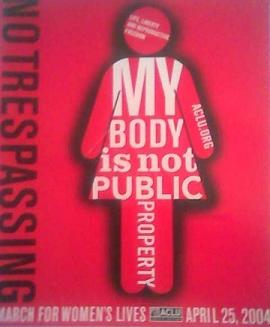
Remember, citizen, your body is public property, and if you’re letting it get blighted, there’s always some conscientious state legislators ready for a bold campaign of eminent domain and cosmetic renewal.

Further reading:

Whited sepulchres (posted 19 April 2004)

(thanks to feministe: The Gazillion Things Crowding Up My Desktop for the link)

The Boondocks: A Right to be Hostile
photo: Eric Alterman

Eric Alterman, the whitest Leftist on the planet

The Nation is a well-written, insightful magazine that’s well worth reading. Eric Alterman is one of the best popular media critics today. These are people well worth supporting with your time, money, and attention. Nevertheless, I can’t find an ounce of sympathy for them in my heart—or an ounce of pique at Aaron McGruder—on reading The New Yorker’s profile of McGruder and its account of a shouting match between McGruder and white liberals at a recent $500-a-plate dinner for The Nation:

On the day of Saddam Hussein’s capture, last December, the left-leaning political weekly The Nation celebrated its hundred-and-thirty-eighth birthday. It was a Sunday night, and the weather was dreadful—forbiddingly cold and wet, heavy snow giving way to sleet—but three hundred people could not be deterred from dropping five hundred dollars a plate for roast chicken amid the marble-and-velvet splendor of the Metropolitan Club, on Fifth Avenue.

Toward the dessert (chocolate torte) portion of the evening, Uma Thurman rose to introduce a special guest: Aaron McGruder, the creator of the popular and subversive comic strip The Boondocks, who, as it happens, had travelled farther than anyone else to be there, all the way from Los Angeles. McGruder, one of only a few prominent African-American cartoonists, had been making waves in all the right ways, poking conspicuous fun at Trent Lott, the N.R.A., the war effort. … It seemed to be, as a Nation contributor said later, his coronation as our kind of guy.

But what McGruder saw when he looked around at his approving audience was this: a lot of old, white faces. What followed was not quite a coronation. McGruder, who rarely prepares notes or speeches for events like this, began by thanking Thurman, the most ass-kicking woman in America. Then he lowered the boom. He was a twenty-nine-year-old black man, he said, who got invited to such functions all the time, so you could imagine how bored he was. He proceeded to ramble, at considerable length, and in a tone, as one listener put it, of militant cynicism, with a recurring theme: that the folks in the room (courageous? Please) were a sorry lot.

He told the guests that he’d called Condoleezza Rice, the national-security adviser, a mass murderer to her face; what had they ever done? (The Rice exchange occurred in 2002, at the N.A.A.C.P. Image Awards, where McGruder was given the Chairman’s Award; Rice requested that he write her into his strip.) He recounted a lunch meeting with Fidel Castro. (He had been invited to Cuba by the California congresswoman Barbara Lee, who is one of the few politicians McGruder has praised in The Boondocks.) He said that noble failure was not acceptable. But the last straw came when he dropped the N-word, as one amused observer recalled. He said—bragged, even—that he’d voted for Nader in 2000. At that point, according to Hamilton Fish, the host of the party, it got interactive.

Eric Alterman, a columnist for The Nation, was sitting in the back of the room, next to Joe Wilson, the Ambassador. He shouted out, Thanks for Bush! Exactly what happened next is unclear. Alterman recalls that McGruder responded by grabbing his crotch and saying, Try these nuts. Jack Newfield, the longtime Village Voice writer, says that McGruder simply dared Alterman to remove him from the podium. When asked about this incident later, McGruder said, I ain’t no punk. I ain’t gonna let someone shout and not go back at him.

Alterman walked out. I turned to Joe and said, I can’t listen to this crap anymore, he remembers. I went out into the Metropolitan Club lobby—it’s a nice lobby—and I worked on my manuscript.

Newfield joined in the heckling, as did Stephen Cohen, a historian and the husband of Katrina vanden Heuvel. It was like watching LeRoi Jones try to Mau-Mau a guilty white liberal in the sixties, Newfield says. It was out of a time warp. Who is he to insult people who have been putting their careers and lives on the line for equal rights since before he was born?

Can you see his face as he says this? The teeth gritted, the lip curled up, the words Ungrateful nigger— just barely stifled between his tongue and his teeth.

Nevertheless, Newfield is right in one respect: the whole fracas reads like a bad flashback from the 1960s. Not, however, for the reasons that Newfield thinks it does: what feels like it came out of a time warp is a bunch of pretentious, comfortable white radicals (oh, I’m sorry, progressives — a terminological shift that looks like a bad flashback from the 1910s) lecturing everyone else on how to do enlightened politics, patting themselves on the back, angrily shouting down speakers they disagree with, and snivelling about anyone who says things that make them feel guilty.

Here, meanwhile, is what McGruder has to say about the whole thing:

At a certain point, I just got the uncomfortable feeling that this was a bunch of people who were feeling a little too good about themselves, McGruder said afterward. These are the big, rich white leftists who are going to carry the fight to George Bush, and the best they can do is blame Nader?

There’s not much to say on the latter point that I haven’t already said elsewhere in considerably more depth; the main thing to stress here is that, while I have quite a few problems with Green Party strategy since the 2000 election, and a lot of problems with Nader’s campaign for 2004, it’s dreadfully foolish for lefty Democrats to waste their time and effort alienating people who are sympathetic to the independent party movement with slash-and-burn Nader-blaming tactics. The target is Bush: energize your base by taking the fight to him and you will win. Demoralize your base with hectoring and finger-pointing and you will lose, and you will deserve to lose.

It’s the former point that I want to dwell on for a moment: the stifling sense of complacency and self-congratulatory politics that we on the Left are all too often prone to. If there is a characteristic vice of the white, male Left, it is pride: specifically, the phony simulacrum of self-worth that comes from indulgence in a certain sort of Pharisaic purity. The basis of our politics, after all, is the repudiation of some of the very roots of the society we live in — the ugly, daily realities of white supremacy, gay-bashing, war, colonialist occupation, men’s rape and battery against women, and so on. The constant temptation is to act as though we’ve somehow managed to extricate ourselves from the sins of the society that surrounds us, and to purify ourselves through our own virtue.

What happens when that self-image is endangered is all too familiar—all too often we answer criticism with a sort self-righteous, defensive backlash. (This is a lesson that we owe especially to the writings by feminists on the male Left; see, for example, Cocktales, anthologized in Dear Sisters; everything I say here about the white Left just as much to the male Left, the straight Left, the collegiate Left, or whatever form of privileged background you care to look at.) And when this happens, the tactics are all too familiar. We change the subject from what we’re doing to how we’re feeling and what we’ve done—changing the subject from institutional structures and the interpersonal character of our acts, to our own personal good intentions. It shifts from being a question of whether or not I’m doing something fucked up (and if so, what I can do to be accountable for that), to being a question of whether I’m one of Us or one of Them (the bigots, the running-dogs, the misogynists, the Bush Administration—everyone that I, the pure one, have defined myself against). From there it’s not far to taking up criticism as a personal attack rather than as a serious critique; and it becomes very easy just to attack back, to scapegoat the critic and—natch—to reiterate all the virtuous things I’ve done for you (or think I’ve done, anyway), that set me apart from the demoniacal Them—and how dare you not realize it, &c.

But if we want to help build an open and just society, some day or another we are going to have to answer for all the big and little ways that we’ve participated in injustice—and the sooner the better for all concerned. Courage, and pride in accomplishments, is a great thing to have — but without humility and accountability there is no real courage or pride; there is only boldness and egotism. Salvation needs works, but it also needs grace; good intentions alone won’t feed a person who’s hungry or stop an assault or defuse a bomb. I, for one, haven’t always made my good intentions do some good for other people more than once; and I know also that I’m not the only one, either. If pompous white radicals progressives won’t cop to that on our own, then we could use a good Mau-Mauing every now and again—hell, anything to get us to sit down and shut up and think about what other people are saying for two seconds. It’s not about guilt, and it’s not about radical chic. It’s about having the guts to acknowledge that you’ve fucked up from time to time (and if the elite Left hasn’t been fucking up pretty frequently for the past two decades, what the hell has it been doing?!) and having the humility to listen to people (even if you disagree with half of what they are saying) when they take you to task on it.

Aaron McGruder was right; folks like Eric Alterman and Jack Newfield write some good stuff, but they are feeling way too good about themselves. If McGruder’s shock therapy did not work, then I’m not sure what to suggest, except perhaps a long-term prescrption of Daily Abnegations. Every morning, before they sit down to work, maybe they should repeat to themselves: Black people know more about racism than I do. Women know more about sexism than I do. Poor people know more about poverty than I do. Now let’s work together to do some good by the end of the day.

This may seem like a tall order for someone like Eric Alterman, who describes himself as A contributor to virtually every significant national publication in the US and many in Europe, but surely the most honest and incisive media critic writing today can suck it up and manage it.

Sponsorship

Libertarian Ad Network

I speak only for myself in the Rad Geek People's Daily, not necessarily for sponsors. Contrariwise, Google ads are served automatically, without individual review; an ad's appearance doesn't entail my endorsement of the sponsor.