Rad Geek People's Daily

official state media for a secessionist republic of one

Posts filed under Misc

Anarchist Communications.

Here’s some things that have come across my desk this week that I’ve been meaning to post a note about.

Publications.

  • Shawn P. Wilbur, La Frondeuse Issues #3 and #4. From Shawn Wilbur: The Black and Red Feminism zine has been reborn as La Frondeuse [The Troublemaker, or The Anti-Authoritarian.] The name is borrowed from one of Séverine’s collections. Issue 3 features works by Louise Michel, Paule Mink and Séverine. Issue 4 contains works by Jenny d’Héricourt under various pen-names. The name-change comes with a bit of fancy repackaging, and will be retroactive. . . . With just a little luck, the paper edition of La Frondeuse will become the first monthly subscription title from Corvus Editions, starting this fall….

  • Roderick Long, Three from The Liberator. From Roderick Long: William Lloyd Garrison's Liberator was the premier abolitionist journal of the antebellum u.s. I've just posted three pieces from The Liberator: an anti-voting piece by Garrison, an anti-slavery piece by Lysander Spooner, and a report on an 1858 reform convention.

  • Fair Use Repository, Now available: The Relation of Anarchism to Organization (1899), by Fred Schulder OK, this one’s by me, so the path of communication was a relatively short one. Still, check it out: a rare individualist anarchist pamphlet from Cleveland, Ohio, printed in 1899. By Fred Schulder, an individualist anarchist noticeably influenced by Tucker, Clarence Swartz, and Henry George.[1] From the Fair Use Blog: Schulder's essay is, in any case, an interesting attempt at discussing the possibilities of consensual social organization, and the anti-social, anti-coordinative features of State force, from a framework based on Spencerian evolutionary theory. [More here.]

  • CAL Press, Modern Slavery #1: From CAL Press: . . . The first full issue of this journal has now taken half a decade to come to fruition. It's been a struggle on many fronts to turn the original impulse and idea into reality. But from here on there's no turning back and we refuse to be stopped! The Modern Slavery project is a direct successor to previous C.A.L. Press projects. These include the magazine Anarchy: A Journal of Desire Armed (published since 1980, and now produced by an independent collective since 2006), the North American Anarchist Review (published for a few years in the '80s), the Alternative Press Review . . ., and the C.A.L. Press book publishing project . . . . The original idea for this new journal was to provide a space within the libertarian and anarchist milieu for the publication of some of the really important, critical and creative material that has too often fallen into the cracks between what will fit into the inadequate spaces available in libertarian periodicals and what has been publishable in book form. . . . The original concept for Modern Slavery included a roughly 200-page, perfect-bound oversize journal format oriented towards people who enjoy reading and who aren't afraid to dive into longer texts that are exciting, intelligent and well-written. In order to remove any possibility or appearance of competition with the now separate and independent Anarchy magazine project, the intention was to avoid newsstand distribution, keep the graphic design simple, severely limit artwork and photos, and avoid publishing any material on the shorter side. The planned format was actually intended to be something not yet too far from what you'll find in this first full issue. However, since the Anarchy collective has recently decided to end its newsstand distribution and shrink its circulation, Modern Slavery will instead seek (limited) newsstand distribution, include more complex graphic design and more artwork and photos, while attempting something more of a balance between longer and shorter contributions in future issues. The changes in direction will probably become more clear as future issues appear. Issue #1 includes articles by Paul Simons, François Gardyn, Henry David Thoreau, Ron Sakolsky, Voltairine de Cleyre, Massimo Passamani, Jason McQuinn, Émile Armand, and the first parts of serialized works by Karen Goaman, Wolfi Landstreicher, and Lang Gore.[2] [More here.]

CFPs.

  • InterOccupy: Science & Society Accepting Papers on Anarchism: Theory, Practice, Roots, Current Trends. From andrea @ InterOccupy: Science & Society is planning a special issue on the broad theme of anarchism, as appearing in both past and present-day political movements. . . . While we expect contributors to innovate and shape their papers according to specific interests and views, we encourage them to contact the Guest Editors (email parameters provided below), so that completeness of coverage can be achieved, and duplication avoided, to the greatest extent possible. We are looking for articles in the 7,000-8,000 word range. Projected publication is Spring 2014, so we would like to have manuscripts in hand by January 2013. Discussion about the project overall, and suggestions concerning content, should begin immediately. Note that, this being Science & Society, the top two suggested topics for contributions are, essentially, What is it that an understanding of Anarchism can contribute to the confirmation or theoretical development of Marxism? But there are a bunch of other topics that they’re throwing out for consideration in the CFP, and it may well turn out to be an interesting issue. (This being a CFP, whether it’s interesting for good, or for ill, is partly up to you….)

Events.

  1. [1]Oh well, you can’t have everything. –R.G.
  2. [2]Also there’s an article by Bob Black, but oh well, you can’t have everything. –R.G.

Keeping the Liberties of Some People Safe


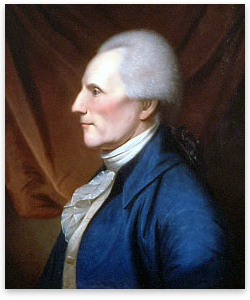
One of the Mises Institute Daily Articles for Thursday was Gary Galles’s Keeping the Liberties of the People Safe, a short article about Richard Henry Lee (1732-1794), a pro-Independence member of the Continental Congress who later became an anti-Federalist in the debate over the United States Constitution. The body of the article itself mostly consists of a fragmentary list of pull-quotes about liberty, power, and government. But here’s the article summary (which you’ll see if you search for the article in Google, or if you read it in a feed reader):

Keeping the Liberties of the People Safe

Richard Henry Lee is best known for the June 7, 1776, motion calling for the colonies’ independence from Great Britain, which led to the Declaration of Independence. As a consistent advocate of liberty, he also opposed the Constitution.

As a consistent advocate of liberty, Richard Henry Lee also enslaved more than 60 men, women and children on the plantation he governed at Chantilly, Virginia.[1]

Here’s something — quoted approvingly by Gary Galles in the Mises Daily article — that the slave-driving hypocrite Richard Henry Lee wrote about liberty while he was living off the forced labor of dozens of captive black slaves:

[W]e ought not to lodge [powers] as evidently to give one order of men in the community undue advantages over others; or commit the many to the mercy, prudence, and moderation of the few.

Well, yeah.

See also:

  1. [1]Cf. J. Kent McGaughy (2004), Richard Henry Lee of Virginia: a portrait of an American revolutionary (Lanham, Maryland: Rowman & Littlefield), p. 61

The Black Scare in Santa Cruz

From Vandals Strike Downtown Santa Cruz, City on a Hill Press (2010-05-06):

Emily Bernard, a manager at Dell Williams Jewelers, was shocked by the event.

. . . While the police department has not publicly verified individuals or groups that are involved except the two transients arrested . . ., it is investigating the group of vandals as a possible anarchist organization.

Business owners and Santa Cruz community members alike [1] are focusing their blame on SubRosa, an anarchist café, partly because one of the men arrested admitted picking up fliers for the event there.

We can't let [an] anarchist café exist now that we know the potential of what they can do and publicize, Bernard said.

— Jenny Cain & Julia Reis, City on a Hill Press (2010-05-06): Vandals Strike Downtown Santa Cruz

I don’t know why Emily Bernard thinks that the existence of an anarchist café should be subject to her personal sufferance. She manages a business, but she doesn’t own downtown Santa Cruz. SubRosa pays their rent to a landowner who is willing to have them, and they have as much of a right to be there as anybody else. But in any case, the SubRosa community space is being scapegoated, harassed, and targeted by other business owners for eradication, for no other reason than the fact that they are Anarchists.

See also:

  1. [1]Sic — The article is operating on a rather selective notion of who counts as a Santa Cruz community member (apparently Johanna Isaacson, Simone Chandler, and other Santa Cruz residents who support, or are part of, the SubRosa collective, don’t count).

Ending State violence against women in prostitution in San Francisco

Last year, a dangerous California street gang rolled up on 1,583 women and abducted them off the streets of San Francisco, tied them up, and held them against their will for days or weeks at a time. Some were robbed of money and then let go. Others were held in specially-constructed dungeons for as long as half a year before they were allowed to see the light of day again.

There has been little notice of this massive wave of violence against women in the malestream media, and little outcry, even though this same gang is still active, and is on track to abduct a similar number of women this year. Part of the reason for the neglect of this story is the fact that the 1,583 women were women in prostitution, or suspected of being in prostitution and all too many people (by which I mainly mean men, and by which I mainly mean pols, lawyers and cops) figure that assaults and disappearances are just business as usual for women in the sex trade, something that can be stamped N.H.I. and shrugged off with a blink.

The other part of the reason is that the street gang’s colors are blue, and they all carry badges, and they call these abductions arrests, the imprisonment pretrial detention or a sentence, and, even though the women they target and grab off the street through force or intimidation are just doing a job for willing customers, and threatening or attacking exactly no-one, these gangsters can count on the biggest racket of all — the protection racket known as the State — to get their back, to claim their violence is justified because it is carried out under color of The Law (as if that were somehow immune to question or challenge), and to put out well-paid mouthpieces who will insist, with a completely straight face, that when women in prostitution are being forcibly hauled off, arrested, cited, fined, jailed, and generally subjected to an attempt to forcibly destroy their livelihood, the people (mostly men) who are doing all this are actually doing it for the women’s own good.

In fact these rationalizations are no better than — really, no different from — the rationalizations that every abusive man in the world uses to pass off their controlling behavior and violence against their women as if they were expressions of love. The male-dominated State is nothing more than an abusive sociopath writ large — one that can attack women by the thousands or by the millions, and one with armies and dungeons and trillions of dollars at its disposal.

As I said last December 17th:

Any serious commitment to freedom for, and an end to violence against, women, means a serious commitment to ending violence against women who work in the sex industry. All of it. Immediately. Now and forever.

And that means any kind of violence, whether rape, or assault, or robbery, or abduction, or confinement against her will, or murder. No matter who does it. Even if it is done by a john who imagines that paying for sex means he owns a woman's body. Even it is done by a cop or a prosecutor who calls the violence of an assault, restraint, and involuntary confinement an arrest or a sentence under the color of The Law. The Law has no more right to hurt or shove around a woman than anyone else does.

— GT 2007-12-17: December 17th is the International Day to End Violence Against Sex Workers

This November, eligible voters in San Francisco have an opportunity to call for peace on this front of the city government’s war against women:

San Francisco would become the first major U.S. city to decriminalize prostitution if voters next month approve Proposition K, a measure that forbids local authorities from investigating, arresting or prosecuting anyone for selling sex.

The ballot question technically would not legalize prostitution, since state law still prohibits it, but the measure would eliminate the power of local law enforcement officials to go after prostitutes.

Proponents say the measure will free up $11 million the police spend each year arresting prostitutes and allow them to form collectives.

It will allow workers to organize for our rights and for our safety, said Patricia West, 22, who said she has been selling sex for about a year by placing ads on the Internet. She moved to San Francisco in May from Texas to work on Proposition K.

Even in tolerant San Francisco, where the sadomasochism fair draws thousands of tourists and a pornographic video company is housed in a former armory, the measure faces an uphill battle, with much of the political establishment opposing it.

Some form of prostitution is legal in two states. Brothels are allowed in rural counties in Nevada. And Rhode Island permits the sale of sex behind closed doors between consenting adults, but it prohibits street prostitution and brothels.

. . .

Police made 1,583 prostitution arrests in 2007 and expect to make a similar number this year. But the district attorney’s office says most defendants are fined, placed in diversion programs or both. Fewer than 5 percent get prosecuted for solicitation, which is a misdemeanor punishable by up to six months in jail.

Proposition K has been endorsed by the local Democratic Party. But the mayor, the district attorney, the police department and much of the business community oppose the idea. They contend that it would increase street prostitution, allow pimps the run of neighborhoods and hamper the fight against sex trafficking, which would remain illegal because it involves forcing people into the sex trade.

. . .

If the proposal passes, we wouldn’t be able to investigate prostitution, and it’s going to be pretty difficult for us to locate these folks who are victims of trafficking otherwise, said Capt. Al Pardini, head of the police department’s vice unit. It’s pretty rare that we get a call that says, I’m a victim of human trafficking or I suspect human trafficking in my neighborhood.

— Associated Press, CNN (2008-10-21): San Francisco may become safe for prostitutes

While I certainly agree that coerced sex trafficking is an evil that needs to be seriously addressed, government officials and government cops like Captain Al Pardini, who claim to be concerned about the welfare of women forced into prostitution, refuse to talk about ways to address the systemic issues that stop trafficked women from being able to come forward and speak out or seek help about what’s been done to them (like, the State’s violence against undocumented immigrants and the threat of deportation; like, the police’s refusal to take women in prostitution seriously or treat them like human beings), and instead they apparently feel perfectly comfortable insisting that their difficulties in investigating sexual slavery somehow justify laws that grant police the power to force any woman suspected of being in prostitution off the street and into police detention, under police scrutiny, to imprison her, to force her to pay punitive fines, to conduct arbitrary police raids to go on fishing expeditions for trafficked women (e.g., at Asian massage parlors) based on nothing other than racial profiling, and so forth, and so on, all in the name of facilitating the police’s attempts to investigate a different crime that affects some subset of the women being rousted up, shoved around, arrested, questioned, fined, imprisoned, and so on, and all in order to be able to force trafficked women into the protection of the criminal law, with or without their consent. This amounts to nothing more than an argument for ensuring that the State maintains and exercises plenary police state powers over all women suspected of being sex workers, for no reason other than the alleged necessity of protecting some women in the sex industry from violence, while ignoring the many crimes that women in prostitution are never able to report to the police for fear of being arrested, and while ignoring the immense violence against all women in the sex industry that is committed by cops themselves, as part and parcel of this policy of arrest and detention. Nobody would ever accept this argument if it were directed against a class of people whose basic human rights malestream society is more accustomed to granting. (E.g., We need to be able to investigate the enslavement of migrant farmworkers; let’s outlaw farming! We need to be able to investigate medical malpractice; let’s give the cops the power to arrest any doctor and charge them with a misdemeanor!) It is only when it comes to people who powerful men regard as official non-persons that these kind of arguments get made — whether they are made against the safety and freedom of women in prostitution, or against the safety and freedom of immigrants without government papers or unauthorized drug dealers, in parallel arguments for government border laws and drug prohibition. That’s despicable, and it’s baffling to reason. If you have the chance, I’d strongly encourage you to vote Yes on Prop. K, and No on police state tactics and government violence against women.

I should say that, while I’ve given up completely on electoral politics as a primary vehicle for political change, measures like Prop. K — or Question 1 and Question 2 in Massachusetts, or State Question 2 in Nevada — are a good demonstration of why, if you’re going to put in for electoral politics, voter initiatives and direct votes on referendum questions offer a much better vehicle for doing it than throwing in for the personal political prospects of some favored (or least-worst) candidate for the elective oligarchy that is so fatuously described as our democracy. Proposition K will have a hard time passing — a similar initiative was defeated in Berkeley recently by a 2-to-1 margin — but the mere fact that completely decriminalizing prostitution in a major U.S. city has entered into the political debate, that it is being considered for passage (or. mutatis mutandis, repealing the income tax in one of the highest-tax states in the U.S., or decriminalizing possession of small amounts of marijuana, or banning all eminent domain seizures for transfer to private developers in a state with one of the most intensely state-capitalist economies in the U.S.) is an achievement in itself, compared to the way in which representative politics completely smothers all serious politics, by choking off any and all political issues outside of the established bipartisan government consensus on the acceptable range of debate. Voting libertarians take note: if you’re going to spend your time on this stuff, there’s not much hope for making a difference this way, but there’s some, and that’s better than I can say for personality politics and representative elective oligarchy.

See also:

What Is Anarchy?

Anarchy means lawlessness. It does not mean riot or chaos. The government schools and the corporate media have taught you to believe that Anarchy means disorder because they need you to believe that order and peace can only exist where they are imposed by government laws and enforced by government police. The elite few who pull the strings in the government and in the corporate media need you to believe that social order requires social control. After all, they intend to do the controlling. They expect you to surrender your freedom to their authority. In exchange they promise you peace, protection, security, and order. But what they deliver is fear, war, police brutality, and humiliating security checkpoints. Their order means taking orders. Their protection is a prison.

In Anarchy there is another way. Instead of a coercive order imposed by government, we believe in consensual order. Instead of protection from brutal government cops, we look to individual and neighborhood self-defense. Instead of "relief" from indifferent government welfare bureaucracies, we look to fighting unions, worker solidarity and cooperative community-based mutual aid. Instead of "order" imposed by obedience to government laws, we look to voluntary contracts and agreements between free people negotiating as equals.

We oppose all government prohibitions, government taxes, government borders, government police, and government wars, because we are for peace, freedom, and social harmony. These can only exist between people who come to agreements as equals, not between people who are forced to obey out of fear. It is government law that produces violence, riot, and disorder. Only in Anarchy can there be true order, real peace, individual freedom and social harmony.

If you are interested in learning more about these ideas, or meeting other people in Las Vegas who are working to make them a reality, check out the Vegas Anarchist Cafe at: http://vegas.anarchistcafe.org[1]

  1. [1]This is the text from a series of handbills that Southern Nevada Alliance of the Libertarian Left prepared to advertise the Vegas A-Cafe, back in 2008. I wanted a place to link just to the text, without the clutter of a bunch of now out-of-date meeting information, so I’ve made this a separate post. –CJ, Sextilis 2015.
Anticopyright. All pages written 1996–2026 by Rad Geek. Feel free to reprint if you like it. This machine kills intellectual monopolists.