Rad Geek People's Daily

official state media for a secessionist republic of one

Posts filed under Smash the State

Lazy linking on Leftist labor libertarianism

Try saying that three times fast.
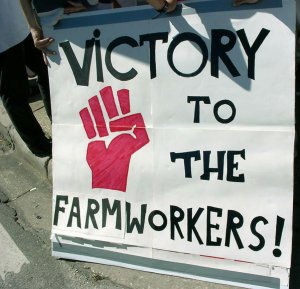
For a while now I’ve been urging libertarians and the labor movement to take a more serious and sympathetic look at one another. (Cf. GT 2004-05-01: Free the Unions (and all political prisoners!), GT 2005-03-23: El pueblo unido jamás será vencido! and GT 2005-03-31: Anarquistas por La Causa for representative examples.) Just as with radical libertarianism and radical feminism I think that the supposedly obvious and unbridgeable opposition between the two is the result more of terminological difficulties and shifting political alliances over the course of the 20th century than any deep or principled gulf. The best way to see this is with more engaged discussion: fewer polemics, more history, more earnest questioning, and more listening. So I’m excited to see a lot of interesting new material just in the past couple of weeks from libertarians (mostly but not exclusively left-libertarians) trying to get clear on the questions and hammer out some of the answers about the prospect for a libertarianism that has a place for workers organizing freely, and a wildcat labor movement that frees itself from the smothering patronage of the State. Here’s a bit of lazy linking to the discussion so far.

  • Brad Spangler (2005-12-03): War, Socialism, and Precision in Thinking writes on the need to disentangle the different meanings attached to the words capitalism and socialism (each of them has at least one traditional meaning that’s perfectly consistent with the peaceful economic cooperation, and one that’s directly antagonistic to it). Brad protests the fuzzy thinking that typically comes about from running the terms freely together, and urges libertarians to realize that If anything that is voluntary on all sides is, at the very least, acceptable to the point that it at least can not righteously be opposed by force, then one has to come to grips that a stateless society will have capitalistic and socialistic aspects in practice. Hippy communes. Farmers co-ops. Employee owned enterprises. Workers syndicates. Unions. … Ultimately, vulgar libertarians, on this point anyway, fail to distinguish libertarianism from personal preference for a particular class of business models.

  • Roderick Long at Austro-Athenian Empire (2005-12-04): Freedom and the Firm asks What will firms look like in a free society? He points out the important trade-off that you face when you decide whether to get business done with a centralized, amalgamated firm, or a small-scale, decentralized operations like family shops and worker’s co-ops: larger size can mean lower transaction costs, but it also comes at the cost of calculational chaos. (The incentive problems and knowledge problems that libertarians have pointed out in central planning don’t evaporate when the central planning is done by corporate rather than government bureaucrats.) Roderick points out some of the ways in which state capitalism distorts the trade-off in favor of big, centralized firms; Leviathan, as always, is Behemoth’s greatest ally: We don’t have a free market, however; instead we have a highly regulated market. For familiar reasons, such regulations hamper the less affluent more than the more affluent, and so successful firms will tend to become somewhat insulated from competition by less established firms, thus removing one check on their inefficiency. And as Kevin Carson points out, regulatory standardisation also decreases competition among the successful firms — a form of de facto cartelisation. Government regulation thus lowers the costs associated with size and hierarchy more than it lowers the associated benefits; it stands to reason, then, that firms in a genuine free-market context could be expected to be smaller and less hierarchical than they tend to be today. This is doubly true once one takes into account the increased competition for workers that a less regulated economy would presumably see (assuming that workers generally prefer less hierarchical work environments).

  • Kevin Carson (2005-12-08): Socialist Definitional Free-for-All: Part I reviews a recent donnybrook over the meaning of socialism and whether voluntary workers’ co-ops and other forms of state-free direct worker control over the means of production are (1) instances of socialism, and (2) compatible with libertarianism. Bithead makes an ass of himself; Knapp holds his own; John T. Kennedy directs some good critical questions at Knapp; Knapp offers some good replies. Carson adds his own Extended Commentary, placing the debate in the historical context of the thought of late-19th and early-20th century libertarians such as Thomas Hodgskin, Benjamin Tucker, and Franz Oppenheimer, who explicitly considered themselves (1) socialists, (2) supporters of organized labor, and (3) radical advocates of laissez-faire in economics. Carson also offers some interesting historical notes on the individualists’ economic thought

    Individualist anarchism, the strand of socialism that most closely approximates my own position, doesn’t place that much importance on ownership of the means of production (leaving aside the views of Tucker et al on occupancy-based ownership of land, anyway). Although some strands of mutualism tended toward a much more active affinity for cooperative organization of production, and considered explicitly cooperativist arrangements would likely predominate in a stateless society, the American individualist branch of mutualism placed much more emphasis on the conditions of exchange than the organization of production. … What mattered to him was that, without state enforcement of special privileges for capital, and without artificial scarcity rents resulting from such privileges, the natural wage of labor in a free market would be its full product. And without the state’s enforcement of artificial scarcity in land and capital, jobs would be competing for workers instead of the other way around.

    And Carson points out that the debate is often confused by the fact that all sides tend to talk about coercion and property as if everyone already had a perfectly clear and common conception of what sorts of things can count as your property and under what conditions. Libertarians tend to broadly agree on central cases, but when the debate is about something more substantial than name-tags or banner colors, it usually comes down to substantive disagreements over peripheral cases:

    All the parties to the debate tend to throw around the term coercion, in discussing whether coercion is essential to collective ownership of the means of production, without addressing the prior question of what constitutes coercion. Now I would argue that whether the establishment and enforcement of collective ownership is coercive depends on what set of property rights rules you start out with. Forcibly invading someone’s rightful property, by definition, is coercion; but using force to defend one’s rightful property claims against invasion is not. So the question of whether force is coercive depends on who the rightful owner is. When the parties to the dispute adhere to two separate sets of rules for property rights, they will disagree on who is the aggressor and who is the defender.

  • Kevin Carson (2005-12-08): Socialist Definitional Free-for-All, Part II offers a lengthy follow-up where he assembles quotes from posts Roderick, Brad, and me on definitions of socialism and capitalism, the size of firms, and organized labor, and adds his own exposition and commentary. Among other things, he points out one of the important ways in which unionization can serve as a road to, rather than a roadblock against, workers adjusting pay, security, and conditions to something like the marginal product of their labor: Regardless of the long-run market incentives to pay labor its full product and treat people like actual human beings, in the short run the uncertainty and potential disruption of being an at-will employee can be quite a hassle. For the benefit of those who have been living on Planet Cato these many years and never had direct experience working for a boss, I’d like to point out that the average boss can fuck your life up in some really unpleasant ways before the market disadvantages of doing so are finally brought home to him. And, as some radical historians of workplace relations have pointed out, a management policy of harassing selected subgroups of workers and dividing them against each other may produce benefits, in the form of reduced labor solidarity and bargaining power, that outweigh the alleged irrationality costs. On the other hand, the benefits of contractually-enforced stability and predictability are just as real to a wage-laborer as they are to the parties to any other kind of contract.
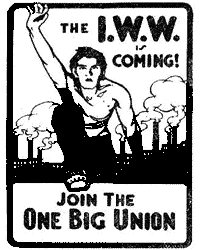
That’s a rather dense thicket of interlinking posts; moving aside from this mutualist admiration society, there’s also been good discussion elsewhere:

  • Joshua Holmes at No Treason (2005-12-09): Open Question about Libertarians and Unions asks What do libertarians have against labour unions? This question struck me the other day (because it was better than studying for Business Associations) and I wondered why libertarians have so much bile for labour unions. Holmes has a good breakdown of common corporatarian objections to unions and responses to them. A vigorous go-around on semantics, tactics, and principles follows in the comments.

  • Irfan Khawaja at Theory and Practice (2005-12-15): The Taylor Law and the Transit Strike: Some Questions asks for further discussion from libertarians and classical liberals about the status of strikes and work stoppages, and laws (such as the Taylor Law) which ban strikes by government employees:

    Is a strike–as Howard Dickman suggests in his book Industrial Democracy in America–just a glorified form of breach of contract? In that case, libertarianism justifies strike-breaking and scabdom, period. (Cf. Truman’s breaking up the railway and miner’s strikes in 1946.) Or does striking have a deeper justification in libertarian principles? To the best of my knowledge, there isn’t much normative discussion of this subject in the contemporary libertarian literature–a shame, considering the centrality of the issues.

    In comments, I suggest a focus on questions about individual rights to refuse to work and move on to the status of strikes from there; Irfan replies with more helpful questions and commentary.

This doesn’t end here. A week from now — 28 December 2005, 11:15 a.m.-1:15 p.m — The Molinari Society will be holding a symposium at APA Eastern Division in New York. The topic is going to be the debate between thick and thin libertarianism, and the thick side will be represented by Jack Ross’s Labor and Liberty: A Lost Ideal and an Unlikely New Alliance. Ross will read and I’ll be commenting on the essay. (Shorter me: the outline of Ross’s argument is correct and important; I’m not so confident about the details and I think there are some important questions and distinctions to be raised about the kind of labor organizing that libertarians should ally with.)

Hope to see you there!

December 17th is the International Day to End Violence Against Sex Workers

We identify with all women. We define our best interest as that of the poorest, most brutally exploited women. —Redstockings Manifesto (1969)

December 17th is the International Day to End Violence Against Sex Workers. The commemoration began from the Sex Workers’ Outreach Project‘s memorial and vigil for the victims of the Gary Ridgway, the Green River Killer. Since then its purpose has expanded to a memorial for, and protest against, all forms of violence against women in prostitution and elsewhere in the sex industry.

I’m opposed to prostitution as an industry, on radical feminist grounds. I frankly have very deep and sharp differences with the organizers of the event, and I’m iffy at best towards the rhetorical framework of sex work as a whole, for reasons that are way beyond the point of this post). But so what? The day is an important one no matter what differences I may have with the organizers. Real steps towards ending the ongoing daily violence against women in prostitution and elsewhere in the sex industry are more important than that; here as much as anywhere — probably more than anywhere else — women’s lives are at stake.

Women in prostitution, especially, have always been the first to suffer and the last to be protected from the very worst forms of men’s intimidation of, harassment of, scorn for, and violence against women. They have been the first and most common victims of almost every serial rapist-murderer, from the eleven women mutilated and murdered by Jack the Ripper to the 48 or more women raped and murdered by Ridgway. But the most lurid and well-known cases are only the purest expressions of the hatred, terror, and violence that pervades our culture and that all too many women in prostitution face every minute of every working day of their life. They are spat upon, robbed, raped, attacked, ignored, and left to die by the men who hold power — as pimps, as johns, as opportunistic cops, and as sanctimonious politicians. A serious commitment to freedom for, and an end to violence against, women means a serious commitment to end violence against women in the sex industry. All of it. Now and forever.

That means fighting back against rape and assault, no matter who the victim is or how she puts food on the table.

That means resisting sexist contempt against women in the sex industry. And its hideous offspring, the killing cruelty of malign neglect when women in prostitution are attacked, robbed, raped, or killed.

That means going to the streets and helping women in prostitution — with food, with money, with legal aid, with emotional support, with condoms, with transportation, with referrals to clinics and shelters if they need it. For exactly the same reasons that we help any other women at risk of battery or rape. It means options and hope.

That means stopping pimps who beat and rape and steal.

It means stopping johns who believe that their money buys a woman’s body and gives them the right to do anything they want to her, whether she agrees or not.

It means stopping cops and prosecutors who respond to these crimes with a shrug of indifference or a sneer of whore.

And ending violence against women in prostitution also means ending State violence against women in prostitution. All of it. Law enforcement comes from the barrel of a gun, and criminalizing women in prostitution means authorizing cops to attack them. Ending violence against women means decriminalization of prostitution; it means an end to cops, guns, clubs, cuffs, jail for women who are just trying to get by in peace. It means an end to the misogynist audacity of conservative pols who use violence against women in prostitution as one of the primary excuses for attacking those women with the sword of the Law. If you want someone to go after, there are plenty of abusive pimps and johns and traffickers out there to go after. Please. For the love of God.

And while statements are important, it also means more than making statements. Today I contributed $50.00 to Alternatives for Girls, a nonprofit near here in Detroit, which (besides a lot of other worthwhile projects) runs a life-saving Street Outreach Project aimed at homeless women and women in prostitution. The Street Outreach Project uses a van as a mobile base, and sends teams through the streets of southwest Detroit and the Cass Corridor offering food, clothing, and shelter, along with HIV prevention materials, crisis intervention, rides for medical services, and referrals. They also organize support groups, activities, and case management services. I hope that you’ll do something similar — if you want to contribute to Alternatives for Girls specifically, you can contribute money, donate items from their wishlist, or volunteer.

For New Yorkers, the Sex Workers Project of the Urban Justice Center provides legal aid, legal training, and documentation for women in prostitution, whether by choice, circumstances, or coercion. You can help them out with a monetary donation.

If you know of other projects that provide direct safety or legal aid services in other towns, please feel free to add links to them in the comments.

May we all live free
in the glory and joy of life
that every human being deserves.

— Daisy Anarchy, I deserve to be safe

Remember. Mourn. Act.

Over My Shoulder #2: from Adam B. Ulam’s Stalin: The Man and His Era

You know the rules. Here’s the quote. This week’s is again from reading on the bus; this time, it’s from Ulam’s Stalin: The Man and His Era.

The first and fundamental battle touched on the role of the trade unions. Here his [Lenin’s] success in repulsing the demands that the unions run the economy, and that Russia should have in effect workers’ control of industry, was greatly helped by Trotsky’s impolitic intervention in the debate. The War Commissar spelled out what Lenin was thinking but was too diplomatic to say, and did so with brutal explicitness: it was sheer nonsense to babble about proletarian democracy when Russia’s economy was in ruins and required military methods to get going again, he argued. The unions had to be strictly controlled by the Party. All democratic and egalitarian compunction had to yield to the drive for higher production. Marxism, he reminded the Party, never promised equality until the final stage of abundance of Communism was reached. Men work because they have to, and work well because of material incentives. Just as the Civil War could not have been won without military specialists, so the war for production for socialism could not be carried on without skilled managers and engineers.

Trotsky’s frankness enabled Lenin to play the role of a moderate, of an arbiter between the anarchosyndicalist Shlyapnikov and the militarist Trotsky. God forbid that the workers’ state should abolish the workers’ unions or turn them into purely administrative agencies! No, trade unions should function freely, they should be schools of Communism. But the state (i.e., the Party) should control the economy. With Trotsky once again serving as the lightning rod for antiauthoritarian and egalitarian forces, Lenin’s position was endorsed by the Ninth and Tenth Party Congresses in 1920 and 1921.

Stalin eschewed a prominent part in this trade union dispute–wisely for his future career. Though there was some superficial similarity between the Workers’ Opposition postulates and those of the military opposition during the Civil War, the background of the dispute was quite different. The opponents of military specialists had often been motivated by their own ambitions to command; here, whatever the personal motives of Shlyapnikov or Kollontay, there was a genuine grassroots feeling of resentment among the workers at the return of the capitalist boss, rechristened economic specialist. Stalin may even have shared this feeling. Class hatred was not the least prominent among his many hatreds. As dictator he licensed the trials of managers and engineers who were made to confess to belonging to a fictitious industrial party, etc. But of course he was also the man who would subjugate trade unions and submit the workers to a discipline undreamed of by Trotsky at his most authoritarian, and who would create that Soviet managerial elite whose emoluments and privileges made the special benefits of the bourgeois specialists of the 1920s seem puny by comparison. Now he stood firmly behind Lenin and his allegedly compromise position. It gave him a welcome opportunity to assail Trotsky–a man, he said, who does not understand the difference between the army and the working class. Persuasion rather than compulsion, as Trotsky would have it, should be used to harness the labor unions in the task of reviving the economy.

Another of Stalin’s infrequent interventions in the issue that rocked Russian Communism for about three years was on the opposite front, that against what Lenin called the anarchosyndicalist deviation of Shlyapnikov. Despite the several condemnations of Workers’ Opposition postulates by Party Congresses and Conferences, this deviation kept popping up like some medieval heresy condemned by Church councils but embedded in the simple faith of laymen. The regime therefore resorted to chicanery against the more prominent Opposition leaders. They were sent on missions abroad–thus began Mme. Kollontay’s long diplomatic career. Michael Tomsky, who was enormously popular with workers, showed himself not free from error: it was discovered that he was badly needed for Party work in Turkestan. A few months among the sands of Central Asia, and he came back chastened and ready to support Lenin. In a secret vote the Tenth Party Congress authorized the Central Committee to throw out people from the Party for factionalism. Still the damnable heresy persisted. It raised its head at the Fourth All-Russian Congress of Trade Unions in May 1921. And somebody in the Party Secretariat (it shows what a mess its affairs were in before Stalin took over) had the fantastic idea of delegating Ryazanov to defend the official Party line before the Communist caucus of the Congress.

To be sure, the old eccentric had supported Lenin on the issue. Always ready with a quip, Ryazanov convulsed the gathering by declaring that Mme. Kollontay’s proletarian zeal reminded him of those wellborn maidens who in the 1870s went to the people to instruct the benighted peasants in the latest political fashions. But he was a hopeless individualist, and it occurred to him while he was speaking that, by God, it was true that the unions were being run in an undemocratic way! So he proposed an amendment, which carried, stipulating that union officials should be elected according to scrupulous democratic norms. Lenin, Stalin, and Bukharin had to rush in to try to undo the damage. This sudden emergency had the usual effect on Stalin of transforming him from a skillful and judicious political manipulator into a violent and threatening accuser. He lashed out at Ryazanov and those who supported him. Shut up, you fool! he shouted, when Ryazanov interrupted his speech. It fell to Lenin to sooth tempers and to persuade the delegates to reverse their vote. Ryazanov, who had answered Stalin tit for tat, was henceforth banned from any activity connected with trade unions.

–Adam B. Ulam (1973), Stalin: The Man and His Era. Boston: Beacon Press. pp. 199-202.

Post your own on your website or in the comments, as you see fit.

A parable

Here’s an old joke from the Brezhnev era. I offer it as a parable in light of the recent debate at Catallarchy (2005-12-15) and Unclaimed Territory (2005-12-14) over public objections to the killing of Tookie Williams and the alleged failure of his supporters to properly denounce all the murderous regimes in the world.

A Soviet apparatchik has been assigned to show an American guest around Moscow. They’re standing on the subway platform waiting for the train, which is now a couple of minutes late. The apparatchik is passing the time by showing his guest the map of all the subway stops throughout Moscow and the spotless cleanliness of the platform — a triumph of socialist efficiency and the rational planning of the people’s public works committee. The American nods quietly and agrees that it’s very clean. Half an hour later, the apparatchik is still talking, and there’s still no train in sight; by now he’s moved on to pointing out the ornate beauty of the station and the murals on the walls — a visible manifestation, he says, of the people’s victory, and the workers’ heroic sacrifices. The American says Yes, Sergei Ivanovich, it is very elaborate. After about an hour another train whizzes by without stopping on its way to another station, and the apparatchik (who’s looking pretty nervous at this point) tries to get his American guest to marvel at the latest triumphs of Soviet science and technology that allow the trains to run faster and more quietly than any in Eastern Europe. Finally the American turns to his guide and says, That’s all very impressive, Sergei Ivanovich, but where is our train?

His guide turns very red in the face and blurts out, And what about your blacks in the South?

Further reading

Bill of Rights Day festivities

I’ve been thinking for a while that I ought to start a feature leading up to the (upcoming) 5th anniversary of Geekery Today, called Dumb Things I’ve Said. The basic idea being that anyone who spends five years writing regularly on controversial topics is likely to change their views over time, and it’s better to spend your commemorative anniversary posts hammering out your own errors than clapping yourself on the back, because you’ve probably said things you later ended up thinking were pretty dumb. I’m no exception, and what I wrote a couple years ago in belated recognition of Bill of Rights Day is a case in point. I doubt that I’ll actually start the feature, but that won’t keep me from ragging on myself for today, at least.

It’s been 214 years today — December 15th — since the first ten amendments, commonly known as the Bill of Rights, were scribbled onto the end of the United States Constitution by order of the several states and the Congress of the United States. Folks with too much time on their hands have dubbed it Bill of Rights Day and think you ought to celebrate the grand legacy of those ten amendments. A couple years ago, I took the opportunity of the 212th anniversary to sing the praises of the Bill of Rights, to bemoan the erosion of some of their traditional protections, and hope that a brighter day would dawn soon. It was a bunch of nonsense, and I should have known that it was at the time, but it took me a while to really see through the dust that the canonical fairy-tales about legal history kick up.

Not surprisingly, I had started doubting the usefulness of leaning on the Constitution when I became an anarchist. But old cognitive habits die hard, and it wasn’t until last year, when I really started reading about William Lloyd Garrison and the rest of the disunionist abolitionists, that I began to feel anti-constitutionalism in any serious way, and it was largely through the Garrisonians that I came to realize the importance of making your arguments from moral basics rather than from legal hermeneutics. Voting abolitionists, and even Lysander Spooner, insisted on twisting the Constitution every which way they could to avoid the conclusion that it was (1) a pro-slavery alliance, and thus (2) an objective force for evil, the covenant with Death and agreement with Hell that Garrison denounced. But as interesting as Spooner’s argument was, it was really Garrison that was right about the Constitution (as I think Spooner came to realize later in his career); the important thing wasn’t constitutionality, but justice, which is not subject to legislative fiat. The Garrisonians, because so many of them were fervently religious, talked about a higher law than the Constitution; that’s partly right, but in a sense it’s also a matter of a lower, more human law; any serious theory of justice has to start from our ordinary claims to justice and dignity, the kind of demands that we ordinarily address to our fellow human beings (don’t attack me without reason, don’t trash my stuff, mind your own business if it’s not hurting you) rather than the ritual incantations that you might utter before a Court (Eighth Amendment, Public Use Clause, penumbral right to privacy, blah blah blah).

But as of a couple years ago my recognition of all this was nowhere near complete, and so my half-complete anti-statism didn’t stop me from singing the Bill of Rights’ praises, piously hoping that other branches of government would force the Bush administration to stick more closely to it, and absurdly describing it as that good old parchment barricade against tyranny.

Well, the thing about parchment barricades is that they don’t hold up very well against pressure. (That’s why you usually want to make barricades out of mud or bricks, at a minimum.) Constitutions don’t protect liberty; people do. Or don’t, which is the legacy the Constitution of the United States leaves us with today. Whatever protections the Bill of Rights was supposed afford white male citizens from the federal government, and whoever those protections were supposed to be extended to in the present day, we have (just to pick a few arbitrarily-selected examples) the FBI spying on us in secret, increasingly arrogant and militant paramilitary police ([1], [2], [3], [4], [5]) occupying our cities, a rampaging global war machine, deliberate and systematic gutting of habeas corpus, and a Justice Department that seems to believe that it can threaten and arrest people for failing to comply with secret laws whose terms they refuse to disclose. Either the Bill of Rights permits this kind of abuse, in which case it does not deserve the praise of rational people, or it forbids it but is incapable of stopping it, in which case it is useless.

In either case, my whining that this sort of thing oversteps this or that clause is bloody well irrelevant; the problem with invading people’s lives with unwarranted searches and seizures, government-sponsored religious persecution, seizing guns, maintaining a standing war machine, inflicting cruel and unusual punishment, or rounding people up and throwing them in prison forever without charges, is not that they’re unconstitutional; it’s that they’re evil. There may be cases where something is wrong just because it violates some bit of positive law — respect for human life demands that you drive on the side of the road other people drive on, but it’s a matter of arbitrary convention which side that should be — but these are certainly not that sort of case. The right to your own body, to self-defense, to your conscience, to peace and freedom, are prior to any law or compact, the only possible foundation for any just law or legitimate authority at all, and therefore not dependent on the Constitution saying one mumbling word about them.

Human rights don’t need to be written on scraps of paper to be worth defending, and wasting your time and energy wrangling over the right enchantments to invoke The Law on your side is a distraction and a sucker’s bet. I’ll take my rights. You can keep the bill.

Further reading

Anticopyright. All pages written 1996–2026 by Rad Geek. Feel free to reprint if you like it. This machine kills intellectual monopolists.