Rad Geek People's Daily

official state media for a secessionist republic of one

Cops are here to protect you. (#6)

Cops are here to protect you by stopping an upset man from cutting himself with a knife by shouting at him in a language he doesn’t speak, then, after he fails to obey commands he couldn’t understand, by tasering him, firing pepperballs at him, and then shooting him dead — with several shots fired after he had dropped the knife.

All for his own good, of course. It became necessary to kill Odiceo Valencia in order to save him.

Cops are here to protect you by pulling you over if your car seems suspicious to them and then, if you want to know what you were pulled over for, pulling you out of the car, getting up in your face, and shouting, Ever get smart-mouthed with a cop again, I show you what a cop does, threatening to arrest you for some fucking reason I come up with, bragging that they can come up with nine other things to arrest you for, insisting, when you tell them that their conduct is being recorded, shouting I don’t really care about your cameras, ’cause I’m about ready to tow your car, then we can tear ’em all apart, and then proceeding to give you a ten-minute lecture on how you should properly address your public servants.

Please note that Officer James Kuhnlein’s dash cam tape from that night was inexplicably missing when Brett Darrow filed a complaint with the St. George police department. Actually, I don’t think it’s particularly difficult at all to explain what happened to the tape.

Cops are here to protect you by pulling you over for possibly speeding and then arresting you on a 10-year-old dog violation. Then, since they just can’t be bothered to wait half an hour until your sister arrives, leaving a 15 year old girl and a 7 month old infant stuck alone in a car on the side of the road at 11 o’clock at night.

GRAND JUNCTION, Colo.—A Grand Junction woman says a state trooper left her baby and her teenage niece unattended in her car for 25 minutes one night when he took her to jail after a traffic stop.

Keio Saupaia said Trooper Jeffrey Vrbas pulled her over at about 11 p.m. on April 28 when she had her 7-month-old daughter and 15-year-old niece with her.

She said Vrbas contacted her sister to come get the children, but that he didn’t wait for the sister to arrive before taking Saupaia to jail.

If that was me, I could have been charged with child abuse, she told the Grand Junction Daily Sentinel.

Colorado State Patrol Capt. Ed Clark confirmed to The Associated Press Monday that Vrbas had arrested Saupaia. Clark said he doesn’t dispute Saupaia’s account but declined to discuss specifics of the incident.

Clark said the matter had been handled internally, but he declined to say whether Clark had been disciplined or to give any other details, citing confidentiality rules covering personnel matters.

I just ask the public to trust that we would handle this appropriately, he told the AP in a telephone interview.

— Denver Post (2008-05-19): Woman says trooper left her baby, teen alone in car at night

But why the fuck would anyone trust them to handle it appropriately?

Trust is earned, not bestowed, and in the case of out-of-control cops like Trooper Jeffrey Vrbas, there is no empirical evidence at all to justify putting trust in the police department administration to do a damned thing about it, beyond possibly ripping him for causing a P.R. problem. When every fucking week brings another story of a Few More Bad Apples causing Yet Another Isolated Incident, and the police department almost invariably doing everything in its power to conceal, excuse, or minimize the violence, even in defiance of the evidence of the senses and no matter how obviously irresponsible or dangerously out-of-control the cop may be, it beggars belief to keep on claiming that there is no systemic problem here, that cops ought to be given every benefit of the doubt, that the same police department that hires and trains these goons ought to be trusted to handle it internally (which means secretly), and that any blanket condemnation of American policing is a sign of hastiness and unfair prejudice. The plain fact is that what we have here is one of two things: either a professionalized system of control which tacitly permits and encourages cops to exercise this kind of rampant, repeated, intense, and unrepentant abuse against powerless people–or else a system which has clearly demonstrated that it can do nothing effectual to prevent it. In either case, it is unfit to exist.
See also:

Rad Geek Speaks: a talk on the Southern Nevada ALL TOMORROW, at Libertarian Party of Clark County meeting. Las Vegas, 3 June 2008, 7:30 PM.

The Southern Nevada chapter of ALL has been busy over the past few months doing some outreach, literature drops, and making contacts with the local networks of anti-statist and social justice activists. In addition to our April 15 Tax Day flyering action, and some informal get-togethers, Southern Nevada ALLies have also:

  1. Done literature drops around town, using William Gillis’s excellent Market Anarchy zine series, and a couple of Vegas Anarchy pamphlets of our own (more on that, soon, I promise) using a version of his template adapted to our local situation;

  2. Put on a small networking and outreach event for the Libertarian Party of Clark County’s last monthly meeting, to get our name out and pass out some literature;

  3. Participated in Las Vegas’s May Day rally against the criminalization of peaceful immigrants; and

  4. Worked together with the Las Vegas United Coalition for Im/migrant Rights to help them organize and promote the 23 May March for the DREAM.

As a result of our outreach event last month, I have been invited the give a talk about Southern Nevada ALL, and left-libertarianism more broadly, at the next meeting of the Libertarian Party of Clark County, TOMORROW, Tuesday 3 June 2008. The meeting will last from 7:30 PM to about 9:00 PM; the LP hosts an informal coffee-klatsch (or bier-klatsch, or whatever) sort of meet-and-greet after the meeting from 9:00 PM onward. I plan to pass out some literature, give a prepared talk — about 1/3 about Southern Nevada ALL itself and what we do, about 1/3 about anarchist and left-libertarian goals broadly, and about 1/3 about direct action, counter-economics, and other means of effecting social change outside of electoral politics — and then to field some Q&A. Mild-mannered and uncontroversial as I may be, I hope for some lively discussion.

Here are the details on the event:

  • WHAT: Talk by Charles Johnson on Southern Nevada ALL, left-libertarianism, and non-electoral activism
  • WHEN: Tuesday, 3 June 2008, 7:30 PM
  • WHERE: Boomerang’s, 6650 Vegas Drive, Las Vegas, Nevada; located on the corner of Vegas Drive and Rainbow Blvd.

One logistical note for those in the area: Boomerang’s is way out on the edge of town; it takes me about half an hour to get their by car. If anyone wants to go but needs help with transportation or wants to carpool, get in touch with me either privately or in comments, and let’s see what we can work out.

For the record, Southern Nevada ALL does not work through electoral politics and is not affiliated with any political party or candidate. But the talk should provide a good opportunity to do some outreach, get our name out, pass out some literature about ALL and left-libertarianism, and maybe find a few new ALLies or fellow travelers. It’s also a good chance to practice some good old soapboxing, and if it goes tolerably well, I hope that we can use it, or something like it, as a model for outreach and talking with other groups — voting libertarians, organized Pauliticos, non-libertarian lefty social justice groups, social anarchists, etc. — with whom we have significant differences but also substantially overlapping interests, and amongst whom might be possibly find a few new ALLies or at least fellow travelers.

It will also be a good opportunity for anyone in the area who’s interested in learning more about ALL to do so, independently of how much or how little interest they may have in the Libertarian Party specifically. So if you know anybody in Las Vegas, or in the area of southern California, southern Nevada, or northwestern Arizona, more broadly, who might be interested — whether or not the Libertarian Party is particularly their thing (after all, it’s not particularly my thing, either, but I’m happy to talk with and work with them on many issues of common concern) — then please do forward the announcement on to them.

More to come soon; watch this space.

Unearthed in South Korea

(Via Lew Rockwell 2008-05-19: Cold War Murder and Roderick Long 2008-05-25: Anarchocide in South Korea.)

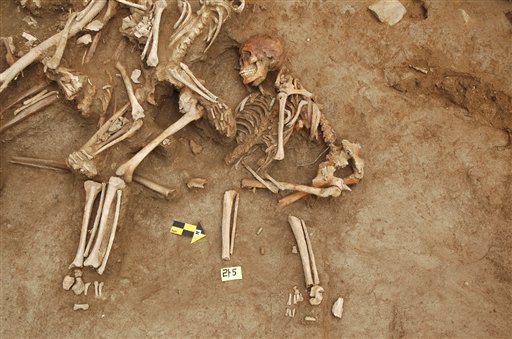
Charles J. Hanley, The Huffington Post (2008-05-18): Mass Killings In South Korea In 1950 Kept Hidden From History:

SEOUL, South Korea — One journalist’s bid to report mass murder in South Korea in 1950 was blocked by his British publisher. Another correspondent was denounced as a possibly treasonous fabricator when he did report it. In South Korea, down the generations, fear silenced those who knew.

Fifty-eight years ago, at the outbreak of the Korean War, South Korean authorities secretively executed, usually without legal process, tens of thousands of southern leftists and others rightly or wrongly identified as sympathizers. Today a government Truth and Reconciliation Commission is working to dig up the facts, and the remains of victims.

How could such a bloodbath have been hidden from history?

Among the Koreans who witnessed, took part in or lost family members to the mass killings, the events were hardly hidden, but they became a public secret, barely whispered about through four decades of right-wing dictatorship here.

The family couldn’t talk about it, or we’d be stigmatized as leftists, said Kim Chong-hyun, 70, leader of an organization of families seeking redress for their loved ones’ deaths in 1950.

Kim, whose father was shot and buried in a mass grave outside the central city of Daejeon, noted that in 1960-61, a one-year democratic interlude in South Korea, family groups began investigating wartime atrocities. But a military coup closed that window, and the leaders of those organizations were arrested and punished.

Then, from 1961 to 1988, nobody could challenge the regime, to try again to reveal these hidden truths, said Park Myung-lim of Seoul’s Yonsei University, a leading Korean War historian. As a doctoral student in the late 1980s, when South Korea was moving toward democracy, Park was among the few scholars to begin researching the mass killings. He was regularly harassed by the police.

Scattered reports of the killings did emerge in 1950 — and some did not.

British journalist James Cameron wrote about mass prisoner shootings in the South Korean port city of Busan — then spelled Pusan — for London’s Picture Post magazine in the fall of 1950, but publisher Edward Hulton ordered the story removed at the last minute.

Earlier, correspondent Alan Winnington reported on the shooting of thousands of prisoners at Daejeon in the British communist newspaper The Daily Worker, only to have his reporting denounced by the U.S. Embassy in London as an atrocity fabrication. The British Cabinet then briefly considered laying treason charges against Winnington, historian Jon Halliday has written.

Associated Press correspondent O.H.P. King reported on the shooting of 60 political prisoners in Suwon, south of Seoul, and wrote in a later memoir he was shocked that American officers were unconcerned by questions he raised about due process for the detainees.

Some U.S. officers — and U.S. diplomats — were among others who reported on the killings. But their classified reports were kept secret for decades.

— Charles J. Hanley, The Huffington Post (2008-05-18): Mass Killings In South Korea In 1950 Kept Hidden From History

William Gillis, Human Iterations (2008-05-22): Mass Graves:

The commission estimates at least 100,000 people were executed, in a South Korean population of 20 million. That estimate is based on projections from local surveys and is very conservative, said Kim. The true toll may be twice that or more, he told The Associated Press.

In 1945, as the Japanese Empire finally went into retreat, the Korean people were left without an occupational authority for the first time in decades. In that brief moment something amazing happened. The Korean Anarchists, long the champions of the resistance struggle, came out of the woodwork and formed a nationwide federation of village and workers councils to oversee a massive project of land reform. Korea graduated from feudalism overnight. Aside from some struggles with the Socialists and Nationalists, the peninsula was at peace.

When WWII concluded, however, the responsibility of securing peace and order in Korea was assigned to the Americans and Soviets. By all accounts in this instance the US actually had no imperialist intentions. While the Soviets moved quickly to deploy their forces and occupy the North, the Americans took their time showing up, and were largely content to let the South Koreans manage themselves.

The Koreans, culturally steeped with anti-authoritarian values, were fond of America and openly despised the Soviets. While a few socialists fled North hoping that the Soviets would give them a hand against the Anarchists, they were overwhelmed in numbers by a mass migration south. Everyone assumed the Americans would assist or at least respect their autonomy.

This did not last.

The Americans Military commanders who eventually arrived had trouble understanding or dealing with the anarchy they found. They had no protocol for dealing with regional federations and autonomous communes. So they helped the dispossessed aristocracy form a military government. In order to make the map simple. In order to get things under hand.

Most importantly they did not understand that the Korean Anarchists and Anti-Authoritarian activists that saturated the countryside were different than–and in fact vehemently opposed to–the Communists, going so far as to organized and launch insurrectionary attacks on the Soviet Occupation before the Americans arrived.

The Americans couldn’t understand anarchists. But leftists, they knew, meant Soviets. And they had the gall to ignore or resist their puppet military government. So they started killing them.

By the start of the Korean War, the slaughter was in full swing. Having arrested every anarchist organizer or sympathetic peasant they could get their hands on, they started executing them en masse.

The Korean Anarchist movement was, historically, one of the strongest in the world. It survived half a century of brutal occupation and economic exploitation. It survived a three way assault by the Chinese, Japanese and Soviets. It has survived many, many massacres and exterminations. It is even still around today. So strong that in the last few years they’ve been known to evict the police from the streets. But the worst injury it ever suffered was initiated and orchestrated by the United States military. In a single campaign so horrific it borders on genocide.

This was truly, objectively, one of the worst things the US has ever done. And there are some big fucking contenders.

Most north american papers ran front-page stories this Monday about the latest mass graves being uncovered while I was riding the Empire Builder from St. Paul to Portland. I found a copy wedged between Amtrak seat cushions. And there was an ancient photo of piled corpses as far as the eye could see. The papers euphemistically used the term leftists. But I know the history, I did the research.

They were almost all anarchists.

However lovely America may be. Remember, the US government is not our friend. It will never be. It can never be.

— William Gillis, Human Iterations (2008-05-22): Mass Graves

Shameless Self-promotion Sunday #3

Happy June!

So, what did you all write about this week? Leave a link and a short description for your post in the comments.

In Their Own Words: Stokes Got A Constituency edition

(Via This Modern World 2008-05-28.)

Master GOP strategist Karl Rove on Fox News Sunday with Chris Wallace, 18 May 2008:

ROVE: But look. The Republicans have got three things they need to do strategically and three things they need to do tactically.

Strategically, they better get their act together with an aggressive agenda of reform here at home about the things people are talking around the kitchen table.

What are the Republicans going to do about health care? What are they going to do about providing reliable and affordable energy? What are they going to do about jobs and keeping our economy innovative and competitive, encouraging exports? What are we going to do about helping people grapple with the cost of college education?

We’ve got great answers, Republicans do, on this, but they better get their act together in laying this out in a comprehensive way.

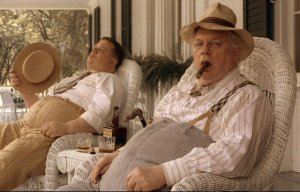
Menelaus Pappy O’Daniel and his son, Junior O’Daniel, in O Brother, Where Art Thou? (2000):

Pappy: Languishing! Languishing! Goddamn campaign is languishing! We need a shot in the arm! You hear me boys? In the goddamn arm! If the election held tomorrow, that goddamn Stokes would win it in a walk….

Junior: Well… he’s the re-form candidate, Daddy…

Pappy: Yeah?

Junior: Well, people like that re-form….

Hey! Maybe we should get us some!

Pappy: I’ll reform you, you soft-headed sonofabitch! How we gonna run reform when we’re the damn incumbent?

Anticopyright. All pages written 1996–2026 by Rad Geek. Feel free to reprint if you like it. This machine kills intellectual monopolists.