Over My Shoulder #25: Lee’s views on Reconstruction and civil rights, from Michael Fellman (2000), The Making of Robert E. Lee
Pick a quote of one or more paragraphs from something you’ve read, in print, over the course of the past week. (It should be something you’ve actually read, and not something that you’ve
read
a page of just in order to be able to post your favorite quote.)Avoid commentary above and beyond a couple sentences, more as context-setting or a sort of caption for the text than as a discussion.
Quoting a passage doesn’t entail endorsement of what’s said in it. You may agree or you may not. Whether you do isn’t really the point of the exercise anyway.
Here’s the quote. This is from Chapter 13, Southern Nationalist, of Michael Fellman’s The Making of Robert E. Lee. The war has ended and Lee is now facing the rapidly changing landscape of the South under Reconstruction. Notice how in retrospect the old statist warrior Lee could turn even secession into a statist doctrine. Also keep in mind that this is the white marble man whose memory is officially celebrated together with that of Martin Luther King Jr. (and the civil rights movement by extension) on Lee-King Day
, in the states of Arkansas, Mississippi, and my old home state of Alabama.
On February 17, 1866, Robert E. Lee was called before the Joint Committee on Reconstruction in Washington to discuss issues of race and politics. A reluctant witness, Lee nevertheless was quite forthright in his defense both of the 1861 secession of the South and of the current efforts of Southern white elites to wrest back control of their domain from the threats posed by empowerment of blacks.
On the surface, it continued to be important for Lee to claim that he was above partisanship and discord. He asserted at the onset of the testimony that he was not well acquainted with current political issues.
I have been living very retired, and have had but little communication with politicians,he testified, rather disingenuously, since he had been in constant communication with such men. The maintenance of an Olympian persona for public consumption was a major component of Lee’s postwar Southern nationalism: he would be the true conservative statesman above the fray, a position that both increased his value to other Southern white leaders and heightened the esteem he had gained in the South during the war, which was of great importance to him. The naive prewar engineer who could not think politically without getting headaches had been politicized by the secession crisis and the war, and afterward Lee was quite aware that his suprapolitical status was especially helpful when synchronized with those of his comrades who sought to roll back Reconstruction.By the time Lee testified to Congress, Andrew Johnson had begun to come into conflict with congressional Republicans over how far to push change in the defeated South. While the Republicans wanted to punish the leaders of the Confederacy and pass laws and constitutional amendments to guarantee civil rights for blacks, protect their rights as free workers, and offer them suffrage, Johnson opposed all such uses of federal authority, supporting Southern white men and Northern Democrats who were organizing to abort all such political and social changes tand to return the former Confederacy to the Union with whites firmly in control of blacks.
Lee was well positioned to take up Johnson’s proffered handshake. He testified to the congressional committee that the former secessionists
are for cooperating with President Johnson in his policy…. Persons with whom I have conversed,Lee stated (almost immediately refuting his position that he had been living very retired),express great confidence in the wisdom of his policy of restoration, and they seem to look forward to it as a hope of restoration.As nearly as possible, Lee argued, restoration should be a return to the status quo ante, the reinstitution of slavery [which had been abolished under the Thirteenth Amendment –RG] excepted. As part of his position, Lee stoutly defended the legality of secession. Citizens of Southern states such as Virginia had not committed treason in 1861;
they considered the act of the State[s] as legitimate,under the Tenth Amendment,merely using the reserved right which they had a right to do…. The act of Virginia, in withdrawing herself from the United States, carried me along as a citizen of Virginia… her laws and her acts were binding upon me.Besides, Lee said, secession had been brought about by a blundering generation of national politicians.
The position of the two sections which they held to each other was brought about by the politicians of the country; that the great masses of the people, if they understood the real question, would have avoided.In that sense, demagogic politicians backed by gullible lower-class white voters hadwheedledthe nation, Lee stated. He was seeking to narrow the meanings of secession (and even the war) in the name of an essential constitutional continuity, the better to sharply limit new forms of federal intervention during Reconstruction. Along these lines, he was even in favor of Southern states repaying Confederate debts contracted during the war against the Union rather than repudiating them, as the Republicans were insisting–debts held by ex-Confederates such as himself.Much of Lee’s testimony concerned his opinions toward blacks. On the most general level, Lee said that
every one with whom I associate expresses kind feelings towards the freedmen. They wish to see them get on in the world, and particularly to take up some occupation for a living, and to turn their hands to some work.Lee also expressed hiswillingness that blacks should be educated, and… that it would be better for the blacks and for the whites.Although he did not believe that blacks had the same intellectual capacities as whites, he wasacquainted with those who have learned the common rudiments of education.Guarded and rather condescending by implication during the rest of his testimony, Lee never questioned his belief in the inferiority of blacks as a race, often pairing an attribute he found endearing with results he found irritating.
Wherever I have been they have been quiet and orderly,he told the congressmen,not disposed to work, or rather not disposed to any continuous engagement to work, but just very short jobs, to provide them with the immediate means of subsistence.Asked whether the black race had as great a drive to accumulate money and property as whites, Lee answered,I do not think it has. The blacks with whom I am acquainted look more to the present time than the future…. They are an amiable, social race. They like their ease and comfort, and, I think, look more to their present than their future.There he was in Lee’s mind’s eye: the stereotypical slave, now free but still lazy, irresponsible, and undisciplined, if charming and amusing. What white people such as Lee could not understand was that after their emancipation, many blacks strove mightily to remove themselves from white surveillance and to work on their own toward subsistence and as much economic security as they could garner from short-term employment. Such efforts to gain independence and increase their distance from their former masters appeared to men such as Lee to be a lack of effort that proved black racial inferiority.
Lee was certain that the well-bred Southern whites he knew were kind to these childlike folks. But responding to the possibility of the political elevation of blacks, of the sort that many radicals in Congress were then proposing, Lee’s feelings immediately were shown to be less benign. As for white Northerners who came south to aid the freedmen, Lee conceded that proper gentlemen
would avoid them… not select them as associates… not admit them into their social circles.If Congress were to pass an amendment giving suffrage to blacks, men of his classwould object. … I think it would excite unfriendly feelings between the two races. I cannot pretend to say to what extent it would go, but that would be the result.Lee threatened nothing in the way of violence, but he feared that general white opinion would turn that way. Indeed, even given the incentive of increased Southern representation in the House of Representatives should blacks be given the franchise, Lee concluded that white Virginiawould accept the smaller representation.For the forseeable future, black suffrage would open the door to political and social catastrophe.My own opinion is that, at this time, they cannot vote intelligently, and that giving them the [vote] would lead to a great deal of damagogism, and lead to embarassments in various ways.Just as he had believed before the war that God would end slavery some distant day, Lee could admit the possibility of black suffrage only after some infinitely long process of labor and educational improvement (unlikely for blacks, under his definition of their instrinsically limited intellectual potential).What the future may prove, how intelligent they may become, with what eyes they may look upon the interests of the State in which they may reside, I cannot say more than you.Bland and calm until then, at the end of his testimony, Lee was drawn out by a series of direct questions into expressing his underlying antipathy for the notion of renegotiating race relations in order to promote a biracial social and political modus vivendi. Asked
Do you not think that Virginia would be better off if the colored population were to go to Alabama, Louisiana,and other Deep South states, Lee replied,I think it would be better for Virginia if she could get rid of them. … I think that everyone there would be willing to aid it.Yes, he thought Virginia was absolutely injured and its future would be impaired by the presence of blacks; yes, with its great natural resources, once rid of blacks, Virginia would attract white immigration. And Lee arguedthat is no new opinion with me. I have always thought so, and have always been in favor of emancipation–gradual emancipation.Lee harkened back to the colonizationist stance of his wife and mother-in-law, a position he had never actually adopted but that might serve him rather well before Congress. The best possible result for race relations in Virginia, he maintained, would be the gradual disappearance of blacks, a curious reworking of the meaning of gradual emancipation and colonization. Failing that, Lee could accept blacks only in the most marginal fashion.Such were Lee’s opinions when he was at his most reserved, in the sort of public forum he usually sought to avoid. Writing privately, Lee was even more candid about his postwar racial views. In common with most Southerners of the master class, Lee had had relatively little to say about blacks during slavery days, when he had been a confident paternalist who believed that he could manage the servants. Indeed, near the end of the war, he had expressed less concern about black soldiers under direct white control than about guerrilla soldiers drawn from the poor white population. But when, with emancipation, the racial order in fact had been undermined, Lee could maintain paternalist equilibrium only when he saw blacks as clearly subordinate–any move toward political or social equality was deeply upsetting to him.
Rarely one to use hot language, Lee nevertheless expressed considerable distaste for blacks. Particularly was this true for blacks immediately around him, which meant those servants he and Mary Lee sought to employ after the war. As contracted labor, these free blacks presented a new phenomenon: blacks bargaining over wages and conditions of employment. After Lee began to set up housekeeping in Lexington in the fall of 1865, he addressed the servant problem in several letters to Mary, who was to follow him to the college.
You had better bring up Miss Skipworth’s woman. I fear we shall not be able to procure white servants. … Servants of some kind (black) I have no doubt can be obtained.But Lee clearly expressed his belief that blacks ought to be the employees of last resort. Freed blacks proved hard to obtain, whatever Lee’s distaste, and they did not seem willing to settle down under the control of former masters. On October 29, Lee wrote Mary,as regards servants, I cannot speak positively till the time comes for employing them. They are leaving their homes here as elsewhere, but there seems to be enough & some have offered their services. If any good ones offer, I advise their engagement. Indifferent ones I think can be had here. We shall want but one man.Lee then ran through the names of their ex-slaves, finding one named Jimmy to be the least incompetent. The next day, he commented about hirnig a man whom one might think Lee would have put in the indifferent category:I have engaged a man for the balance of the year who professes to knoweverything. He can at least make up the fires & go on errands & attend to the yard & table.Uncharacteristic sarcasm revealed Lee’s reaction to a man who had been altogether too uppity for a black servant when Lee had interviewed him. Lee chafed at such new relationships between the races, where blacks did not instantaneously display the appropriate deference but asserted themselves above their station. Racial unrest characterized everyday exchanges as well as politics of a more public and dramatic sort.As late as 1869, Lee wrote his son Rob about his ex-slave Jimmy, resident on Rob’s plantation, with whom Lee had shared bonds he considered proper before the war. Even with the prospect of hiring Jimmy, however, Lee was now tentative.
I forgot to speak for Jimmy,Lee wrote Rob.If he wishes to come to me & is sufficiently acquainted with gardening to undertake the garden, & will attend to the stable & all outdoor matters–send him up. I will give him $10 per month, as long as he suits me & I suit him.The new order was certainly not the best of all possible worlds.Immediately after the war, Lee began expressing a contempt for blacks that he had never uttered before, including that desire to get freedmen out of his sight by literally pushing them out of Virginia. Early in June 1865, he urged Colonel Thomas H. Carter to discharge his ex-slaves and replace them with whites. Carter replied that such a desire would be utopian in his neighborhood, as he could get only black labor to do the drudge work.
I have always observed,Lee then insisted,that wherever you find the Negro, everything is going down around him, and wherever you find the white man, you see everything around him improving.Lee understood Colonel Carter’s point–there were simply no whites willing to compete with blacks at the bottoms of the labor barrel–but still he wished that black removal could be effected. That October, Lee wrote to Fitzhugh about improving Fitzhugh’s land,
I fear that you will be able to do but little with black labour, & until you can put up some buildings, you will not be able to attract white.And a year later, Lee wrote to Rob, his other plantation-owning son,The mill dam I know is a troublesome work, but I hope you will accomplish it, & I fear you will have to execute it with negro labour. I presume at present there is none other to be had. You might get aid from the Virginia Emmigration Co.; which now has an agent in Europe endeavoring to procure emigrants.Lee had become an active supporter of the Virginia Immigration Society, as part of his notion of how the state ought to both modernize and whiten. In 1869, he wrote to Colonel Joseph H. Ellis, director of the society, that he believed that the
agriculturistas much as the industrialist had need forregular & consistent workthatcan only be served by the introduction of a respectable class of labourers from Europeto replace blacks. Other sources of nonwhite labor would not work well, such as those that had been introduced in California, the Caribbean, and Latin America,for although temporary benefit might be derived from the importation of Chinese or Japanese, it would result I think in eventual injury to the country, & her institutions. We not only want reliable labourers but good citizens whose interests & feelings would be in unison with ours.Whole families of white Europeans, such as the folks flooding the North, were what was wanted.I have been & still am an advocate for European immigration.Lee’s view of a labor force appropriate for modernization resembled the one he saw developing in the North, but white immigrants voted with their feet not to compete with black labor in the war-scarred, impoverished South. In 1868, for example, of 213,000 overwhelmingly northern and western European immigrants, only 713 settledi n Virginia.Lee’s interest in European immigration to replace black labor–a desire quite widespread in the upper South–contained considerable bitterness about the incapacity and perfidy of blacks. In 1868, Lee wroteRob that he had recently had a visit from a Dr. Oliver of Scotland, who was examining lands for immigrants from his country.
From his account, I do not think the Scots and English would suit your part of the country,which would be too hot and hilly to please them.I think you will have to look to the Germans; perhaps the Hollanders, as a class, would be more useful.Lee was also active among those pushing for a railroad into the Shenandoah Valley of Virginia from the eastern seaboard, forthen I think there will be no difficulty in getting whites among you.In the meantime, white Southerners would have to bend their backs to the plow, unaccustomed though they were to hard physical labor.People have got to work now. It is creditable to them to do work; their bodies and their minds are benefited by it, and those who can and will work will be advanced by it.Lee was fully aware that for white Southerners manual labor was degraded by its association with blacks. Nevertheless, he insisted that, however irreplaceable it was likely to be, black labor was now fundamentally antagonistic to white interests:You will never prosper with the blacks, and it is abhorrent to a reflecting mind to be supporting and cherishing those who are plotting and working for your injury, and all of whose sympathies and associations are antagonistic to yours.Catching his pen in an unaccustomedly overt expression of that racist anger resident in the dark side of paternalism, Lee quickly corrected himself.I wish them no evil in the world–on the contrary, will do them every good in my power, and know that they are misled by those to whom they have given their confidence.Yet right after paternalistically sympathizing with Virginia’s black innocents who had been misled by Northern carpetbagging politicians, Lee went back to the racial divide:Our material, social, and political interests are naturally with the whites.In Lee’s mind, as in those of most of his countrymen, North and South, the racial hierarchy was clear. English and Scots were above Germans and Hollanders, who were much better than Chinese and Japanese, all of whom were superior to blacks. To the English journalist W. H. Nettleton, who was about to return home, Lee wrote in 1866,
Your visit to America must have impressed upon you the fact that, though climate, government, and circumstances have produced changes in the character of the people, yet in all essential qualities they resemble the races from which they are sprung; and that to no race are we more indebted for the virtues which constitute a great people than to the Anglo-Saxon. You will carry back with you to England my best wishes.When, in 1870, Mrs. Emily Hay forwarded a pamphlet written by the Anglo-Canadian immigration propagandist Professor Goldwin Smith, Lee responded that he was gratified by Smith’s interest in Virginia& wish that the tide of emigration from England could be turned toward the State. Englishmen need not fear the exhibition of hostility against them in Virginia. They would be cordially welcomed… agriculturists especially.To his son Rob, Lee had expressed his doubts that significant numbers of Englishmen would settle in Virginia, but if they did, as fellow Anglo-Saxons, they would be the most welcome of the newcomers: in Lee’s essentialist racial categorization, they were bone of his bone, blood of his blood. Many attitudes were quite in line with the cutting edge of contemporary racialist thought.Mary Custis Lee was more vituperative on the issue of race than her husband, although he did not really disagree with the underlying sentiments she expressed. To take but one of many examples, on May 20, 1866, she wrote from Lexington to her old friend Emily Mason,
We are all here dreadfully plundered by the lazy idle negroes who are lounging about the streets doing nothing but looking what they may plunder during the night. We have been raided on twice already…. But all thro’ the country the people are robbed nearly as much as they were during the war. … When we get rid of the Freedman’s bureau & can take the law in our hands we may perhaps do better. If they would only take all their pets north it would be happy riddance to all.It must be added that in other moods, when he was not feeling threatened and betrayed, Lee continued to express a kinder paternalism toward this less fortunate race. In this vein, he wrote to a Northern Presbyterian clergyman who was seeking to find suitable genteel Southern white men to distribute Northern educational funds earmarked for the freedmen,
I entirely agree with you… that the education and advancement of the colored people at the South can be better attended to by those who are acquainted with their characters and wants than by those who are ignorant of both.Lee recommended Drs. Hoge and Brown in Richmond as useful contacts, while begging off from becoming the distribution agent for Lexington–I coul not attend to it on account of other duties … nor do I know any colored preacher competent–but he then assured this preacher, rather disingenuously, because privately he fumed against black behavior, thatthe colored people in this vicinity are doing very well, are progressing favorably, and, as far as I know, are not in want. There is an abundance of work for them, and the whites with whom they are associated retain for them the kindest feelings.This calmer part of Lee lived in considerable disjuncture with the Anglo-Saxonist who was so angry at the local blacks, which is not to suggest that both sides may not have coexisted.–Michael Fellman (2000), The Making of Robert E. Lee (ISBN 0801874114), pp. 264–275
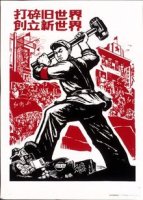 The Great Conservative Cultural Revolution is a great revolution that touches people to their very souls and constitutes a new stage in the development of the conservative revolution in our country, a deeper and more extensive stage. At present, our objective is to criticize and repudiate the reactionary far-left academic
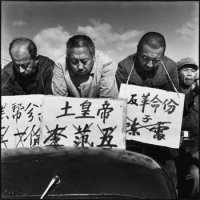 Now, far be it from me to stand between the Red State Guards and their patriotic duty of shaming dissenting professors for their