Rad Geek People's Daily

official state media for a secessionist republic of one

Posts filed under Politics

The Ludlow Massacre

John D. Rockefeller, Jr., speaking to assembled Colorado miners, September 20, 1915.

We are all partners in a way. Capital can’t get along without you men, and you men can’t get along without capital. When anybody comes along and tells you that capital and labor can’t get along together that man is your worst enemy. We are getting along friendly enough here in this mine right now, and there is no reason why you men cannot get along with the managers of my company when I am back in New York.

John D. Rockefeller, Jr., June 10, 1914.

There was no Ludlow massacre. The engagement started as a desperate fight for life by two small squads of militia against the entire tent colony ... There were no women or children shot by the authorities of the State or representatives of the operators ... While this loss of life is profoundly to be regretted, it is unjust in the extreme to lay it at the door of the defenders of law and property, who were in no slightest way responsible for it.

From the New York World. Reprinted in Walter H. Fink, The Ludlow Massacre (1914), 7–21.

On the day of the Ludlow battle a chum and myself left the house of the Rev. J. O. Ferris, the Episcopal minister with whom I boarded in Trinidad, for a long tramp through the hills. We walked fourteen miles, intending to take the Colorado & Southern Railway back to Trinidad from Ludlow station.

We were going down a trail on the mountain side above the tent city at Ludlow when my chum pulled my sleeve and at the same instant we heard shooting. The militia were coming out of Hastings Canyon and firing as they came. We lay flat behind a rock and after a few minutes I raised my hat aloft on a stick. Instantly bullets came in our direction. One penetrated my hat. The militiamen must have been watching the hillside through glasses and thought my old hat betrayed the whereabouts of a sharpshooter of the miners.

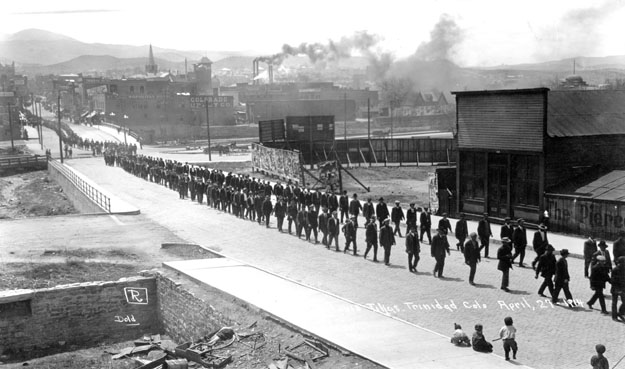
Then came the killing of Louis Tikas, the Greek leader of the strikers. We saw the militiamen parley outside the tent city, and, a few minutes later, Tikas came out to meet them. We watched them talking. Suddenly an officer raised his rifle, gripping the barrel, and felled Tikas with the butt.

Tikas fell face downward. As he lay there we saw the militiamen fall back. Then they aimed their rifles and deliberately fired them into the unconscious man's body. It was the first murder I had ever seen, for it was a murder and nothing less. Then the miners ran about in the tent colony and women and children scuttled for safety in the pits which afterward trapped them.

We watched from our rock shelter while the militia dragged up their machine guns and poured a murderous fire into the arroyo from a height by Water Tank Hill above the Ludlow depot. Then came the firing of the tents.

I am positive that by no possible chance could they have been set ablaze accidentally. The militiamen were thick about the northwest corner of the colony where the fire started and we could see distinctly from our lofty observation place what looked like a blazing torch waved in the midst of militia a few seconds before the general conflagration swept through the place. What followed everybody knows.

Sickened by what we had seen, we took a freight back into Trinidad.
New York Times, April 21, 1914.

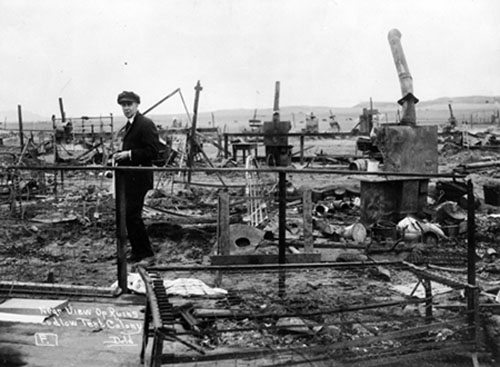
The Ludlow camp is a mass of charred debris, and buried beneath it is a story of horror imparalleled in the history of industrial warfare. In the holes which had been dug for their protection against the rifles’ fire the women and children died like trapped rats when the flames swept over them. One pit, uncovered [the day after the massacre] disclosed the bodies of ten children and two women.

Fellow Workers,

Today is the 94th anniversary of the Ludlow massacre–April 20th, 1914. The United Mine Workers of America led a massive strike in Rockefeller’s Colorado coal mines from 1913 to 1914, demanding an eight hour day, an increase in wages, the removal of company-hired guards from the coal pits, and freedom for workers to arrange for their own housing, choose their own doctor, and receive pay in cash instead of company scrip. Tens of thousands of workers — over 90% of the miners in the coal-pits — went on strike. When the miners went on strike, they lost everything, because they all had to live in company towns, with company landlords. They lost their money; they couldn’t shop at the stores; and they were thrown out of their homes. So they set up shanty-towns on land that the union leased for them, and lived in tents high in the hills through the long winter months of a bitter strike. The company hired guards from private detective agencies, and they got the governor to call up the Colorado National Guard on their behalf. On April 20th, the National Guard and the company thugs pretended to negotiate with Louis Tikas while setting up machine-guns in the high-points around the camps. They fired down into shanty-town and, after many of the strikers dug into the ground for cover, they torched the tents. By the end of the night 45 people were dead–32 of them women and children–shot, smothered, or burned alive. They were murdered by company death squads and by agents of the State, in order to defend John D. Rockefeller Jr.’s laws and his legally-fabricated claims to property that he never worked, and had barely ever seen.

Howard Zinn, Declarations of Independence.

As I read about this, I wondered why this extraordinary event, so full of drama, so peopled by remarkable personalities, was never mentioned in the history books. Why was this strike, which cast a dark shadow on the Rockefeller interests and on corporate America generally, considered less important than the building by John D. Rockefeller of the Standard Oil Company, which was looked on as an important and positive event in the development of American industry?

I knew there was no secret meeting of industrialists and historians to agree to emphasize the admirable achievements of the great corporations and ignore the bloody costs of industrialization in America. But I concluded that a certain unspoken understanding lay beneath the writing of textbooks and the teaching of history: that it would be considered bold, radical, perhaps even communist to emphasize class struggle in the United States, a country where the dominant ideology emphasized the oneness of the nation We the People, in order to…etc., etc. and the glories of the American system.

An anonymous proletarian. First printed by the Industrial Workers of the World in 1908.

We have fed you all for a thousand years
And you hail us still unfed
Though there’s never a dollar of all your wealth
But marks the workers dead
We have yielded our best to give you rest
And you lie on crimson wool
But if blood be the price of all your wealth
Good God we have paid in full

There is never a mine blown skyward now
But we’re buried alive for you
There’s never a wreck drifts shoreward now
But we are its ghastly crew
Go reckon our dead by the forges red
And the factories where we spin
If blood be the price of your cursèd wealth
Good God we have paid it in

We have fed you all for a thousand years
For that was our doom, you know
From the days when you chained us in your fields
To the strike a week ago
You have taken our lives, and our husbands and wives
And we’re told it’s your legal share
But if blood be the price of your lawful wealth
Good God we bought it fair.
Further reading:

Just shut the fuck up

I don’t mean to be rude. But this issue is important.

There are lots of reasons to despise Alexander Hamilton — given his record as a Caesarian centralizer, rampaging war-luster, and the spiritual and political father of U.S. state capitalism. There are also lots of cases where Thomas Jefferson was better than Hamilton on things that Hamilton was rotten on. This should be taken into account if you are ever trying to rank U.S. revolutionaries according to their libertarian merits. But the reverse is also true, and the issues that Jefferson was rotten on — like, oh, slavery — were not small potatoes or minor personal foibles. And while I think that Will Wilkinson is making several interrelated mistakes, among them misrepresenting and unfairly minimizing the case against Hamilton, when he says…

If you think central banks are a bigger issue for liberty than human enslavement, trade, or the growth of capitalism then your priorities are screwed.

— Will Wilkinson (2008-04-07), comments on ABJ @ The Fly Bottle

… what I would like to stress, at the moment, is that if you ever, ever find yourself thinking that it might possibly be appropriate to reply to a remark like that by saying something like this:

Central banking is one of the worst forms of human enslavement, actually. You should try going out more often, WW, and read some Hoppe and DiLorenzo for good measure.

— Alberto Dietz (2008-04-09), comments on ABJ @ The Fly Bottle

Then you need to stop. Right there. And just–well, you know the rest.

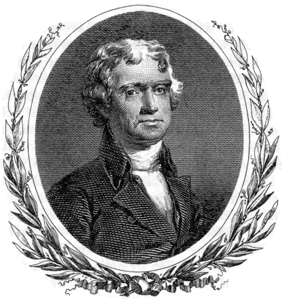
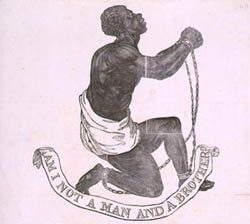
Thomas Jefferson wrote a couple of documents that I admire very much. One of them I consider to be one of the finest and most important political documents written in the history of the world. But Jefferson was a man, not just the signature on a series of essays, and he also did many other things in his life. He was an overt and at times obsessive white supremacist. He was a rapist. He was a posturing hypocrite. He was President of the United States. He was himself a war-monger, who launched the United States’ first overseas war within months of his first inauguration. Most of all, he was a active slaver, a lifelong perpetrator of real, not metaphorical, chattel slavery. He violently held hundreds of his fellow human beings in captivity throughout their lives and throughout his, with the usual tools of chains and hounds and lashes. He maintained himself in an utterly idle life as a landed lord of the Virginia gentry by forcing his captives to work for his own profit, and living off of the immense wealth of things that they built and grew by the sweat of their own brows and the blood of their own backs. He had no conceivable right to live this life of man-stealing, imprisonment, robbery and torture, and no justification for it other than racist contempt for his victims and the absolute, violent power that he (with the aid of his fellow whites) held over the life and limb of hundreds of victims. He knew that his own words in the Declaration of Independence condemned his own actions towards his slaves, who were by right his equals, beyond appeal, but he went on enslaving them anyway for the rest of his life and would not even make any provisions in his will to set them free when he finally died. He was a hereditary tyrant, claiming, based solely on his descent, the right to go on perpetrating a reign of terror over his prison-camp plantation more hideous and invasive than anything ever contemplated by the most absolutist Bourbon or Bonaparte. Not because he was in any way extraordinary or at all harsher than the average, compared to other white slavocrats, in how he treated his slaves–but rather because that kind of terror and violence is part and parcel of what forcing hundreds of people into chattel slavery means. As insidious and destructive as government-centralized banking and the money monopoly may be — and I am the last person to deny that — it is callous, counter-historical, inhuman bullshit to try and pass it off as one of the worst forms of human enslavement in comparison to American chattel slavery. It’s bullshit that needs to stop.

A side note. When trying to explain Jefferson’s view on slavery, one thing that a lot of people seem to take as a point in his favor is his opposition to the trans-Atlantic slave trade. In 1807, Jefferson in fact signed a bill banning the trans-Atlantic slave trade (which could not take effect until 1808 because the U.S. Constitution only granted Congress the power to regulate the international slave trade 20 years after its ratification). It comes up a couple of different times in the same comments thread.

Unfortunately, it doesn’t actually speak in Jefferson’s favor. Jefferson, like many other white Virginian slave-camp commandants, was indeed for banning the trans-Atlantic slave trade, which he, like many other white Virginian slavers, sometimes fiercely denounced as infamous and inhumanly cruel. They were right about that part, and they were right that the trans-Atlantic slave trade ought to have been banned, but their primary reasons for wanting it banned were quite different from what people reading them today often conclude. If, after all, they were actually against the slave trade for humanitarian reasons, then they certainly ought to have the same problems with the internal slave trade in the United States, and the exportation of slaves out of the United States (for example, down to the death-plantations of the Caribbean). Those parts of the slave trade also involved the hellish passage of hundreds of slaves, shackled below decks, in sea voyages from New England or the upper South to the far-away places they were sold down to. But you’ll find little of that from Jefferson or his fellow white Virginian slavers, and the reason is that they profited from the internal slave trade. By the late 18th and early 19th century, Virginia was in the process of a long decline in agricultural productivity, but the landed lords held on to their stream of pirated wealth — by becoming the leading exporter of slaves to other, more productive plantations, down in the Deep South and in the Caribbean. Jefferson’s opposition to the slave trade, like that of many of his fellow Virginia slavers, was not nascent abolitionism. It was pure protectionism, designed to prop up the Virginian slave-traders’ profits while they retained the same absolute, violent power over their slaves at home.

Hope this helps.

Further reading:

Lincoln scholarship scholarship

Let’s compare and contrast.

Here’s Tom DiLorenzo at LewRockwell.com Blog

George Mason University Ph.D. candidate (public policy program) Phil Magness has had this terrific article published in the Journal of the Abraham Lincoln Association. It shows that, until his dying day, Dishonest Abe was hard at work trying to organize the colonization (i.e., deportation) of all the freed slaves.

— Tom DiLorenzo, LewRockwell.com Blog (2008-04-08): The Latest Scholarship on Lincoln’s Colonization Fetish

Here’s George Mason University Ph.D. candidate (public policy program) Phil Magness, in this terrific article published in the Journal of the Abraham Lincoln Association:

Constrained by the limitations of written evidence, inquiry into Butler’s account becomes necessarily speculative. Given the general’s probable exaggerations, one conceivable scenario involves the conversation turning to the subjects of racial conflict and colonization, with Lincoln indicating his willingness to receive Butler’s suggestions. Such a conversation would fall short of the specific project Butler describes or Lincoln’s choice of Butler to complete the task, though it indicates the possibility, and perhaps even likelihood, that Lincoln still entertained colonization ideas. Many unlikely parts of the conversation appear in Butler’s quotations of himself, rather than those attributed to Lincoln. The use of black troops to establish a colony, the canal component, and the policy itself are all expressed as ideas of Butler, which I will suggest to you, Mr. President. Lincoln’s only reaction, there is meat in that, General Butler, is far from espousal of the plan’s particulars, though it would indicate a more likely scenario in which Lincoln patiently received and considered Butler’s suggestions.

The present inquiry set out to provide a firmer basis for evaluating Butler’s colonization anecdote by resolving the issue of its reported timeline. Though established in date, the anecdote leaves many additional questions unanswered and provides room for further examination of an underexplored area of Lincoln’s presidency. As the full conversation between Butler and Lincoln was known only to its participants, one of them assassinated only three days later and the other writing of it twice several decades after the fact, a comprehensive and unbiased record of its events is unlikely ever to emerge. What is certain is that a private meeting in 1865 between Butler and Lincoln occurred. The details of this meeting, as conveyed by Butler, exhibit duly acknowledged signs of embellishment and the distorting effects of their distance from the event itself. Beginning with the meeting’s known date though, the two Butler accounts deserve greater attention than they have received. Sufficient evidence exists to merit additional consideration of Lincoln’s colonization views later in life, and tends to caution against the conclusiveness that many scholars have previously attached to the view that Lincoln fully abandoned this position. The Butler anecdote remains an imperfect example, yet some of its more plausible details may indicate that Lincoln retained an interest in colonization, even if limited, as late as 1865.

— Phil Magness, Journal of the Abraham Lincoln Association 29.1 (Winter 2008): Benjamin Butler’s Colonization Testimony Reevaluated

Magness’s article shows nothing like what DiLorenzo claims it to show. Nor does it claim to show anything like what DiLorenzo claims it to show. What it shows (with a great deal of care and interesting detail) is that a common argument, based on problems with Butler’s timeline, for decisively rejecting a particular piece of evidence for the claim that Lincoln continued to advocate deportation and colonization of free blacks after 1863, is ill-founded, because, while Butler could not have met with Lincoln at the time he claimed in his memoirs (published decades after the fact), he did meet privately with Lincoln not long after, and a little-known second account that Butler gave of his meeting with Lincoln helps clarify which parts of the anecdote are more trustworthy and which parts are less trustworthy. Magness says that the evidence leaves open the possibility that Butler is telling the truth, although encrusted with misremembering and possibly deliberate exaggeration. Unfortunately, the facts being what they are, the anecdote leaves many questions about Lincoln’s final views unanswered, and many questions that it may be impossible ever to answer. But it remains possible that Lincoln was still interested in, though apparently not actively working on, small-scale colonization schemes near the end of his life. Scholars who reject the possibility, and Butler’s testimony, out of hand need to reconsider their views, and Butler’s two accounts of the meeting deserve closer attention.

DiLorenzo would have us believe an entirely different claim — that this article decisively demonstrates that not that a particular piece of evidence should not be rejected out of hand, but rather that a particular conclusion on Lincoln’s views must be accepted, and that it decisively demonstrates not merely that it’s possible that Lincoln idly believed in colonization and patiently received and considered plans for small-scale projects while doing nothing to further them, but that he was actively pursuing colonization schemes up to the end of his life. None of these claims are anywhere to be found in the article.

There are already plenty of certain reasons to condemn Abraham Lincoln as a shameless opportunist, a dictatorial warlord, and, yes, a white supremacist and segregationist. There is no need to jump on any and every opportunity to manufacture new reasons, or to distort scholars’ claims so as to depict the case as being much stronger than the facts warrant, not to mention much stronger than the scholar in question ever claimed it to be. This mad-dog polemical style and partisan misrepresentation of arguments serve nobody.

Further reading:

Professional courtesy

(Boing Boing 2008-04-07, via Roderick Long 2008-04-08.)

It’s 1:45 p.m. on a Wednesday in February and a Toyota Camry is driving west on the 91 Express Lanes, for free, for the 470th time.

The electronic transponder on the dashboard – used to bill tollway users – is inactive. The Camry’s owners, airport traffic officer Rudolph Duplessis and his wife, Loretta, have never had a toll road account, officials say.

They’ve never received a violation notice in the mail, either. Their car is registered as part of a state program which hides their home address on Department of Motor Vehicles records. The agency that operates the tollway does not have legal access to their address.

Their Toyota is one of 996,716 vehicles registered to motorists who are affiliated with 1,800 state and local agencies and who are allowed to shield their addresses under the Confidential Records Program.

An Orange County Register investigation has found that the program, designed 30 years ago to protect police from criminals, has been expanded to cover hundreds of thousands of public employees — from police dispatchers to museum guards — who face little threat from the public. Their spouses and children can get the plates, too.

This has happened despite warnings from state officials that the safeguard is no longer needed because updated laws have made all DMV information confidential to the public.

The Register found that the confidential plate program shields these motorists in ways most of us can only dream about:

  • Vehicles with protected license plates can run through dozens of intersections controlled by red light cameras and breeze along the 91 toll lanes with impunity.

  • Parking citations issued to vehicles with protected plates are often dismissed because the process necessary to pierce the shield is too cumbersome.

  • Some patrol officers let drivers with protected plates off with a warning because the plates signal that the drivers are one of their own or related to someone who is.

Exactly how many people are taking advantage of their protected plates is impossible to calculate. Like the Orange County Transportation Authority, which operates the tollway, many agencies have automated processes and have never focused on what happens to confidential plate holders. Sometimes police take note of the plate and don’t write a ticket at all.

I would highly doubt that anybody is registering their vehicles on a confidential basis to do anything but protect themselves, Garden Grove Police Capt. Mike Handfield said. I just don’t think people are thinking they’re getting away with anything.... Is the value of having a confidential plate and protecting the law enforcement community from people who might hurt them, is that worth that risk? I believe it is.

The Register asked the DMV for a list of the number of motorists participating in the program and the agencies they claim as an employer. But the DMV refused to provide those records unless The Register paid $8,442, which officials said was the cost of extracting the list from its database.

Some police officers confess that when they pull over someone with a confidential license plate they’re more likely to let them off with a warning. In most cases, one said, if an officer realizes a motorist has a confidential plate, the car won’t be pulled over at all.

It’s an unwritten rule that we would extend professional courtesy, said Ron Smith, a retired Los Angeles Police Department officer who worked patrol for 23 years. Nine out of 10 times I would.

California Highway Patrol officer Jennifer Hink put it a little differently. It’s officer discretion ... (But) just because you have confidential plates doesn’t mean you’re going to get out of a citation.

Many police departments that run red light camera programs systematically dismiss citations issued to confidential plates.

It’s a courtesy, law enforcement to law enforcement, San Francisco Police Sgt. Tom Lee said. We let it go.

— Jennifer Muir, Orange County Register (2008-04-04): Special license plates shield officials from traffic tickets

The term professional courtesy comes from the traditions of medicine: many doctors will not charge money when they treat another doctor’s immediate family. When doctors talk about professional courtesy they are talking about a very old system of mutual aid in which one doctor agrees to do a favor for another, at her own expense, for the sake of collegiality, out of concern for professional ethics (to offer doctors an alternative to having their own family as patients), and because she can count on getting similar services in return should she ever need them.

But when the Gangsters in Blue start talking about professional courtesy, they’re talking about something quite different: a favor done for a fellow gang member at no personal expense, with the bill sent to unwilling taxpayers who must pick up the tab for the roads and parking; and a favor done in order insulate the gangsters and their immediate family from any kind of ethical accountability to the unwilling victims that they sanctimoniously insist on serving and protecting. Professional courtesy in medicine means reciprocity in co-operative mutual aid in healing sick people; professional courtesy in government policing means reciprocity in a conspiracy to make sure that any cop can do just about anything she wants by way of free-riding, disruptive, dangerous or criminal treatment of innocent third parties, with complete impunity, and the rest of us will get the bill for it and a fuck you, civilian if we don’t like it.

To be sure, letting a traffic ticket slide is, in the grand scheme of things, a pretty small thing. But it’s a small thing that is intimately connected with bigger things–with a pervasive, institutionalized system with consequences that are as terrible as they are inevitable and predictable.

ALL I need to know about taxes is what I learned on the street

Today, Tax Day, marked the first public action of the Southern Nevada Alliance of the Libertarian Left. Here are the flyers we posted today.

Flyer:
How Government Works (#1)
Flyer:
How Government Works (#2)
Flyer:
Taxes Pay For Torture (#1)
Flyer:
Taxes Pay For Torture (#2)
Flyer:
Taxes Pay For War (#1)
Flyer:
Taxes Pay For War (#2)
Flyer:
Your Money Or Your Life!
Flyer:
Your Tax Dollars At Work (#1)
Flyer:
Your Tax Dollars At Work (#2)

Here’s the communiqué I wrote to go along with the flyers, because I like that kind of goofy shit.

Communiqué #1

This is the first communiqué from the Southern Nevada Alliance of the Libertarian Left.

Today, April 15th, guerrilla educators affiliated with Southern Nevada ALL struck targets in the streets of southeastern Las Vegas and on the UNLV campus. Flyers—with slogans including Taxes Pay For Torture, Taxes Pay For War, and Your Money Or Your Life,—were raised to reach out to unwilling taxpayers and potential new ALLies, and to raise public consciousness about taxes.

On the filing deadline for 2007’s federal income tax—when countless honest working folks are sick of meddlesome government—when they are tired of being forced to fill out complex forms—and when they are forced to take (on average) 30% of the money that they worked to earn in the previous year and render it as tribute to the United States federal government—against their will, and whether or not they approve of what the government will do with the money—we have a perfect opportunity to spread our message about the violence of government taxation.

Taxes mean violence, both at the point of collection, and at the point of government spending. Collecting taxes is inherently violent because taxpayers are forced to pay the government whether or not they want to, under the threat of government violence. Those who refuse to turn over the money are subjected to government fines, confiscation of their homes and effects, or locked away in prison. It must never be forgotten that anything is funded by taxes could have been funded voluntarily, if enough people could have been convinced to donate the money willingly, or to give it freely in exchange for something that they get in return. In the last analysis, there is no reason to fund a project by taxation unless there is no honest and peaceful way to persuade people to support that project voluntarily. But if there is no honest and peaceful way to fund something, then it should not be funded. Taxation ought to be considered the last resort of the scoundrel and the thug. Morally, there is no difference between tax collection and highway robbery.

But the violence of taxation is even worse than the violence of highway robbery—for while the robber takes your money violently to satisfy his own greed, and then leaves you alone, the tiny handful of people who constitute the the ruling faction of the federal government take your money violently, and then they use that money to fund yet more violence — whether by locking nonviolent drug users away in government prisons, or in the form of police brutality, or in the use of torture by government intelligence agencies in the name of National Security, or in the form of government wars and occupations. The government’s ongoing wars in Iraq and Afghanistan have already cost more than half a trillion dollars, and which cost millions of dollars more with every passing day, and the onlyem> reason that this government can afford to continue with their occupation and their bombings, long after the majority of people in the United States have concluded that the wars are hopeless and fundamentally wrong, is that tiny handful of people have the power to force the millions of us who are against these wars to fund them anyway, against our will and in violation of our own conscience. Taxes pay for police brutality. Taxes pay for torture. Taxes paid for Guantanamo. Taxes paid for Abu Ghraib. Taxes pay for war. And when taxes pay for something, what that really means is that unwilling victims, including you and me, are forced to pay for it even if they don’t think that it is worthwhile. Even when they think that it is abhorrent to their own beliefs.

We believe that there is another way. Southern Nevada ALL is working to raise public awareness, and to work towards a new, consensual society, in which no-one will be forced to pay for torture or war, and in which working folks will be able to keep what they have earned, rather than being forced to turn it over to be used at the whim of the violent minority faction known as the United States federal government. We are starting small, and we are starting here, because that is what we have, and this is where we live. We ask that everyone in Southern Nevada who believes in peace, voluntary co-operation, mutual aid, and individual liberty join us in our struggle.

—ALLy C.J., 15 April 2008.

The Southern Nevada Alliance of the Libertarian Left can be reached through its website, sonv.libertarianleft.org, or through its e-mail list ALLSouthernNevada.

This is phase 1 (or maybe version 0.1) of organizing an ALL chapter in southern Nevada. Our next step is to meet any new ALLies we may find, start talking about plans, and prepare some more (hopefully eye-catching) flyers, handbills, and pamphlets to spread the word. (For example, distributing some copies of William Gillis’s excellent Market Anarchy zine series, and some other pamphlet-length articles similarly formatted, hopefully to get them circulating amongst local anarchists, libertarians, and peace people.) After that, to begin talking about local networking, informal gatherings, on-the-ground activism, and spinning off affinity groups and longer-term projects. I think that global popular revolution is scheduled for sometime after next March.

If you’re interested, and you’re in (or know people in, or are just interested in) the area of Las Vegas and southern Nevada, consider joining the e-mail list. If you enjoy the flyers, you’re free to take them, modify them as necessary, and re-use them as you see fit.

Onward.

Anticopyright. All pages written 1996–2026 by Rad Geek. Feel free to reprint if you like it. This machine kills intellectual monopolists.