Rad Geek People's Daily

official state media for a secessionist republic of one

Posts filed under Politics

Happy Lysander Spooner Day!
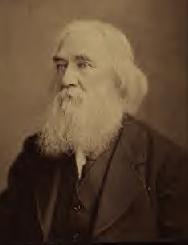
To-day — 19 January 2008 — is the 200th birthday of the militant abolitionist, philosopher, and individualist anarchist Lysander Spooner (b. 19 January 1808, Althol, Massachusetts; d. May 14, 1887, Boston, Massachusetts). In honor of his life and work, the Ministry of Culture of this secessionist republic of one has declared that 19 January shall be celebrated as Lysander Spooner Day.

This is from the end of Spooner’s famous pamphlet No Treason: The Constitution of No Authority:

Inasmuch as the Constitution was never signed, nor agreed to, by anybody, as a contract, and therefore never bound anybody, and is now binding upon nobody; and is, moreover, such an one as no people can ever hereafter be expected to consent to, except as they may be forced to do so at the point of the bayonet, it is perhaps of no importance what its true legal meaning, as a contract, is. Nevertheless, the writer thinks it proper to say that, in his opinion, the Constitution is no such instrument as it has generally been assumed to be; but that by false interpretations, and naked usurpations, the government has been made in practice a very widely, and almost wholly, different thing from what the Constitution itself purports to authorize. He has heretofore written much, and could write much more, to prove that such is the truth. But whether the Constitution really be one thing, or another, this much is certain – that it has either authorized such a government as we have had, or has been powerless to prevent it. In either case, it is unfit to exist.

— Lysander Spooner (1870): No Treason No. 6: The Constitution of No Authority

And this is from an earlier number of No Treason:

But to say that the consent of either the strongest party, or the most numerous party, in a nation, is sufficient justification for the establishment or maintenance of a government that shall control the whole nation, does not obviate the difficulty. The question still remains, how comes such a thing as a nation to exist? How do millions of men, scattered over an extensive territory — each gifted by nature with individual freedom; required by the law of nature to call no man, or body of men, his masters; authorized by that law to seek his own happiness in his own way, to do what he will with himself and his property, so long as he does not trespass upon the equal liberty of others; authorized also, by that law, to defend his own rights, and redress his own wrongs; and to go to the assistance and defence of any of his fellow men who may be suffering any kind of injustice — how do millions of such men come to be a nation, in the first place? How is it that each of them comes to be stripped of his natural, God-given rights, and to be incorporated, compressed, compacted, and consolidated into a mass with other men, whom he never saw; with whom he has no contract; and towards many of whom he has no sentiments but fear, hatred, or contempt? How does he become subjected to the control of men like himself, who, by nature, had no authority over him; but who command him to do this, and forbid him to do that, as if they were his sovereigns, and he their subject; and as if their wills and their interests were the only standards of his duties and his rights; and who compel him to submission under peril of confiscation, imprisonment, and death?

Clearly all this is the work of force, or fraud, or both.

By what right, then, did we become a nation? By what right do we continue to be a nation? And by what right do either the strongest, or the most numerous, party, now existing within the territorial limits, called The United States, claim that there really is such a nation as the United States? Certainly they are bound to show the rightful existence of a nation, before they can claim, on that ground, that they themselves have a right to control it; to seize, for their purposes, so much of every man’s property within it, as they may choose; and, at their discretion, to compel any man to risk his own life, or take the lives of other men, for the maintenance of their power.

To speak of either their numbers, or their strength, is not to the purpose. The question is by what right does the nation exist? And by what right are so many atrocities committed by its authority? or for its preservation?

The answer to this question must certainly be, that at least such a nation exists by no right whatever.

We are, therefore, driven to the acknowledgment that nations and governments, if they can rightfully exist at all, can exist only by consent.

— Lysander Spooner (1867): No Treason, no. 1

And this is from A Letter to Grover Cleveland, on His False Inaugural Address, The Usurpations and Crimes of Lawmakers and Judges, and the Consequent Poverty, Ignorance, and Servitude of the People, perhaps the finest letter ever written to the President of the United States:

Let me then remind you that justice is an immutable, natural principle; and not anything that can be made, unmade, or altered by any human power.

It is also a subject of science, and is to be learned, like mathematics, or any other science. It does not derive its authority from the commands, will, pleasure, or discretion of any possible combination of men, whether calling themselves a government, or by any other name.

It is also, at all times, and in all places, the supreme law. And being everywhere and always the supreme law, it is necessarily everywhere and always the only law.

Lawmakers, as they call themselves, can add nothing to it, nor take anything from it. Therefore all their laws, as they call them, — that is, all the laws of their own making, — have no color of authority or obligation. It is a falsehood to call them laws; for there is nothing in them that either creates men’s duties or rights, or enlightens them as to their duties or rights. There is consequently nothing binding or obligatory about them. And nobody is bound to take the least notice of them, unless it be to trample them under foot, as usurpations. If they command men to do justice, they add nothing to men’s obligation to do it, or to any man’s right to enforce it. They are therefore mere idle wind, such as would be commands to consider the day as day, and the night as night. If they command or license any man to do injustice, they are criminal on their face. If they command any man to do anything which justice does not require him to do, they are simple, naked usurpations and tyrannies. If they forbid any man to do anything, which justice could permit him to do, they are criminal invasions of his natural and rightful liberty. In whatever light, therefore, they are viewed, they are utterly destitute of everything like authority or obligation. They are all necessarily either the impudent, fraudulent, and criminal usurpations of tyrants, robbers, and murderers, or the senseless work of ignorant or thoughtless men, who do not know, or certainly do not realize, what they are doing.

— Lysander Spooner (1886): A Letter to Grover Cleveland, on His False Inaugural Address, The Usurpations and Crimes of Lawmakers and Judges, and the Consequent Poverty, Ignorance, and Servitude of the People

Further reading:

Fryeday quote

Besides taking very kind notice of my article in The Freeman, Roderick Long (2008-01-18) and Micha Ghertner (2008-01-14) each also mention the epigraph that I included — a long quotation on the experience of oppression by the radical lesbian feminist philosopher Marilyn Frye. The quotation is one of my favorite passages from her essay Oppression, in The Politics of Reality. I had originally hoped to include more of it, but the epigraph had to be trimmed back in the interest of space. The full version would have been:

The experience of oppressed people is that the living of one's life is confined and shaped by forces and barriers which are not accidental or occasional and hence avoidable, but are systematically related to each other in such a way as to catch one between and among them and restrict or penalize motion in any direction. It is the experience of being caged in: all avenues, in every direction, are blocked or booby trapped.

Cages. Consider a birdcage. If you look very closely at just one wire in the cage, you cannot see the other wires. If your conception of what is before you is determined by this myopic focus, you could look at that one wire, up and down the length of it, and be unable to see why a bird would not just fly around the wire any time it wanted to go somewhere. Furthermore, even if, one day at a time, you myopically inspected each wire, you still could not see why a bird would gave trouble going past the wires to get anywhere. There is no physical property of any one wire, nothing that the closest scrutiny could discover, that will reveal how a bird could be inhibited or harmed by it except in the most accidental way. It is only when you step back, stop looking at the wires one by one, microscopically, and take a macroscopic view of the whole cage, that you can see why the bird does not go anywhere; and then you will see it in a moment. It will require no great subtlety of mental powers. It is perfectly obvious that the bird is surrounded by a network of systematically related barriers, no one of which would be the least hindrance to its flight, but which, by their relations to each other, are as confining as the solid walls of a dungeon.

It is now possible to grasp one of the reasons why oppression can be hard to see and recognize: one can study the elements of an oppressive structure with great care and some good will without seeing the structure as a whole, and hence without seeing or being able to understand that one is looking at a cage and that there are people there who are caged, whose motion and mobility are restricted, whose lives are shaped and reduced.

–Marilyn Frye (1983), Oppression, in The Politics of Reality. pp. 4–5.

In the case of poor people — and especially poor people who live in the socioeconomic or racial ghettos of large cities — both state socialists and state capitalists have spent no end of time looking at one or two wires, and wondering why the bird behind them builds its nest in such a funny, cramped shape. Since their perspective has excluded treating state oppression of the poor in any systematic way, the state socialists, rightly understanding that poor people are basically alright, wrongly figure that the problem must be the inherent vices of the market process. The state capitalists, rightly understanding that the market process is basically alright, wrongly figure that the problem must be in the vice, folly, or ignorance of individual poor people, or poor subcultures. But both of them are wrong. To understand the problem aright, you have to start by stepping back to see the whole cage. Then, and only then, can you meaningfully talk about what poor people can do about breaking out–and what you, if you are not yourself poor, can do to help them in their efforts.

Well, thank God #8: Civil Tongue Edition

Fellow citizens, you can rest easier tonight knowing that City Officials in St. Charles, Missouri are contemplating decisive action against a grave and gathering threat to the safety and well-being of their citizens–the threat of coarse language and vulgar songs at saloons.

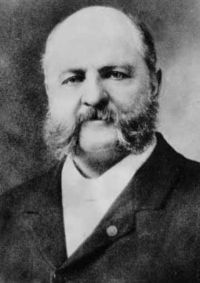
Here's a photo of Anthony Comstock

St. Charles City Officials

ST. CHARLES, Mo. — … A St. Louis-area town is considering a bill that would ban swearing in bars, along with table-dancing, drinking contests and profane music.

City officials contend the bill is needed to keep rowdy crowds under control because the historic downtown area gets a little too lively on some nights.

City Councilman Richard Veit said he was prompted to propose the bill after complaints about bad bar behavior. He says it will give police some rules to enforce when things get too rowdy.

… The proposal would ban indecent, profane or obscene language, songs, entertainment and literature at bars.

— Associated Press (2008-01-08): St. Louis-area town considers proposal that would ban swearing in bars

Well, thank God, says I. The last thing that the august officials of that fair city should permit is for consenting adults to indulge in bawdy or profane entertainments. Some might say that City Officials ought to let each bar keeper make his or her own rules as to what is or isn’t permissible behavior in their own bars. But that surely misses the point. There’s a historic downtown district at stake here, and if a City Official isn’t entitled to treat a Historic Downtown District as his own private property in order to preserve its Character from rowdies and vulgarians, then by crackie, what is he entitled to do?

Some are not so sure:

Marc Rousseau, who owns the bar R.T. Weilers, said he thinks the bill needs revision.

We’re dealing with adults here once again and I don’t think it’s the city’s job or the government’s job to determine what we can and cannot play in our restaurant, Rousseau said.

— Associated Press (2008-01-08): St. Louis-area town considers proposal that would ban swearing in bars

But really, M. Rousseau! Think of the importance of keeping a family-friendly atmosphere in a late-night bar district! If the city government doesn’t shield the delicate ears of bar-hoppers from indecent, profane, or obscene language that they are willing to hear, then who will?

Since we already have a cadre of professional bureaucrats, legislators, regulators, and statesmen running behind us all, yelling You’ll put an eye out with that! and Don’t drink that; it’ll stunt your growth! and You're not going out like that, are you?! what could be more natural than to give the police some rules to enforce and have The Law come around, in all its majesty and dignity, to shout at us all, You keep your mouth clean, son, or I’ll wash it out for you with soap!

(Via feministe 2008-01-11.)

Non-Lethal Force

In Florida, another man has died after being tasered by cops:

A man in his 20s died after a Coral Gables police officer used a Taser stun gun to subdue him Friday morning.

He was identified Friday afternoon as Xavier Jones, 29.

Jones had been disruptive at a party and resisted arrest, according to Miami-Dade police, whose homicide bureau is investigating the death.

About 2 a.m., police officers responded to a call about a scuffle at University Inn Condominium, 1280 S. Alahambra Cir., near the University of Miami. The building is across the street from the university and borders on U.S. 1.

After the man became disruptive inside the apartment, a security guard attempted to remove him from the property. The confrontation spilled outside.

Miami-Dade police said Jones displayed aggressive and combative behavior so a police officer used a Taser stun gun to restrain him.

After the discharge, Jones became unresponsive, and paramedics took him to Doctor’s Hospital in Coral Gables, where he was pronounced dead.

— David Ovalle, Miami Herald (2008-01-11): Man who died in Gables Tasing identified

Although I write a lot about police brutality involving tasers, I should make it clear that I don’t have any essential problem with the use of tasers, either by police or in individual self-defense. My issue has to do with the brutality, not with the equipment used, and I think that these incidents have a lot more to do with an arrogant, violent, and completely unaccountable institutional culture within police forces than they have to do with the specifics of painful electric shocks. When tasers weren’t available, cops happily used guns and truncheons; I wouldn’t regard a return to that status quo ante as any kind of progress.

That said, there are a couple of things about the use of tasers which may be some reason for special concern. One of them is the capacity to use painful electric shocks as a form of torture which doesn’t leave embarrassing bruises or other visible signs of the brutality. The second is the persistent and institutionalized dogma that tasers shocks are always a non-lethal use of force. This belief–which naturally makes individual cops and policy-setters much less cautious about the use of tasers than they might otherwise be, is endlessly repeated by cops, PR flacks, and by Taser Inc., which has gone so far as to misrepresent the findings of studies and sending PR flacks to personally lean on coroners to alter their findings in order to insulate their claims from inconvenient empirical evidence. The belief persists, in spite of hundreds of documented cases of people dying soon after being tasered, and in spite of an almost complete lack of controlled research on the health effects of taser shocks (particularly repeated shocks), because the cops’ basic interest is to be able to use as wide a variety of pain compliance techniques as possible without any danger of being held accountable for the consequences; the politicos’ basic interest is to curry favor with the Fraternal Order of Pigs and to come across as tough-on-crime; and Taser Inc.’s basic interest is in making a bloody buck through ongoing political patronage. Given the arrogance of power that they have all cultivated, and the political privileges that they all enjoy, none of them have much reason to be particularly interested in empirical reality, or for that matter in the lives of their victims.

(Story thanks to Strike the Root Blog 2008-01-11.)

Further reading:

Unto the third generation

The bad news is that, in spite of an immune system which has been almost preternaturally resistant to common ailments for the past several years, I am currently in the process of getting my ass kicked by a cold or some other (hopefully) 24-hour bug.

In place of saying much of anything that I’d actually have to concentrate write out, I’ll share a little bit of trivia about my recent appearance in The Freeman. This is not actually the first time that something by a Charles W. Johnson has appeared in the pages of The Freeman. But the first article published under that name was not by me, but rather by my granddad. (I still get the occasional e-mail asking me if I am the author of some quote pulled from the article by some libertarian newsletter. Nope; I was just named after him.)

In fact, my dad also had an article published back when he was a frosh in college — A Letter to the President, in January 1964. My grandfather’s article, Medical Care Is Not a Right, appeared in April 1969. (My grandfather also had a couple of articles on medical topics in Bob LeFevre’s Rampart Journal of Individualist Thought: Non-Participation, published in Spring 1967, and Medical Political Protection, published in Fall 1968.) I may be the first third-generation Freeman contributor in the history of the publication.

Anticopyright. All pages written 1996–2026 by Rad Geek. Feel free to reprint if you like it. This machine kills intellectual monopolists.