Posts filed under Politics



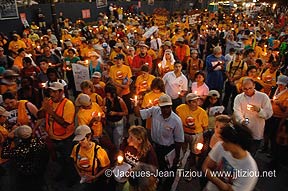
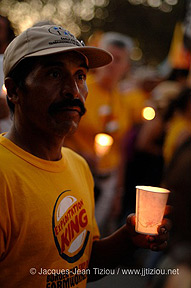
Day of Remembrance
Today is the 12th day of 2007’s 16 Days of Activism Against Gender Violence. It is also the anniversary of the Montreal massacre. On 6 December 1989, 18 years ago today, Marc Lepine murdered 14 women at Montreal’s Ecole Polytechnique. He murdered them because they were women. He stormed an engineering classroom carrying a gun, then he ordered the men to leave. He opened fire on the women, screaming I hate feminists
as he shot. Then he moved through the building, still shooting, always at women, killing a total of 14 women and injuring 8 before he ended the terror by shooting himself.
6 December is a day of remembrance for the women who were killed. They were:
- Geneviève Bergeron, aged 21
- Hélène Colgan, 23
- Nathalie Croteau, 23
- Barbara Daigneault, 22
- Anne-Marie Edward, 21
- Maud Haviernick, 29
- Barbara Maria Klucznik, 31
- Maryse Leclair, 23
- Annie St.-Arneault, 23
- Michèle Richard, 21
- Maryse Laganière, 25
- Anne-Marie Lemay, 22
- Sonia Pelletier, 28; and
- Annie Turcotte, aged 21
GT 2004-12-06: The Montreal Massacre:
The Montreal Massacre was horrifying and shocking. But we also have to remember that it’s less unusual than we all think. Yes, it’s a terrible freak event that some madman massacred women he had never even met because of his sociopathic hatred. But every day women are raped, beaten, and killed by men–and it’s usually not by strangers, but by men they know and thought they could trust. They are attacked just because they are women–because the men who assault them believe that they have the right to control women’s lives and their sexual choices, and to hurt them or force them if they don’t agree. By conservative estimates, one out of every four women is raped or beaten by an intimate partner sometime in her life. Take a moment to think about that. How much it is. What it means for the women who are attacked. What it means for all women who live in the shadow of that threat.
Today is a day to remember fourteen innocent women who died at the hands of a self-conscious gender terrorist. Like most days of remembrance, it should also be a day of action. I mean practical action.. And I mean radical action. I mean standing up and taking concrete steps toward the end to violence against women in all of its forms. Without excuses. Without exceptions. Without limits. And without apologies.
I want to see this men’s movement make a commitment to ending rape because that is the only meaningful commitment to equality. It is astonishing that in all our worlds of feminism and antisexism we never talk seriously about ending rape. Ending it. Stopping it. No more. No more rape. In the back of our minds, are we holding on to its inevitability as the last preserve of the biological? Do we think that it is always going to exist no matter what we do? All of our political actions are lies if we don’t make a commitment to ending the practice of rape. This commitment has to be political. It has to be serious. It has to be systematic. It has to be public. It can’t be self-indulgent.
— Andrea Dworkin (1983), I Want a Twenty-Four Hour Truce During Which There Is No Rape
The same is true of every form of everyday gender terrorism: stalking, beating, confinement, forced labor, rape, murder. How could we face Geneviève Bergeron, Hélène Colgan, Nathalie Croteau, Barbara Daigneault, Anne-Marie Edward, Maud Haviernick, Barbara Maria Klucznik, Maryse Leclair, Annie St.-Arneault, Michèle Richard, Maryse Laganière, Anne-Marie Lemay, Sonia Pelletier, and Annie Turcotte, and tell them we did anything less?
Take some time to keep the 14 women who were killed in the Montreal massacre in your thoughts. If there is a vigil today in your community (1, 2), attend it. Speak out in memory for the women who died, and against the pervasive regime of systematic male violence against women. If you are a member of other movements (as many of my readers are members of the libertarian, anarchist, or anti-authoritarian Left movements), use today to bring a strong feminist voice to your comrades in those movements, to speak out on how any comprehensive human liberation must include the end of systematic violence against women. If you don’t know enough to speak out, make an effort today to learn more (1, 2, 3, 4). Make a contribution to your local battered women’s shelter. Find a local group that works to end domestic violence or rape or any other form of violence against women, and ask them what you can do as a volunteer or as a supporter to help them in their efforts. Don’t worry about what’s radical
or reformist
; think about what kind of concrete action can concretely undermine violence against women, starting today.
Feminists should remember that while we often don’t take ourselves very seriously, the men around us often do. I think that the way we can honor these women who were executed, for crimes that they may or may not have committed–which is to say, for political crimes–is to commit every crime for which they were executed, crimes against male supremacy, crimes against the right to rape, crimes against the male ownership of women, crimes against the male monopoly of public space and public discourse. We have to stop men from hurting women in everyday life, in ordinary life, in the home, in the bed, in the street, and in the engineering school. We have to take public power away from men whether they like it or not and no matter what they do. If we have to fight back with arms, then we have to fight back with arms. One way or another we have to disarm men. We have to be the women who stand between men and the women they want to hurt. We have to end the impunity of men, which is what they have, for hurting women in all the ways they systematically do hurt us.
–Andrea Dworkin (1990): Mass Murder in Montreal, Life and Death, 105–114.
Every year I make a point of explaining that I’m pointing the finger at a sexist patriarchal misogynist society rather than individual men. This year I choose not to do that. The time for assigning
blameis so far in the past (if indeed there ever was such a time), and that conversation takes us nowhere. This is the time for action, for change. Remember Parliament’s 1991 enactment of the National Day of Remembrance and Action on Violence Against Women — the glorious moment when every single womyn in the House stood together and claimed this Day of Remembrance. Remember what we can and do accomplish — all of us — when we work together. It is time to demand change, and to act on that demand. Let’s break the cycle of violence, and let’s do it now.Remember. Mourn. Act.
Elsewhere:
Further reading:
Let’s ask the experts
Roderick has a good post up called A Question for Critics of Ron Paul’s Critics, which does an excellent job of deflating one of the common rejoinders that Ron Paul boosters make to Ron Paul’s libertarian critics–specifically to those, like me, who consider Paul’s anti-libertarian position on abortion or immigration to be a poison pill. It’s well worth reading the whole thing.
There’s a lot of interesting exchange going on in the comments. Here are excerpts from five different comments that oppose treating Ron Paul’s support for forced pregnancy as a poison pill:
Given the complexities of NAFTA (and the same is true of immigration and abortion), it does seem to me rather silly to use this as a litmus test, ….
Immigration, free trade, abortion, and cosmopolitanism don't really mean anything if any of the other candidates get elected and throw us into World War Five.
If I have to tolerate Kansas outlawing abortion in order for Kansas to tolerate New Hampshire legalizing drugs, then I think it a good trade.
To me, personally, it seems clear that federalism and opposing the war are much more important libertarian issues than immigration and abortion.
To those who support Paul but voice their criticisms of his positions on immigration, abortion, whatever... Hurrah! To those who don't support Paul, for whatever reason, I have only one question:
What is your plan for stopping the killing?
Perhaps it is rude to point this out; perhaps it is even dirty pool. Certainly it is not a demonstration that their reasoning is flawed. Nevertheless, can you guess what all five of these commenters have in common when it comes to abortion?
If you’re baffled, try reading the first block quotation in Roe v. Wade Day #34.
Notes on the Cultural History of Sleep
Here’s an interesting passage I noticed in an article in the New York Times Magazine, which was mostly about companies trying to sell fancy new mattresses.
The story of our ruined sleep, in virtually every telling I've heard, begins with Thomas Edison: electric light destroyed the sanctity of night. Given more to do and more opportunity to do it, we gave sleep shorter and shorter shrift. But the sleep that we're now trying to reclaim may never have been ours to begin with.
It's a myth,A. Roger Ekirch, a professor of history at Virginia Tech, told me.And it's a myth that even some sleep experts today have bought into.… More surprising still, Ekirch reports that for many centuries, and perhaps back to Homer, Western society slept in two shifts. People went to sleep, got up in the middle of the night for an hour or so, and then went to sleep again. Thus night — divided into a
first sleepandsecond sleep— also included a curious intermission.There was an extraordinary level of activity,Ekirch told me. People got up and tended to their animals or did housekeeping. Others had sex or just lay in bed thinking, smoking a pipe, or gossiping with bedfellows. Benjamin Franklin tookcold-air baths,reading naked in a chair.Our conception of sleep as an unbroken block is so innate that it can seem inconceivable that people only two centuries ago should have experienced it so differently. Yet in an experiment at the National Institutes of Health a decade ago, men kept on a schedule of 10 hours of light and 14 hours of darkness — mimicking the duration of day and night during winter — fell into the same, segmented pattern. They began sleeping in two distinct, roughly four-hour stretches, with one to three hours of somnolence — just calmly lying there — in between. Some sleep disorders, namely waking up in the middle of the night and not being able to fall asleep again,
may simply be this traditional pattern, this normal pattern, reasserting itself,Ekirch told me.It's the seamless sleep that we aspire to that's the anomaly, the creation of the modern world.… Our peculiar preference for one well-organized hunk of sleep likely evolved as a corollary to our expectation of uninterrupted wakefulness during the day — as our lives came to be governed by a single, stringent clock. Eluned Summers-Bremner, author of the forthcoming Insomnia: A Cultural History, explains that in the 18th century,
we start overvaluing our waking time, and come to see our sleeping time only as a way to support our waking time.Consequently, we begin trying to streamline sleep, to get it done more economically:We should lie down and go out right away so we can get up and get to the day right away.She describes insomniacs as having a ruthless ambition to do just this, wanting to administer sleep as an efficiency expert normalizes the action in a factory. Certainly all of us, after a protracted failure to fall asleep for whatever reason, have turned solemnly to our alarm clocks and performed that desperate arithmetic: If I fall asleep right now, I can still get four hours.Nevertheless, while it may be at odds with our history and even our biology, lie-down-and-die is the only practical model for our lifestyle. Unless we overhaul society to tolerate all schedules and degrees of sleepiness and attentiveness, we are stuck with that ideal.
— Jon Mooallem, New York Times Magazine (2007-11-18): The Sleep-Industrial Complex
Besides grousing about one of my linguistic pet peeves — the sloppy misuse of the idiom ____________-industrial complex,
the only other thing that I’d like to add is that filing the institutions that currently structure most Americans’ sleep patterns under the vague label of our lifestyle
tends to obscure the issue. Depending on your age, the two main institutions that regiment your sleeping schedule are either (1) school, or (2) your job. The first has little to do with lifestyle choices; it’s something that’s forced on children by both their parents and by the government for a good 10-12 years of their lives. After a decade or more of forced training, the job you take is nevertheless a matter of adult choices. But the economic and political environment that structures and constrains those choices — and tends to favor centralized, regimented, official forms of employment not only through cultural prejudice but also through government-enforced subsidy and monopoly — deserves much more critical scrutiny than the term lifestyle
conveys. In both cases, the daily schedules that we keep are no better described as an adopted style
than is a straightjacket.
More Veterans for Vandalism and Petty Thieving
Jim Brossert is a deranged bully who is apparently prone to violence when he doesn’t get his way. Most recently, he barged into a private place of business with an army combat knife, defaced the bar-keep’s private flagpole and stole his American flag, used his status as a retired soldier to justify his violent tantrum, and then hollered a challenge for unarmed bystanders to fight him while still wielding a huge knife.
For this act of vandalism and petty theft, Sarge
praises Jim Brossert as an American Hero
.
At Shirley Buxton’s blog, commenter Maverickti
, who describes the American flag as holy
, says I am a baptised Roman Catholic, serving my 19th year in the Army. When I saw Jim doing what he did, I cheered!
At Lone Star Blog, commenter John Harbaugh suggests trespassing in a private place of business and harassing or intimidating the barkeep and his customers, in order to drive the bar out of business: I think that the INS should visit the bar owner. Once or twice a day until his clientèle quit coming. … If I lived in Reno, I would start showing up myself. I am also a crazy
Vet
.
Also, Maverickti shows up again to say hoo-rah! for Jim Brossert and the Holy American Flag once more: to Mr. Jim Brossert:
In response to an earlier commenter who has the temerity to point out that taking somebody else’s flag is, you know, stealing, and that maybe these freedom-loving types might not want to associate themselves with that sort of thing, Maverickti adds You make me proud! You are the ideal that I enlisted to protect. Know that I am sending your video to everyone I know to show how a TRUE AMERICAN acts when he sees what is not right. That was truly a heroic deed.
George, it's a free country, you can leave any time. The sooner the better.
J.F., Command Master Chief, US Navy (retired), believes that freedom of speech and expression includes the right to express yourself by vandalizing and stealing other people’s private property: So now, the Soviet Socialist State of NV along with it Socialist Commandos, the ACLU, want to prosecute the U.S. army vet for exercising his First Amendment which protects every American’s right to speak and express themselves, Reno city counsel has the authority to enact an ordinance if not already on the books that would deescalate these types of situations but, the question is, did they and will they?
A.B. thinks Having the Mexican flag diplayed above our beloved American flag is a personal insult to myself and all my fellow veterans.If you love Mexico so much go back!
Apparently stealing other people’s stuff and challenging them to fight you for it — when they are unarmed and you have a big combat knife in your hand — is an appropriate response to a personal insult.
C. W. GMC(SW/AW) USN Ret. thinks To those who think that vet was wrong, why don’t you ask a vet what flag means to them before you condemn him. … Sure maybe that Vet could have handled it different but as far as I’m concerned he handled it was the way many more of us should have the courage to do. Next time you see a vet why not let them know that what they did truly means something and it was appreciated.
S.E. of Shingle Springs, California claims that it is treason — a federal crime punishable by death — not to conform to voluntary guidelines based on military etiquette when you fly a flag on your own property: Mexican Flag flying over USA flag being cut down by vet…GOOD FOR HIM. It is TREASON to fly the flag of another country above our own. You are in our country and must show the proper respect as such. This is the USA , not Mexico, if you must fly your countries flag, thatn do it repctfully and in accordance with DOD guidline of proper flag etiquette. You can look up the BSA’s website on proper flag etiquette if you are unsure. As a retired member of the armed forces I am very proud of the vet that cut it down-god bless him.
J.C. from Tahoe, whose family is full of LEGAL immigrants AND veterans
, is sick of people coming to the US and demanding we give them
rights.
Please note that not all retired soldiers are crazy or violent creeps, or cheerleaders for crazy, violent creeps. Many are perfectly decent people. But please also note that these particular veterans, these apologists and sycophants for vandalism, petty thieving, and vigilante censorship, who associate the cause of America
and their beloved flag with the freedom
to intimidate and steal from people who offend you, and who display not the slightest bit of concern for private property or freedom of expression when it comes to their delicate sensibilities about Patriotic Correctness, are exactly the same bunch of whiners who petulantly demand a clap on the back and a validation of the awesome superiority of their personal career choice at every opportunity, because, after all, they Defend Our Freedom.
From what, exactly? With defenders
like these, who needs attackers?