Rad Geek People's Daily

official state media for a secessionist republic of one

Well then I suppose they will lose their waffle cones as well as their principal.

In recent news, from the Money Monopoly, Ethan Clay, the owner of a Pittsburgh-area ice-cream parlor, has been offering a small-time check-cashing service and community bank through his shop’s gift card system. The interest on deposits is paid out in ice cream gift cards. From the WSJ story, it sounds like he was largely motivated by frustration over fees from the cartelists in the Bureaucratically Correct banking system. So he’s offering a neighborhood alternative that’s designed to minimize fees, offer a moderate rate of interest on deposits, and offer low-interest microloans.

PITTSBURGH–State banking officials want to put the freeze[1] on the owner of an ice-cream parlor who opened a community-bank alternative that pays interest in the form of gift cards for ice cream, waffles and coffee.

Ethan Clay, 31 years old, opened Whalebone Café Bank seven months ago in his shop, Oh Yeah!, a year and a half after he was hit with $1,600 in overdraft fees from a local bank where his account was overdrawn by a series of checks.

Mr. Clay says he wants to offer an alternative banking experience, and has accepted small deposits and made small loans. He claims he isn’t subject to banking rules because his operation is a gift-card savings account.

. . . Mr. Clay’s ice-cream-bank novelty is drawing attention at a time when people, irritated over banking fees and overdraft penalties, are increasingly looking to alternatives to traditional banking. Today, 8.2% of the nation’s households—up from 7.7% in 2009—are managing their finances without a bank, according to the Federal Deposit Insurance Corp.

. . . Mr. Clay said he has $550 from depositors and has loaned $1,700, an amount that includes some of his own seed money. My goal is to get to $100,000 in deposits by Dec. 21, he said. This is the prototype, but I hope to become the neighborhood bank.

He said he came up with the idea after he paid 45 fees at $35 each to his local bank. If I’m overdrawn by 64 cents, the bank should charge me 10 cents and not $20, said Mr. Clay. At some point, he said he might have to consider a small penalty for borrowers who spend money they don’t have.

You have to have a way of making it uncomfortable for people to be overdrawn, he said.

— John W. Miller, Wall Street Journal (2012-09-13)

The story doesn’t mention anything about it, but I expect that accepting the deposits would also be a good way for Clay to capitalize his small business without having to go through the high volumes or bureaucratic demands for getting standard business loans from a bank, and without paying off the Money Monopolist’s skim. In any case, the prospect of a community alternative to cartel banking is certainly more than enough for the Pennsylvania Department of Banking to leap into action. My God, the man is threatening to compete. And he isn’t even a banker!

Now of course I do in general terms understand the cartelizing function of banking regulations, and the role that they play in insulating incumbent capitalists from the threat of market competition. And I know that these cartelizing and insulating functions are in fact, and always have been, the essence and the raison d’être of the regulations. And I realize that there really isn’t any micromanaging defend-the-status-quo, control-at-any-cost argument so baldfacedly idiotic that it can’t still be assimilated and rationalized and seriously produced by the internal logic of bureaucratic rationality. Still, when I read this stuff from a guy like Ed Novak, Spokesman for the Pennsylvania Department of Banking …

It’s a strange case, we don’t have the authority to go close an ice-cream store, said Ed Novak, spokesman for the Pennsylvania Department of Banking. But we are going to do something. You can’t mess with people’s money.[2]

. . . There are other issues, as well. Oh Yeah! does not have depositors insurance. If a bank goes under, the depositors get their money back, said Mr. Novak. If the ice-cream store goes under, who knows what happens?[3]

— John W. Miller, Wall Street Journal (2012-09-13)

… I do still find myself wondering, at some level, how you ever get to a point in your life when you can actually say this kind of stuff without just falling over laughing at yourself. In any case, when he ventures to say it in public, the rest of us ought to at the very least to pick up the slack and laugh him out of the room for it.

In any case, here’s a bit more from Novak:

There is also the question of enforcing banking charters, which licenses institutions to cash checks. Banking in the 19th century was a hit-or-miss proposition, says Mr. Novak. And we have a banking system now to make sure that that’s not the issue.

— John W. Miller, Wall Street Journal (2012-09-13)

Now, of course, you can’t mess with people’s money, and we don’t have any of that hit-or-miss stuff. You can’t mess with people’s money because now we have a Banking System which owns all the money, and only allows you to do what they please with it. And within the enclosed game reserve of that Banking System, there is no hit-or-miss: government guarantees that megacapitalists like Citi and J.P. Morgan-Chase will bag their targets.[4] Whether you think all this is a good thing or not depends on how much you like being in the crosshairs.

Also.

  1. [1][The Editor would like to extend his apologies. The Wall Street Journal story seems to exist mostly in order to print as many awful journalistic puns as you can fit in the available space. –RG]
  2. [2][This was apparently said with a straight face. –R.G.]
  3. [3][This too. –R.G.]
  4. [4]If they should miss on their first shot, FDIC and TARP will roll up in a tank and open fire on their behalf.

The bipartisan foreign policy legacy of Truman and Reagan

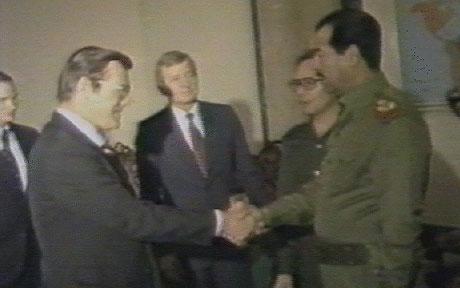
We will honor America's democratic ideals because a free world is a more peaceful world. This is the bipartisan foreign policy legacy of Truman and Reagan . . . .

— Mitt Romney, 2012 Republican National Convention

* * *
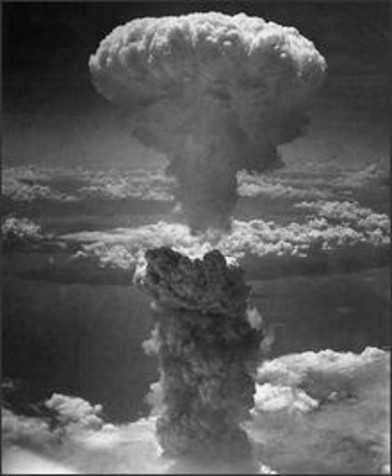
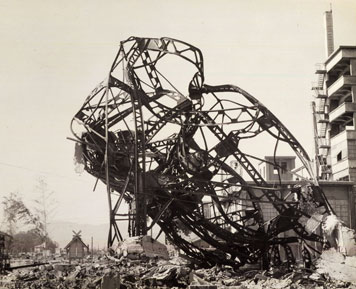
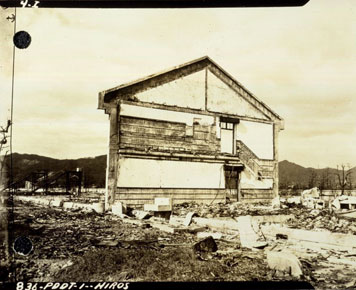
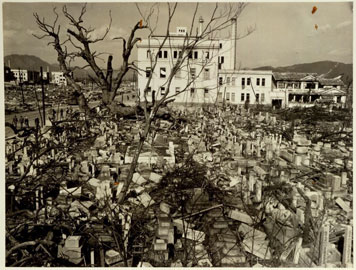
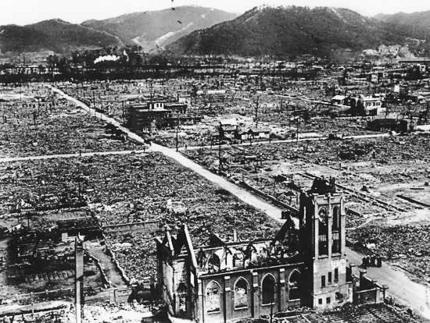
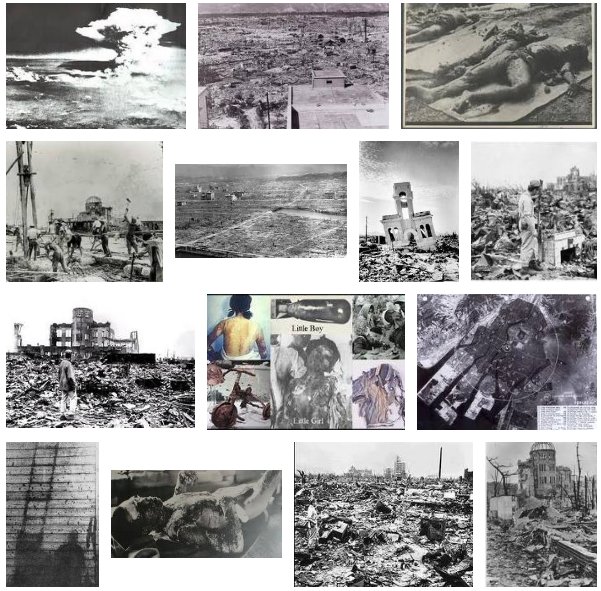
Here is a mushroom cloud, seen from the ground, towering into the sky over a bridge in Nagasaki.
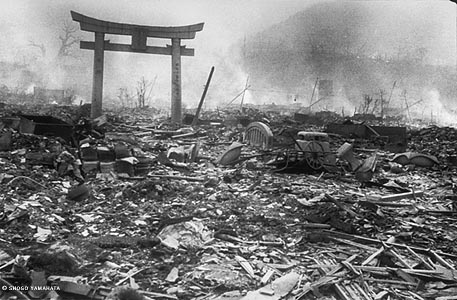
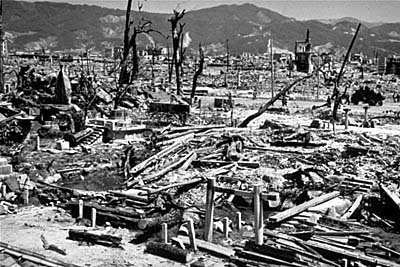
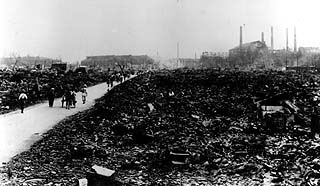
Here is a city street completely reduced to rubble, with fires smoldering in the background and smoke hanging in the air. A single Shinto gateway remains standing over the rubble.
* * *

We will honor America's democratic ideals because a free world is a more peaceful world. This is the bipartisan foreign policy legacy of Truman and Reagan . . . .

— Mitt Romney, 2012 Republican National Convention

* * *
photo: a woman with the pattern of her kimono burnt into her back
photo: a ruined residential neighborhood, with all the homes burnt or toppled
* * *

We will honor America's democratic ideals because a free world is a more peaceful world. This is the bipartisan foreign policy legacy of Truman and Reagan . . . .

— Mitt Romney, 2012 Republican National Convention

* * *
* * *

We will honor America's democratic ideals because a free world is a more peaceful world. This is the bipartisan foreign policy legacy of Truman and Reagan . . . .

— Mitt Romney, 2012 Republican National Convention

Every time they have another Democratic or Republican National Convention, some comfortable man in an expensive suit gets up on the podium and says more or less exactly this, in more or less exactly these words, and in tones of the blandest self-assurance. Every time some politician says this, I want to cry.

Show me what a police state looks like… (2012 edition, part 1 of ????)

These are from the streets of Tampa, Florida. The first is from Brian Miller, via Radley Balko (August 28, 2012) (via my cousin Emily): it’s a picture of the out-of-town police brought in to Tampa to guard the 2012 Republican National Convention. The others are from many sources, collected in Examiner.com’s article on the use of the newest technology in civilian surveillance and police weaponry in Tampa and Charlotte.

* * *

Show me what elected government looks like…

(A photograph of a line of State Troopers in heavy body armor and riot gear.)

This is what elected government looks like.

* * *

Show me what a police state looks like…

(A photograph of two police officers on a boat with a mounted carbine pointing off toward the top of the photo.)

This is what a police state looks like.

(A photograph of a huge crowd of bicycle cops arresting a young man in a Misfits t-shirt, while other bike cops hold onlookers off at a distance.)

* * *

From the Examiner.com article:

Officials in Tampa are preparing for mass arrests; Orient Road Jail has been vacated to ensure that the 1,700 beds can be utilized if needed. It has been reported that an Occupy Tampa protester was arrested on August 27, 2012, for refusing to remove his mask at the request of the police. Occupy Tampa has also reported that homeless people are being arrested near the convention by !!!@@e2;20ac;2dc;secret service.'

Tampa received a $50 million federal grant just for security. Tampa bought high-tech security cameras, body armor, and an armored tank. During the RNC, Tampa will have boat patrols armed with fully automatic .308 caliber rifles. Trapwire surveillance systems have also been installed throughout Tampa . . . .

. . . According to 2012Tampa.com "The Convention is designated by the Department of Homeland Security as one of only four National Special Security Events (NSSE) to be held in 2012; other examples of potential NSSE events include G-8/G-20 Summits and the World Bank/IMF meetings."

— Chris Time Steele, Examiner.com (August 27, 2012): From the DNC in Denver to the RNC in Tampa, the surveillance state grows

* * *

(A photograph of a crowd of sheriffs walking past an MSNBC pavilion.)

* * *

Here is what I wrote a few years ago, during the paramilitary occupations of the Twin Cities during the last Republican National Convention.

. . . Remember that so-called electoral democracy — in fact, nothing more than an imperial elective oligarchy — never means that we (meaning you and I and our neighbors) are respected as sovereign individuals or left alone to manage our own affairs. What it means is that a highly organized, heavily armed elite insists on the privilege of representing us, ruling over us, and ordering us around, on the excuse that, once every several years, we are given some minimal opportunity to select which of two tightly regimented political parties will take control of the ruling apparatus. It is, in other words, not freedom, but rather a Party State, in which we are given only the choice of which of two bureaucratic political parties might control our lives and livelihoods, with their authority supposedly justified by the ritual of elections and the mandate of popular sovereignty. And if the people (again, meaning you and I and our neighbors) should dare to think that we might challenge the authority of the regime supposedly representing us, you'll find that it's the people that go out the window, not the rigged electoral system or the parties’ grasp on the authority supposedly derived from those people.

— GT 2008-09-03: This is what a police state looks like (part 1 of ???)

* * *

(A photograph of a line of police in body armor and riot gear standing in front of a group of seated, unarmed protesters in casual dress.)

* * *

Also.

From 2008.

Shameless Self-promotion Sunday

It’s a beautiful Sunday to-day in the bright sunny South. A day for a stroll; a day for a picnic; a day for relaxing. A day for Shamelessness.

How about you? You know how this goes. So what have you been up to this week? Write anything? Leave a link and a short description for your post in the comments. Or fire away about anything else you might want to talk about.

Anarchist Communications.

Here’s some things that have come across my desk this week that I’ve been meaning to post a note about.

Publications.

  • Shawn P. Wilbur, La Frondeuse Issues #3 and #4. From Shawn Wilbur: The Black and Red Feminism zine has been reborn as La Frondeuse [The Troublemaker, or The Anti-Authoritarian.] The name is borrowed from one of Séverine’s collections. Issue 3 features works by Louise Michel, Paule Mink and Séverine. Issue 4 contains works by Jenny d’Héricourt under various pen-names. The name-change comes with a bit of fancy repackaging, and will be retroactive. . . . With just a little luck, the paper edition of La Frondeuse will become the first monthly subscription title from Corvus Editions, starting this fall….

  • Roderick Long, Three from The Liberator. From Roderick Long: William Lloyd Garrison's Liberator was the premier abolitionist journal of the antebellum u.s. I've just posted three pieces from The Liberator: an anti-voting piece by Garrison, an anti-slavery piece by Lysander Spooner, and a report on an 1858 reform convention.

  • Fair Use Repository, Now available: The Relation of Anarchism to Organization (1899), by Fred Schulder OK, this one’s by me, so the path of communication was a relatively short one. Still, check it out: a rare individualist anarchist pamphlet from Cleveland, Ohio, printed in 1899. By Fred Schulder, an individualist anarchist noticeably influenced by Tucker, Clarence Swartz, and Henry George.[1] From the Fair Use Blog: Schulder's essay is, in any case, an interesting attempt at discussing the possibilities of consensual social organization, and the anti-social, anti-coordinative features of State force, from a framework based on Spencerian evolutionary theory. [More here.]

  • CAL Press, Modern Slavery #1: From CAL Press: . . . The first full issue of this journal has now taken half a decade to come to fruition. It's been a struggle on many fronts to turn the original impulse and idea into reality. But from here on there's no turning back and we refuse to be stopped! The Modern Slavery project is a direct successor to previous C.A.L. Press projects. These include the magazine Anarchy: A Journal of Desire Armed (published since 1980, and now produced by an independent collective since 2006), the North American Anarchist Review (published for a few years in the '80s), the Alternative Press Review . . ., and the C.A.L. Press book publishing project . . . . The original idea for this new journal was to provide a space within the libertarian and anarchist milieu for the publication of some of the really important, critical and creative material that has too often fallen into the cracks between what will fit into the inadequate spaces available in libertarian periodicals and what has been publishable in book form. . . . The original concept for Modern Slavery included a roughly 200-page, perfect-bound oversize journal format oriented towards people who enjoy reading and who aren't afraid to dive into longer texts that are exciting, intelligent and well-written. In order to remove any possibility or appearance of competition with the now separate and independent Anarchy magazine project, the intention was to avoid newsstand distribution, keep the graphic design simple, severely limit artwork and photos, and avoid publishing any material on the shorter side. The planned format was actually intended to be something not yet too far from what you'll find in this first full issue. However, since the Anarchy collective has recently decided to end its newsstand distribution and shrink its circulation, Modern Slavery will instead seek (limited) newsstand distribution, include more complex graphic design and more artwork and photos, while attempting something more of a balance between longer and shorter contributions in future issues. The changes in direction will probably become more clear as future issues appear. Issue #1 includes articles by Paul Simons, François Gardyn, Henry David Thoreau, Ron Sakolsky, Voltairine de Cleyre, Massimo Passamani, Jason McQuinn, Émile Armand, and the first parts of serialized works by Karen Goaman, Wolfi Landstreicher, and Lang Gore.[2] [More here.]

CFPs.

  • InterOccupy: Science & Society Accepting Papers on Anarchism: Theory, Practice, Roots, Current Trends. From andrea @ InterOccupy: Science & Society is planning a special issue on the broad theme of anarchism, as appearing in both past and present-day political movements. . . . While we expect contributors to innovate and shape their papers according to specific interests and views, we encourage them to contact the Guest Editors (email parameters provided below), so that completeness of coverage can be achieved, and duplication avoided, to the greatest extent possible. We are looking for articles in the 7,000-8,000 word range. Projected publication is Spring 2014, so we would like to have manuscripts in hand by January 2013. Discussion about the project overall, and suggestions concerning content, should begin immediately. Note that, this being Science & Society, the top two suggested topics for contributions are, essentially, What is it that an understanding of Anarchism can contribute to the confirmation or theoretical development of Marxism? But there are a bunch of other topics that they’re throwing out for consideration in the CFP, and it may well turn out to be an interesting issue. (This being a CFP, whether it’s interesting for good, or for ill, is partly up to you….)

Events.

  1. [1]Oh well, you can’t have everything. –R.G.
  2. [2]Also there’s an article by Bob Black, but oh well, you can’t have everything. –R.G.
Anticopyright. All pages written 1996–2025 by Rad Geek. Feel free to reprint if you like it. This machine kills intellectual monopolists.