Abortion on demand and without apology (Dakota Remix)
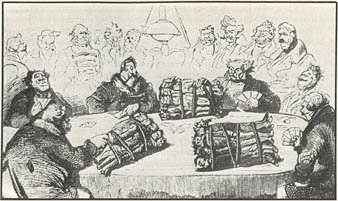
Bill Napoli, member of the arbitrary Senate over the state of South Dakota, 3 March 2006:
You know, I we are really think we’re pushing the envelope on that issue. I’m not sure that the Supreme Court is ready for us yet, but what’s that old saying,
There’s no time like the present?— Bill Napoli, interviewed, Online NewsHour (2006-03-03): South Dakota Abortion Ban
But, unusually for conservatives emboldened by the installation in the White House of a committed Christian, the prospect of a confrontation over abortion has caused some uneasiness in the anti-abortion movement. Is the US public ready for an absolute ban on abortion? Is the supreme court prepared to reverse 30 years of legal precedence? Governor Rounds apparently thinks so.
He and other abortion opponents argue the time is ripe for the supreme court to overturn Roe v Wade, the 1973 decision that granted a woman’s legal right to abortion. In the past five months, two justices have been sworn in to America’s highest court, chosen by Mr Bush for their conservative credentials.
The reversal of a supreme court opinion is possible,Mr Rounds said.The law he endorsed this week takes a maximalist approach, affirming that:
Life begins at the time of conception, a conclusion confirmed by scientific advances since the 1973 decision, including the fact that each human being is totally unique immediately at fertilisation.It would make it a crime for doctors to perform an abortion even in cases of rape or incest, punishable by a $5,000 (£2,850) fine and a five-year jail term. It makes an exception where a woman’s life is endangered.The law does not come into effect until July 1 – giving supporters of abortion rights time to challenge it in the courts.
Abortion opponents in other states also believe the balance at the supreme court has swung in their favour and have readied their own challenges to Roe v Wade. The state legislature in Mississippi voted for an abortion ban last Thursday – with exceptions for rape and incest – and legislation has been introduced in Missouri, Alabama, Oklahoma, Georgia, Indiana, Kentucky and Tennessee since the second Bush term began.
Mike Rounds, arbitrary governor over the state of South Dakota, 6 March 2006:
HB 1215 passed South Dakota's legislature with bi-partisan sponsorship and strong bi-partisan support in both houses. Its purpose is to eliminate most abortions in South Dakota. It does allow doctors to perform abortions in order to save the life of the mother. It does not prohibit the taking of contraceptive drugs before a pregnancy is determined, such as in the case of rape or incest.
In the history of the world, the true test of a civilization is how well people treat the most vulnerable and most helpless in their society. The sponsors and supporters of this bill believe that abortion is wrong because unborn children are the most vulnerable and most helpless persons in our society. I agree with them.
Because this new law is a direct challenge to the Roe versus Wade interpretation of the Constitution, I expect this law will be taken to court and prevented from going into effect this July. That challenge will likely take years to be settled and it may ultimately be decided by the United States Supreme Court. Our existing laws regulating abortions will remain in effect.
— Statement by Gov. Mike Rounds on the Signing Of House Bill 1215 (2006-03-06)
The South Dakota challenge marks a change in strategy for the anti-abortion movement, which had focused its energies on limiting the numbers of abortions in the US. Over the years, activists have restricted government funding, access to abortion past the first 12 weeks of pregnancy, and access for minors.
In South Dakota, there is only one abortion clinic, on the edge of a state that spans some 400 miles. Abortions are performed only eight days a month. The state’s Planned Parenthood clinic in Sioux Falls was already fielding calls yesterday from women anxious that the facility might close.
There already were huge logistical mountains to climb for women in South Dakota. It is an intolerable situation today, and the South Dakota legislature and governor made it even worse if such a thing can be imagined,said Sarah Stoesz, president of Planned Parenthood for Minnesota, South Dakota, and North Dakota.The situation is nearly as dire in Mississippi – which also has just one clinic prepared to perform abortions – and also difficult in other states.
Q Scott, as you probably know, the Governor of South Dakota has now signed this abortion measure that the state legislature passed. Do you anticipate the administration will weigh in on this as it makes its way through the courts?
MR. McCLELLAN: Well, let me express to you the President’s views. The President believes very strongly that we should be working to build a culture of life in America, and that’s exactly what he has worked to do. We have acted in a number of ways, practical ways, to reduce the number of abortions in America. The President strongly supported the ban on partial-birth abortions. This is an abhorrent procedure, and we are vigorously defending that legislation. We have acted in a number of other ways, as well.
Now, I think this issue goes to the larger issue of the type of people that the President appoints to the Supreme Court. And the President has made it very clear he doesn’t have a litmus test when it comes to the Supreme Court, that he will nominate people to the bench that strictly interpret our Constitution and our laws. But this is law that was passed by the South Dakota legislature and signed into law by the Governor of that state. And the President’s view when it comes to pro-life issues has been very clearly stated, and his actions speak very loudly, too.
Q So, again — now it’s going to wend its way through the courts. Will the administration weigh in, in the appeals process that is going to inevitably —
MR. McCLELLAN: Again, this is a state — this is a state law.
Q No, but it’s going to become a federal matter —
MR. McCLELLAN: It’s a state matter. The President is going to continue working to build a culture of life. He believes very strongly that we ought to value every human life, and that we ought to take steps to protect the weak and vulnerable, and that’s exactly what we have done. Now, you’re getting into the question of a state law, and so that’s something that will — the state will pursue.
Q But, Scott, no, maybe you don’t understand — it’s going to become a federal issue because it’s going —
MR. McCLELLAN: Well, let me reiterate. Maybe I’m not being clear — because the President has stated what his view is when it comes to the sanctity of life. He’s committed to defending the sanctity of life. He is pro-life with three exceptions — rape, incest and the life of — when the life of the mother is in danger. That’s his position. This is a state law, Peter. And I’m not going to —
Q So he would embrace this law as passed by South Dakota?
MR. McCLELLAN: This state law, as you know, bans abortions in all instances, with the exception of the life of the mother.
Q And not rape and incest, and so therefore, he must disagree with it, doesn’t he? Doesn’t he, Scott?
MR. McCLELLAN: The President has a strong record of working to build a culture of life, and that’s what he will continue to do.
Q I know, but you’re not answering my question, you’re dodging.
MR. McCLELLAN: No, I’m telling you that it’s a state issue —
Q He is opposed to abortion laws that forbid it for rape and incest —
MR. McCLELLAN: Les, look at the President —
Q Isn’t that true, Scott? That’s what you said.
MR. McCLELLAN: Les, let me respond. Look at the President’s record when it comes to defending the sanctity of life. That is a very strong record. His views when it comes to pro-life issues are very clearly spelled out. We also have stated repeatedly that state legislatures, when they pass laws those are state matters.
Q He disagrees with South Dakota on this one, though, doesn’t he?
MR. McCLELLAN: Les, I’ve addressed the question.
Q He does, on rape and incest.
MR. McCLELLAN: I’ve addressed the question.
— Scott McClellan, White House Press Flack (2006-03-07): daily White House Press Briefing
But there are a lot of conservatives who are afraid of the prospect of galvanising liberal and women’s groups into action by backing so uncompromising an assault on abortion as South Dakota’s. They fear that the supreme court is still delicately balanced on the issues of abortion and life, and it would be more prudent to wait, and hope that Mr Bush has the opportunity to make another conservative appointment.
This probably wouldn’t be the best law to do, and the best time to sign it,said Daniel McConchie, vice-president of Americans United for Life.If this was to show up on the supreme court desk tomorrow they would just reject it out of hand, and having this law waiting in the wings will certainly make it more difficult to get that fifth potential justice that might vote in favour of overturning Roe in this way.Now that Mr Rounds had signed the law, Mr McConchie said his organisation would support it. Butwe are advising the other states to pass laws that would do other things to help reduce abortion.Supporters of abortions rights also face tough choices. They can file a lawsuit against South Dakota in a federal court and wait for the matter to reach the supreme court where they say they are confident it would be thrown out — the standard strategy. Or they can fight a direct challenge by gathering the signatures to put a referendum on the South Dakota ballot in the November elections, a course of action Ms Stoesz says is needed to rouse liberal organisations who have failed to organise effectively.
We have controlled a lot of bad public policy but we haven’t built a movement. I am not trying to be overly self-critical here, but it’s hard to organise around a lawsuit,Ms Stoesz said.And so we have given people a false sense of complacency:Don’t worry. Planned Parenthood will file a lawsuit and save the day— and that alleviates responsibility for them taking action.
… The most important thing feminists have done and have to keep doing is to insist that the basic reason for repealing the laws and making abortions available is justice: women’s right to abortion.
… Until just a couple of years ago the abortion movement was a tiny handful of good people who were still having to concentrate just on getting the taboo lifted from public discussions of the topic. They dared not even think about any proposals for legal change beyond
reform(in which abortion is grudgingly parceled out by hospital committee fiat to the few women who canprovethey’ve been raped, or who are crazy, or are in danger of bearing a defective baby). They spent a lot of time debating with priests about When Life Begins, and Which Abortions Are Justified. They were mostly doctors, lawyers, social workers, clergymen, professors, writers, and a few were just plain women—usually not particularly feminist.Part of the reason the reform movement was very small was that it appealed mostly to altruism and very little to people’s self-interest: the circumstances covered by
reformare tragic but they affect very few women’s lives, whereas repeal is compelling because most women know the fear of unwanted pregnancy and in fact get abortions for that reason.… These people do deserve a lot of credit for their lonely and dogged insistence on raising the issue when everybody else wanted to pretend it didn’t exist. But because they invested so much energy earlier in working for
reform(and got it in ten states), they have an important stake in believing that their position is therealisticone—that one must accept the small, so-calledsteps in the right directionthat can be wrested from reluctant politicians, that it isn’t quite dignified to demonstrate or shout what you want, that raising the women’s rights issue willalienatepoliticians, and so on.Because of course, it is the women’s movement whose demand for repeal—rather than
reform—of the abortion laws has spurred the general acceleration in the abortion movement and its influence. Unfortunately, and ironically, the very rapidity of the change for which we are responsible is threatening to bring us to the point where we are offered something so close to what we want that our demands for radical change may never be achieved.–Lucinda Cisler (1969), Abortion law repeal (sort of): a warning to women, ¶Â¶ 2–10
Hopelessly Midwestern on Gov. Round’s statement, 6 March 2006:
In the history of the world, the true test of a civilization is how well people treat the most vulnerable and most helpless in their society. We in South Dakota feel that the best way of getting around this difficult moral obligation is to pretend that human embryos and fetuses constitute aclass.Oops, I might be paraphrasing a little bit.
— L., Hopelessly Midwestern (2006-03-06): South Dakota HB 1215
Today I want to honor the occasion with a reflection, and a call to action. Abortion rights are the front line of the battle over women’s reproductive rights, and women’s reproductive rights are an absolutely central issue in the struggle for women’s liberation. A woman has the right to control her own body, and that includes her uterine walls; that means that no-one, neither a foetus nor the State, can rightfully compell her to carry a pregnancy to term if she wants to end it. Any State that says or acts otherwise is legalizing reproductive slavery; the forced pregnancies, the jailing of women who defy the prohibition, and the back-alley butcheries that will inevitably rise again if abortion is outlawed are nothing less than forms of State violence against women.
Those who are against abortion are saying nothing more and nothing less than that they have the right to force women not to end their pregnancies against their will; they are saying that if someone else depends on the use of a woman’s body (even if that
someone elseis, as it usually is, an undifferentiated cluster of cells or an embryo no larger than a grain of rice) she does not have the right to sayNo. They are, that is, saying that they have the right to control her body and her behavior just because she has a womb—that is, just because she is a woman. In this respect the George W. Bushes and Jerry Falwells of the world are no different from batterers and rapists writ large. (That there are anti-choice women does not impact the analysis, either: a woman who professes the right to force other women to carry their pregnancy to term because those other women are women and pregnancy is a woman’s natural duty is no better than a man who does this. Nevertheless, it’s worth pointing out that 77% of anti-abortion leaders are men…)
Bill Napoli, member of the arbitrary Senate over the state of South Dakota, 3 March 2006:
FRED DE SAM LAZARO: Napoli says most abortions are performed for what he calls
convenience.He insists that exceptions can be made for rape or incest under the provision that protects the mother’s life. I asked him for a scenario in which an exception may be invoked.
BILL NAPOLI: A real-life description to me would be a rape victim, brutally raped, savaged. The girl was a virgin. She was religious. She planned on saving her virginity until she was married. She was brutalized and raped, sodomized as bad as you can possibly make it, and is impregnated. I mean, that girl could be so messed up, physically and psychologically, that carrying that child could very well threaten her life.
— Bill Napoli, interviewed, Online NewsHour (2006-03-03): South Dakota Abortion Ban
Hopelessly Midwestern, 23 February 2006:
If pressed, they probably won’t deny that we’re human. But so what?
Geekery Today, 18 November 2004:
This is a culture of life we’re building here, folks. And that means doing everything we can with pro-life laws to stop young women from getting abortions from a safe, medical provider. And throwing them in a pro-life prison when they finally make a desparate attempt to end the pregnancy at home without the aid of a doctor.
INDIO, Calif. A California teenager has been convicted of attempted murder for shooting his pregnant girlfriend inside a Riverside County abortion clinic.
The shooting left the 16 year-old victim a quadriplegic.
She testified during the trial that 17-year-old Jeffrey Fitzhenry told her before the shooting that she was
depriving him of his unborn child.The prosecutor told jurors he also threatened,
If you take something of mine, I’ll take something of yours.As Sheelzebub puts it at Pinko Feminist Hellcat:
Apparently, he didn’t like the idea of her getting an abortion. Or rather, he was an abusive sociopath. He reportedly told her:
If you take something of mine, I’ll take something of yours.Except the fetus was in her body not his, and she’d be the one to deal with the health risks and potential complications, not him.
Now, you might think that it’s unfair of me to sit here pinning the actions of one abusive boyfriend on the anti-abortion movement as a whole–but how are Jeffrey Fitzhenry’s actions different in any salient respect from the legal action that
pro-lifelaws are pushingpro-lifeprosecutors to take in Macomb County? Enforcing laws that stop young women from obtaining medical abortions means stationing armed men who are ready to shoot you in the neck to keep you from getting an abortion. Enforcing laws that punish women for getting an unauthorized abortion means using violence against young women who try to get one through other means. The fact that the abusive sociopath wears a suit and works in Congress does not make it any different. The fact that the shooting is done by men with badges does not make it any different. The fact that any complaints against the men who shoot you will be dismissed by men in black robes does not make it any different. The only difference is that Jeffrey Fitzhenry is only one sociopath, with only one woman as his target. Thepro-lifestate would be a sociopath with armies at its disposal, with all young women as its targets. …Jeffrey Fitzhenry didn’t care about life; he shot his ex-girlfriend in the neck because he wanted control over her body, and he wanted to take revenge when she didn’t comply. He is not pro-life; he is an abusive sociopath. And nothing less is true of the legislators, presidents, or prosecutors who use deceptive bills to enforcing a
culture of lifeat the barrel of a gun.
What you need to realize is that we are facing off with people (and, let’s be clear, most of them are men) who have absolutely no compunction with commandeering real women’s lives, livelihoods, and bodies in the name of their theologico-political power trips, because their victims are women and women are (in the minds of the bellowing blowhard brigade) made for the Culture of Life’s use, even if that means involuntary servitude enforced at the point of a pro-life bayonet. Meanwhile the sanctimonious politicos (and, let’s be clear, most of them are men, too) supposedly on our side bite their lips and palaver about the tragedy
of necessary gynaecological surgery and generally act as though their brothers’ claims of dominion over other women’s bodies deserved something less than contempt and resistance. We are the new abolitionists, and it is long past time for the Clintonian hand-wringers and the take-one-for-the-party doughfaces who claim to be part of this movement to shut the hell up and get to the back. If they refuse to, I suggest that it’s our duty to jeer them into silence until they do. Can we get some moral outrage here? Some feminism? Some creative extremism?
William Lloyd Garrison, abolitionist and feminist, 1 January 1831:
I am aware that many object to the severity of my language; but is there not cause for severity? I will be as harsh as truth, and as uncompromising as justice. On this subject, I do not wish to think, or to speak, or write, with moderation. No! no! Tell a man whose house is on fire to give a moderate alarm; tell him to moderately rescue his wife from the hands of the ravisher; tell the mother to gradually extricate her babe from the fire into which it has fallen; — but urge me not to use moderation in a cause like the present. I am in earnest — I will not equivocate — I will not excuse — I will not retreat a single inch — AND I WILL BE HEARD.
— William Lloyd Garrison, To the Public, in The Liberator (1831-01-01)
Happy International Women’s Day.
Further reading
- Hopelessly Midwestern (2006-02-22): South Dakota
- Hopelessly Midwestern (2006-03-06): Bill Napoli hates you. No, really.
- I Blame the Patriarchy (2006-03-06): Bill Napoli is a fucking perv.
- Hopelessly Midwestern (2006-03-01): Regarding
life
- Cleis, Sappho’s Breathing (2006-02-22): Coerced Pregnancy
- Shakespeare’s Sister (2006-02-22): South Dakota Abortion Bill Passes State Senate
- Mikhaela Reed (2006-02-03): Katha Pollitt is Awesome
- Katha Pollitt, The Nation (2006-01-26): Prochoice Puritans
- GT 2006-01-22: Roe v. Wade Day #33
 George Washington was the man who established the American republic. He led the revolutionary army against
the British Empire, he served as the first president, and most importantly he stepped down from power.
George Washington was the man who established the American republic. He led the revolutionary army against
the British Empire, he served as the first president, and most importantly he stepped down from power.
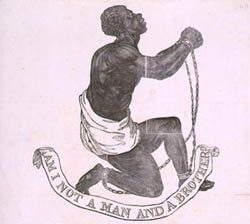 You see, the thing about Washington is that while he was busy Not Being a King by returning to